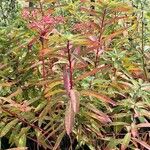
Euphorbia palustris
Marsh spurge · Bog Spurge · Fen Spurge
Description
Source: leafsnapEuphorbia palustris, the marsh spurge or marsh euphorbia, is a species of flowering plant in the family Euphorbiaceae, native to marshland throughout much of mainland Europe and western Asia. It is an herbaceous perennial growing to 90 cm (35 in) tall and wide, with narrow leaves turning red and yellow in autumn, and persistent, bright acid yellow flower-heads (cyathia), 15 cm (6 in) across, in spring.It was published and first described by Carl Linnaeus in his book, Species Plantarum on page 462 in 1753.It prefers permanently moist conditions in full sun, hence the common name "marsh spurge" and the Latin specific epithet palustris, "of marshland". It is thought to be an ideal plant for gardening because it has a different colour for almost all of the seasons. Euphorbia palustris has gained the Royal Horticultural Society's Award of Garden Merit.Like all euphorbias, all parts of the plant are toxic if ingested, and cut stems produce an irritant sticky sap.
Care Guide
💧 Water Every week
Marsh spurge thrives in wetland habitats and prefers consistent moisture, although it can tolerate short periods of dryness. To support its growth, it should be watered weekly. As an herbaceous perennial, its growth cycles are influenced by water availability, which affects its seasonal vigor and dormancy.
How should I water my Marsh spurge plant?
For the Marsh spurge, it's best to use filtered water at room temperature when watering. Tap water may have harmful particles, so filtered water is preferred. The plant comes from a warm environment, so using cold water can be a shock. Also, avoid overhead watering as it can cause foliage problems. Instead, just pour the filtered room temperature water onto the soil until it's completely soaked. This helps the roots stay moist and spread throughout the soil to gather nutrients.
What should I do if I give too much or too little water to my Marsh spurge plant?
Overwatering is a more common issue than underwatering for the health of your Marsh spurge. When the Marsh spurge receives too much water, its stems and leaves may wilt and turn yellow. Overwatering for a prolonged period can also lead to diseases like root rot, mold, and mildew, which can be fatal for the plant. On the other hand, underwatering is less common for the Marsh spurge due to its drought tolerance. However, it is still possible, and in such cases, the leaves may become brittle and brown. It's important to be attentive to the signs of overwatering as some diseases may not be reversible if not addressed promptly. If you notice early signs, reduce your watering schedule immediately and assess the soil's quality. If the soil drains poorly, replace it with a loose, well-draining potting mix. Conversely, if signs of insufficient water are present, water more regularly until those signs subside.
How frequently should I give water to my Marsh spurge?
If your Marsh spurge is in a pot, you can determine if it needs water by checking the soil. Simply insert your finger into the soil, and if the top two to three inches feel dry, it's time to water. For Marsh spurge growing outside in the ground, you can use the same method. If the first few inches of soil are dry, it's a sign to water. Normally, you would water this plant about once a week during spring and early fall. However, in extremely hot weather, you may need to water it twice or more per week. It's important to note that mature, well-established Marsh spurge has a remarkable ability to withstand drought.
How much water does my Marsh spurge plant need?
To properly water your Marsh spurge, don't hold back on the amount of water you give it. Wait until the top two to three inches of soil are dry, then give it a good, deep watering. Make sure the water soaks the soil completely. You should add enough water that it flows out of the drainage holes at the bottom of the pot. If you don't see any excess water draining, you likely haven't given it enough water. However, be careful not to let the water accumulate in the soil, as that can harm the plant. On the other hand, if you notice that water is not draining well through the pot, it might indicate poor draining soil, which is not good for the plant's health. If the plant is outside, it should receive about 1 inch of rain per week, which is enough.
How do I water my Marsh spurge at different stages of growth?
The water needs of the Marsh spurge can vary depending on its growth stages. In the first few years or after being transplanted, the Marsh spurge requires more water. During these stages, the plant focuses on developing new roots for future growth, which need extra moisture. As the plant matures, it will require less water. Additionally, during the bloom period, the Marsh spurge may require more water as flower development requires significant moisture.
☀️ Light Full sun
Marsh spurge grows best in places that receive the full intensity of sun during the day. It can, however, persist with reduced light, although its development may slow. Its usual habitat indicates a liking for open, well-lit areas. Too much or too little light can harm it, causing issues such as leaf scorch or chlorosis.
What are the sunlight requirements for Marsh Spurge?
Marsh Spurge thrives best in locations with full sun exposure, meaning it requires above 6 hours of sunlight daily for optimal growth. However, it can also survive in partial sun, receiving about 3-6 hours of sunlight. It's important to observe how sunlight moves through your garden to choose spots that provide the perfect balance for your plants, ensuring their happiness. Despite its versatility, the plant’s growth may slow if not given enough light, indicating a preference for well-illuminated spaces. Excessive or inadequate light can lead to symptoms like leaf scorch or chlorosis.
How can artificial lighting be used for indoor Marsh Spurge plants?
When natural sunlight is insufficient, especially during winter or in less sunny spaces, artificial lighting can be a vital solution for indoor Marsh Spurge plants. LED lights are popular due to their ability to provide specific wavelengths needed by plants. Full sun plants require 30-50W/sq ft, partial sun plants 20-30W/sq ft, and full shade plants 10-20W/sq ft of artificial light. The light source should be placed 12-36 inches above the plant to mimic natural sunlight, with a duration mimicking natural daylight hours, typically 8-12 hours daily.
What are the symptoms of inadequate lighting for Marsh Spurge?
Inadequate lighting can lead to several symptoms in Marsh Spurge, including the development of smaller new leaves, leggy or sparse growth, faster leaf drop, and slower or no new growth. Insufficient sunlight may cause leaves to develop irregular color patterns or appear pale (a lack of chlorophyll and essential nutrients), and conditions like chlorosis, where leaves lose their green color. Excessive sunlight exposure can cause sunscald, leaf curling as a defense to reduce surface area, wilting from increased water loss, and leaf scorching, indicating a reduction in photosynthetic capacity and overall plant health.
What solutions help Marsh Spurge recover from inadequate lighting?
To manage and recover Marsh Spurge from inadequate lighting, gradual adaptation to sunlight is crucial. For indoor plants, gradually move them to sunnier locations until they receive at least 6 hours of direct sunlight daily, using a south-facing window and keeping curtains open during the day. Artificial light from a desk or ceiling lamp for at least 8 hours daily, or professional plant grow lights, can supplement light for larger or immovable plants. Outdoors, it's important to gradually move plants to sunnier spots to avoid sunburn. Reducing obstructions or transplanting during the dormant period are strategies for outdoor and ground-planted Marsh Spurges. However, it's noted that parts of the plant affected by insufficient light may not recover, but new growth will be healthy with increased light exposure.
🌡️ Temperature 5–35°C
Marsh spurge is native to temperate regions and prefers temperatures of 68 to 95 °F (20 to 35 ℃). It is adaptable, but adjusting conditions seasonally to match these average temperatures will encourage optimal growth.
What is marsh spurge and where is it native to?
Marsh spurge, botanically known as Euphorbia palustris, is native to temperate regions. It thrives in a temperature range of 68 to 95°F (20 to 35°C), adapting well to the average temperatures of these regions to ensure optimal growth. This plant has a robust cold resistance, making it adaptable to various growing conditions without the need for special frost protection measures in most winter scenarios.
How can marsh spurge be protected during extremely cold winters?
Although marsh spurge has strong cold resistance and does not usually require special frost protection, in cases where winter temperatures are expected to drop below -25°C, it is important to protect the plant. This can be achieved by covering the plant with insulating materials such as soil or straw. Additionally, it is recommended to water the plant abundantly before the first freeze in autumn to ensure the soil remains moist and freezes in this state, helping to prevent drought and water scarcity for the plant during winter and early spring.
What are the symptoms and solutions for marsh spurge in low temperatures?
Marsh spurge is cold-tolerant and finds optimal growth conditions when temperatures are above 20°C. During winter, ensuring temperatures stay above 0°C is ideal. However, when temperatures fall below -25°C, the plant may not show immediate changes but could experience reduced or even no sprouting in spring. The solution for such scenarios involves removing any parts that have failed to sprout in spring, which can help promote healthy regrowth.
What should be done if marsh spurge is exposed to high temperatures?
During the summer, it's vital to keep marsh spurge's surrounding environment below 35°C to prevent stress. Exposure to temperatures above 41°C can lead to lighter leaf color, curling, susceptibility to sunburn, and, in severe cases, wilting and drying of the entire plant. The remedy involves trimming away sunburned and dried parts, relocating the plant to a shaded area or using a shade cloth to protect it from strong sunlight, especially during midday and afternoon. Additionally, watering the plant in the morning and evening can help keep the soil adequately moist.
💨 Humidity
🪴 Soil 6-7
🌱 Fertilizer
The best time to fertilize Marsh spurge is in early spring, as it breaks dormancy and starts active growth. Fertilizing supplies essential nutrients for healthy development. While Marsh spurge needs relatively little fertilizer, an annual application can boost its survival and encourage stronger, longer-lasting flowers.
Why should I add fertilizer to my Marsh spurge?
Fertilization is important for the Marsh spurge because it provides essential nutrients for growth, both above and below ground. Although the overall fertilization needs of Marsh spurge are low, annual fertilization can greatly benefit the plant. It helps to keep the plant alive and may also enhance the quality and longevity of its flowers. Therefore, those who want their Marsh spurge to thrive should prioritize annual fertilization.
What is the ideal time to fertilize my Marsh spurge?
The best time to fertilize a Marsh spurge is in late winter to early spring when it is transitioning from dormancy to active growth. Fertilizing at this time promotes healthy growth and a strong start to the season. Although it is generally recommended to fertilize in early spring, fall is also an option. However, it is not advisable to feed a Marsh spurge during summer or winter.
When is the best time to not fertilize my Marsh spurge?
To properly care for your Marsh spurge, it is important to remember that late winter and early spring are the only suitable times for fertilization. This plant has low fertilization needs, so a single annual feeding during this time is sufficient. Fertilizing during spring, summer, or fall can easily lead to overfertilization and its associated complications. However, if you neglected to fertilize in spring, it is acceptable to feed the plant in the fall. Additionally, there is no need to fertilize during the winter when the Marsh spurge is in a dormant growth phase and not producing new growth. Therefore, it is best to refrain from fertilizing during most of the growing season and winter.
What kind of fertilizer should I use for my Marsh spurge?
You can use any general-purpose fertilizer with a balanced amount of nutrients for a Marsh spurge. Some gardeners believe that a fertilizer with higher phosphorus levels can lead to stronger roots and better flowers, so using a phosphorus-rich fertilizer may be a good option for this flowering plant. You can choose between granular or liquid forms of fertilizer, as long as they contain enough nutrients. Alternatively, you can improve the soil for your Marsh spurge using organic methods like compost or manure. These materials can help create a healthy growing medium for your plant.
How do I make my Marsh spurge grow better with fertilizer?
To fertilize a Marsh spurge, the most common approach is to use granular or pellet fertilizer applied to the soil around the plant. It's important to fertilize when the plant transitions from its dormant phase to active growth, typically in spring. Wait until the plant starts sending shoots through the soil and then apply the fertilizer. Alternatively, some people prefer using liquid fertilizer, which should be diluted with water before applying. Regardless of the type of fertilizer used, it's recommended to moisten the soil before, during, and after applying it.
🪴 Pot & Repot 2-3 years
When repotting Marsh spurge, select a pot 1-2 inches (2.5–5.1 cm) larger with good drainage. Use a well-draining potting mix. Repot in spring or fall, making sure the root ball sits slightly lower than the rim of the flower pot. Water thoroughly after repotting and place it in a warm spot with indirect sunlight.
✂️ Pruning
Marsh spurge is characterized by its vibrant yellow-green flowers and bushy growth. To encourage healthy growth and abundant blooms, prune the plant from early to late spring. Remove any dead stems to improve air circulation and shape the plant. Rejuvenate the marsh spurge by cutting back one-third of the oldest stems. Ensure that your tools are sanitized to prevent the spread of disease.
🌿 Propagating
🐛 Diseases & pets
☠️ Toxicity
Characteristics
- Plant Type
- Herb
- Life Cycle
- Perennial, Annual
- Genus
- Euphorbia
- Family
- Euphorbiaceae
- Hardiness Zone
- 5-10
- Mature Height
- 91 cm
- Mature Spread
- 91 cm
- Leaf Color
- Green, Yellow, Orange
- Leaf Type
- Deciduous
- Flower Color
- Yellow
- Flower Size
- 1.02 cm to 2.03 cm
- Bloom Time
- Mid spring, Late spring, Early summer
- Planting Time
- Spring, Summer
- Harvest Time
- Summer
- Native Area
- Turkey, Sweden, Austria, Czech Republic, Slovakia, Montenegro, Bulgaria, Poland, Greece, Croatia, Slovenia, Belarus, Ukraine, Serbia, Russia, Norway, Hungary, Germany, Italy, Kazakhstan, Spain, Switzerland, Estonia, Finland, France, Albania, Romania, Latvia, Netherlands