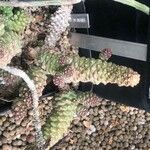
Euphorbia ritchiei
Medusa's Head Cactus · Madusa's head · Medusa’s head
Description
Source: leafsnapEuphorbia ritchiei is a succulent plant from the Euphorbia family, native to Madagascar. It can reach a height of up to 30 cm and features thick, fleshy stems adorned with small green leaves and tiny yellow flowers that bloom during the summer. This plant is widely grown as an ornamental due to its attractive look and low maintenance needs. It thrives both indoors and outdoors, provided it receives ample sunlight and is planted in well-draining soil. A notable characteristic of Euphorbia ritchiei is its milky sap, which contains toxic compounds. This sap can cause skin irritation and even blindness if it comes into contact with the eyes or mucous membranes. Therefore, it's important to handle the plant with care, especially during pruning or propagation. Overall, Euphorbia ritchiei is a fascinating succulent that brings a touch of exotic beauty to any garden or indoor space while requiring minimal upkeep.
Care Guide
💧 Water Every 7 days
Euphorbia ritchiei is well-suited for dry environments, as it can thrive with minimal moisture and is highly drought-tolerant. When watering, do so sparingly—about once every three weeks is sufficient. This makes it an excellent choice for indoor cultivation. It is best grown in containers that help regulate soil moisture to prevent overwatering.
☀️ Light Partial sun
Euphorbia ritchiei comes from habitats with dappled light, such as the understory of forests or rocky areas that provide natural shade. It prefers partial sun but can also tolerate full sun.
🌡️ Temperature 20–37.8°C
Euphorbia ritchiei grows best in warm conditions and needs elevated temperatures during the growing season to encourage development and metabolic activity. It prefers plenty of sunlight, suitable moisture, and good airflow. However, it can be harmed by very low temperatures and by overwatering. It’s also important to maintain balance and avoid extreme heat and overly dry conditions.
💨 Humidity
🪴 Soil 6-7
🌱 Fertilizer
Euphorbia ritchiei requires only light applications of fertilizer once or twice a year during the growing season. Do not fertilize in winter or in the summer when the plant is dormant. Cut back on fertilizer for plants that have been repotted and wait a couple of months after repotting before feeding. Fertilizing helps maintain healthy growth and promotes blooms.
🪴 Pot & Repot 2-3 years
Repot Euphorbia ritchiei in warmer months, choosing a pot only slightly larger than the current one that has good drainage. Use a well-draining cactus or succulent potting mix. Be careful with the roots and caudex while repotting. After repotting, wait about a week before watering to help prevent root rot. Place the plant in a sunny location for best growth.
✂️ Pruning
Monadenium does not need to be pruned. However, it must be transplanted at least every three years. Always transplant in the spring or summer, never in the winter.
🌿 Propagating
🐛 Diseases & pets
☠️ Toxicity
All Euphorbia species produce a milky sap called latex, which is toxic and can range from mildly irritating to extremely poisonous. Use caution when growing near children or pets, and wear gloves when handling the plant.
Characteristics
- Plant Type
- Succulent
- Life Cycle
- Perennial
- Genus
- Euphorbia
- Family
- Euphorbiaceae
- Hardiness Zone
- 10-12
- Mature Height
- 25 cm
- Mature Spread
- 25 cm
- Leaf Color
- Dark Green
- Leaf Type
- Deciduous
- Flower Color
- Yellow, Green
- Bloom Time
- Late spring, Summer
- Planting Time
- Spring, Summer, Autumn
- Harvest Time
- Late summer, Fall
- Native Area
- Africa, Asia, North America, South America