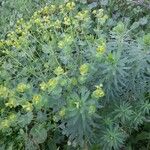
Euphorbia segetalis
Gardenweed · Corn spurge · Grainfield spurge · Meadow spurge · Shortstem carnationweed
Description
Source: leafsnapEuphorbia segetalis, the grainfield spurge, is a species of annual herb in the family Euphorbiaceae. They have a self-supporting growth form and simple, broad leaves. Flowers are visited by Plagiolepis pygmaea, Polistes, and nomad bees. Individuals can grow to 16 cm tall.
Care Guide
💧 Water
Originating from the Mediterranean region, grainfield spurge flourishes with moderate rainfall and needs weekly watering. It can adapt well to dry spells, which is a reflection of its native environment. When grown indoors, occasionally misting the plant helps maintain humidity and ensures that its water requirements are met year-round.
What is the most effective way to water my Grainfield spurge?
To water Grainfield spurge, you have several options for watering tools, such as a garden hose with a spray nozzle or a watering can. The good news is that Grainfield spurge is not too particular about the type of water it receives. This plant can thrive on rainwater, tap water, or filtered water. However, it's best to avoid watering from above as it can harm the leaves, flowers, and potentially lead to disease. Instead, a drip irrigation system is often recommended. These systems ensure that water is evenly distributed and goes directly into the soil. If you have a container-grown Grainfield spurge, the watering method is similar, but you can use a cup, watering can, or tap to apply water directly to the soil.
What should I do if I give my Grainfield spurge too much or too little water?
The remedy for underwatering Grainfield spurge is simple: water it more regularly when you notice it lacks moisture. However, overwatering can be a more serious issue. If you don't catch it early, your Grainfield spurge may develop diseases that can cause it to decline and die. To prevent this, choose a growing location with plenty of sunlight to dry the soil and good drainage to prevent water from pooling. If your potted Grainfield spurge is overwatered, consider transferring it to a new pot with better soil drainage and more efficient drainage holes.
How often do I need to wet my Grainfield spurge?
Grainfield spurge requires regular watering throughout the growing season. In the beginning of spring, it should be watered once a week. As the season progresses and becomes warmer, the watering rate may need to increase to two or three times per week. However, exceeding this rate can harm the plant. Regardless of the frequency, it is important to keep the soil relatively moist but not wet. For Grainfield spurge in a pot, watering needs to be more frequent as the soil in pots can heat up and dry out faster compared to ground soil. In most cases, container-grown Grainfield spurge should be watered a few times per week, while in-ground plants only need to be watered once per week.
How much water does my Grainfield spurge plant need?
Determining the appropriate amount of water for your Grainfield spurge can be done in a few ways. One approach is to assess the soil moisture by feeling it with your hands. If you find that the top six inches of soil are dry, it's a sign that watering is needed. Alternatively, you can use a general rule of thumb – typically, providing around two gallons of water per week for your Grainfield spurge, adjusting based on temperature and soil dryness. However, it's important to be flexible with this guideline as overwatering can occur if your plant needs less water. When growing Grainfield spurge in a container, a different method is needed. You should aim to moisten all the layers of dry soil, which can be tested by sticking your finger into the soil. Another indication of sufficient watering is observing a slight trickle of excess water from the drainage holes of the pot.
How can I know if I'm giving enough water to my Grainfield spurge?
Avoiding overwatering your Grainfield spurge can be a bit tricky. On one hand, these plants have deep roots that need weekly watering. However, Grainfield spurge is highly prone to root rot, which can cause browning. Underwatering is unlikely as these plants can survive without frequent watering, but if you wait too long, they might wilt and develop dry leaves.
☀️ Light Full sun
Grainfield spurge does best in sites with plentiful sunlight. In those conditions it can photosynthesize and grow at peak efficiency. Exposure to slightly less sun does not harm it, reflecting its adaptable nature. Excessive sunlight can cause leaf scorch, while insufficient sun restricts growth.
What are the sunlight requirements for Grainfield spurge?
Grainfield spurge, also known by its botanical name Euphorbia segetalis, thrives best in full sun conditions, requiring above 6 hours of sunlight daily. It can also adapt to partial sun exposure, meaning about 3-6 hours of sunlight each day. It is crucial to observe the movement of sunlight through your garden to ensure you place your plants in locations that provide them with an ideal balance of light and shade for optimal growth and happiness.
What are the essentials for growing Grainfield spurge successfully?
To ensure the successful growth of Grainfield spurge, it is essential to provide it with abundant sun exposure. This plant performs well in full sunlight, where it can photosynthesize and grow optimally. However, it exhibits a notable adaptability by also thriving in slightly less sunny conditions. Be aware that too much sun can lead to leaf scorch, while insufficient sunlight may hinder its growth. For indoor plants that do not receive enough natural light, especially during winter or in less sunny spaces, artificial lighting serves as an effective alternative. LED lights are recommended because they can provide specific wavelengths needed by your plants. Full sun plants require 30-50 Watts per square foot, partial sun plants need 20-30 Watts per square foot, and full shade plants should have 10-20 Watts per square foot of artificial light.
What are the symptoms of inappropriate sunlight exposure in Grainfield spurge?
Grainfield spurge shows several symptoms when it doesn't receive appropriate sunlight exposure. Insufficient light can lead to smaller new leaves, leggy or sparse growth, faster leaf drop, slower or no growth, and lighter-colored or chlorotic (yellow) leaves. Excessive sunlight, on the other hand, may cause symptoms like chlorosis, sunscald, leaf curling, wilting, and leaf scorching. These conditions reflect either a lack or an excess of sunlight, affecting the plant’s ability to photosynthesize and stay healthy.
How can I address sunlight exposure issues with Grainfield spurge?
Addressing sunlight exposure issues with Grainfield spurge involves a few key strategies. For indoor plants, gradually relocating them to sunnier locations to achieve at least 6 hours of daily sunlight is beneficial. Using artificial light sources like desk or ceiling lamps for at least 8 hours a day, or investing in professional grow lights, can also supplement light needs. Outdoors, it's important to gradually move plants to more sunlit spots each week, avoiding sudden changes to prevent sunburn. Reducing obstructions such as pruning nearby trees and considering transplanting smaller plants during their dormant period can also help enhance sunlight exposure. Remember, parts of the plant that have been adversely affected by inadequate sunlight might not recover, but new growth should be healthy once conditions improve.
🌡️ Temperature 15–35°C
Grainfield spurge is native to climates with temperatures ranging from 68 to 95 °F (20 to 35 °C). It grows best in these warmer conditions. In different seasons, it may require careful monitoring and adjustment to maintain optimal temperature.
What is the ideal temperature range for Grainfield spurge?
Grainfield spurge, botanically known as Euphorbia segetalis, is indigenous to climates where the temperature ranges from 68 to 95 °F (20 to 35 °C). It thrives best in these warmer conditions, indicating its preference for warmer climates. During different seasons, careful monitoring and adjustment might be required to maintain the optimal temperature for the plant's health.
What should I do to protect Grainfield spurge in temperatures below 0°C?
Grainfield spurge has some cold tolerance and generally does not require additional measures when the temperature is above 0°C. However, if the temperature is expected to drop below freezing (0°C), it's necessary to implement temporary protective measures such as wrapping the plant with plastic film, fabric, or other suitable materials. This helps to shield the plant from the cold. Once the temperature rises again, these protective coverings should be removed to prevent overheating or suffocation of the plant.
How does Grainfield spurge respond to low temperatures and what are the solutions?
Grainfield spurge has moderate tolerance to low temperatures and performs best when the temperature remains above 20°C. It should be protected to keep it above 0°C during winter. Exposure to temperatures below -10°C can lead to leaves drooping; they may recover in mild cases but will wilt and eventually fall off in severe cases. To protect the plant from low temperatures, frost-damaged parts should be trimmed off. Before exposure to low temperatures again, wrap the plant with non-woven fabric or cloth, and consider building a wind barrier to protect it from cold winds.
How does high temperature affect Grainfield spurge and what should I do?
In the summer, it is crucial to ensure Grainfield spurge does not exceed temperature levels of 35°C. Temperatures above 41°C can cause the leaves to lighten in color, dry, and wither at the tips, curl, and increase the risk of sunburn for the plant. To mitigate these effects, trim away any sunburned or dried-up parts. Relocate the plant to a shaded area during the midday and afternoon sun or use a shade cloth for protection. Additionally, watering the plant in the morning and evening helps maintain necessary soil moisture levels.
💨 Humidity
🪴 Soil 6-7
🌱 Fertilizer
Grainfield spurge benefits from regular, light applications of fertilizer to encourage healthy leaf development. You should feed Grainfield spurge roughly once a month during the summer. Nitrogen is key for foliage, and adding nitrogen-rich fertilizers helps the plant do well.
🪴 Pot & Repot
✂️ Pruning
Pruning grainfield spurge from early to late spring is essential for its health and appearance. By removing dead stems and carefully shaping the plant, you promote the development of new shoots and prevent overcrowding. This improves air circulation and reduces the risk of disease, keeping the plant healthy and attractive.
🌿 Propagating
🐛 Diseases & pets
☠️ Toxicity
Characteristics
- Plant Type
- Herb
- Life Cycle
- Annual
- Genus
- Euphorbia
- Family
- Euphorbiaceae
- Hardiness Zone
- 8-10
- Mature Height
- 10 cm to 30 cm
- Mature Spread
- 30 cm to 49 cm
- Leaf Color
- Light Green, Yellow Green
- Leaf Type
- Evergreen
- Flower Color
- Yellow
- Flower Size
- 1.02 cm to 1.52 cm
- Bloom Time
- Mid spring, Late spring, Early summer, Mid summer
- Planting Time
- Spring, Summer, Autumn
- Harvest Time
- Summer
- Native Area
- Portugal, Italy, Spain, Slovenia, Croatia, Morocco, France