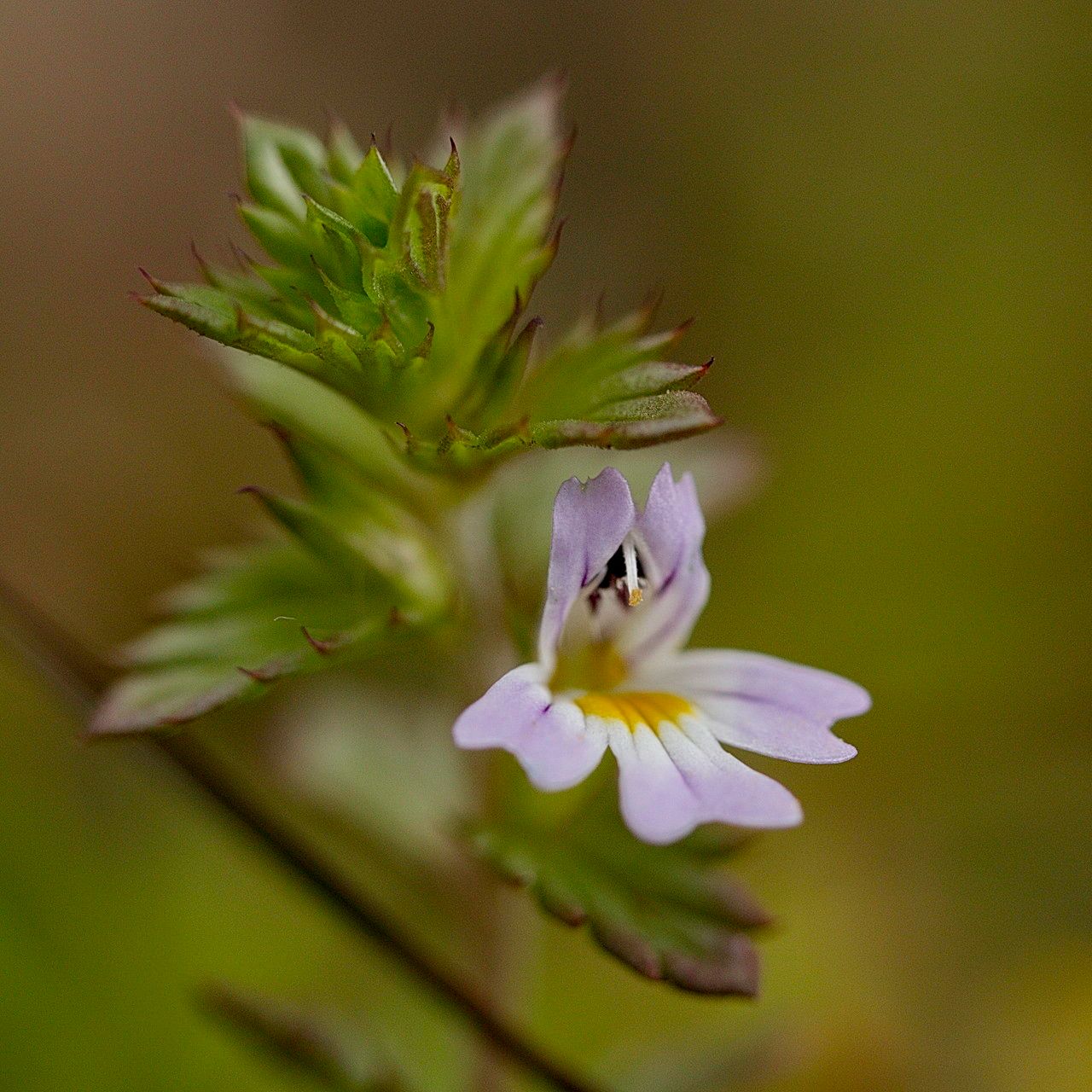
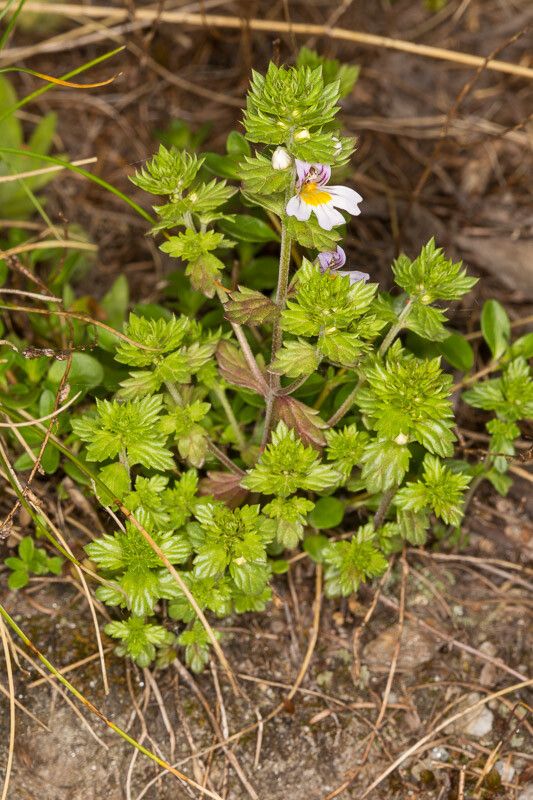
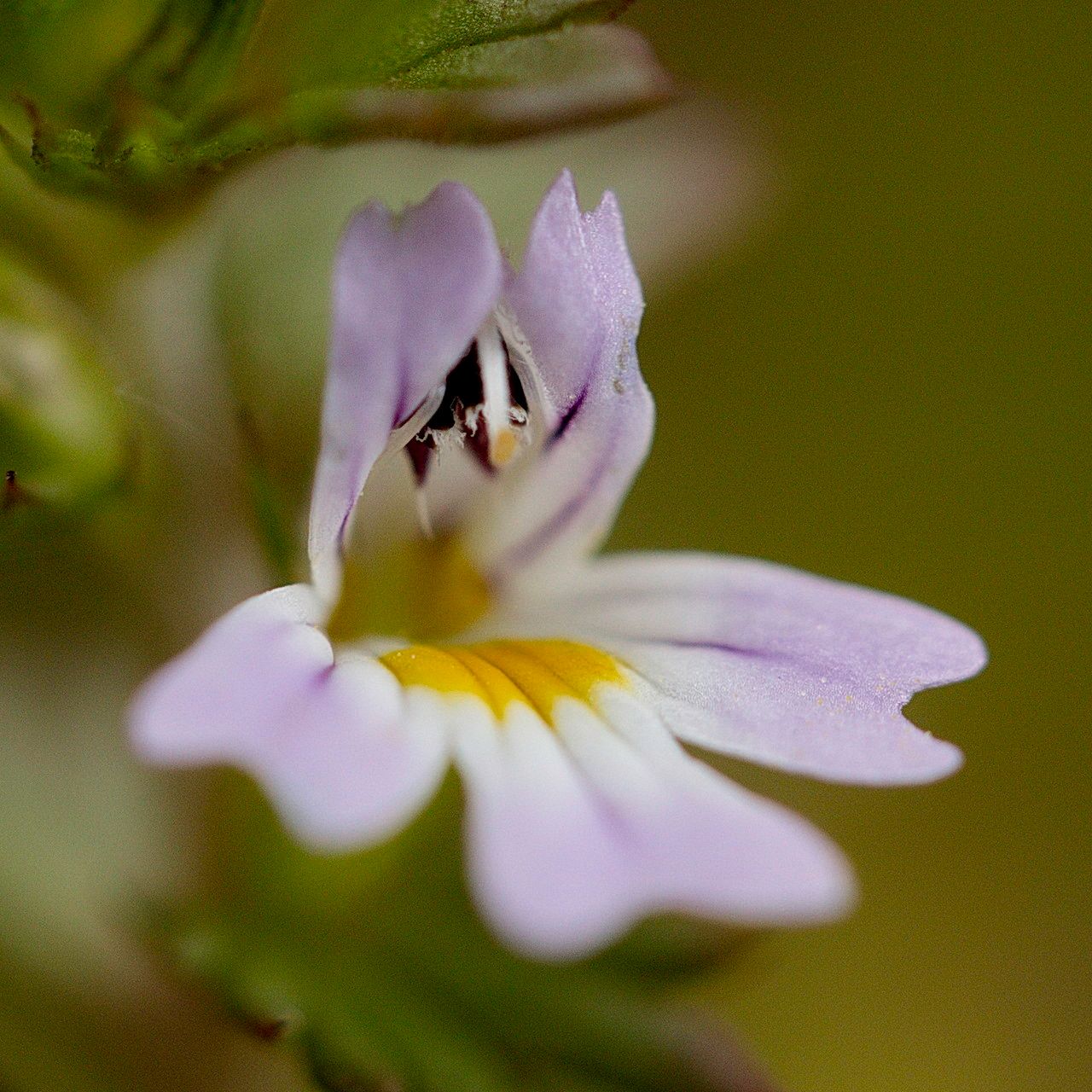
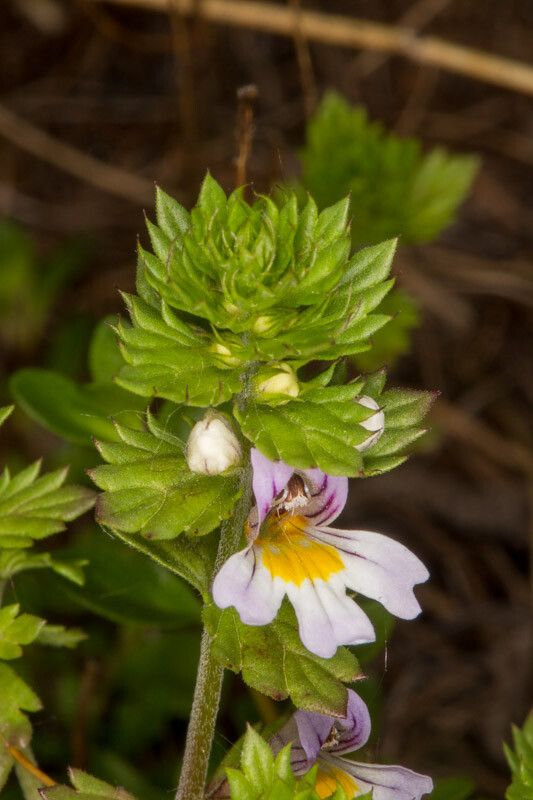
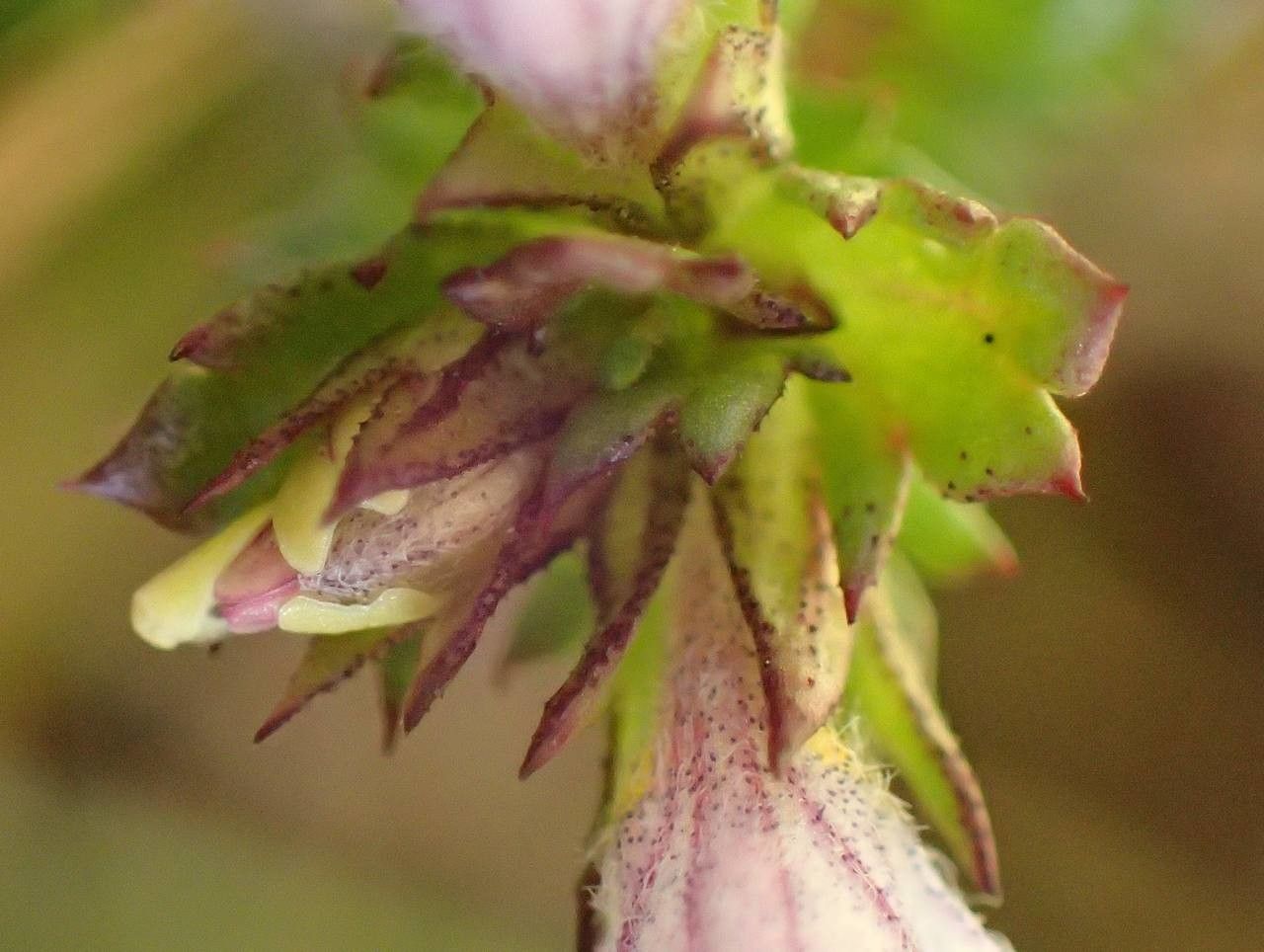
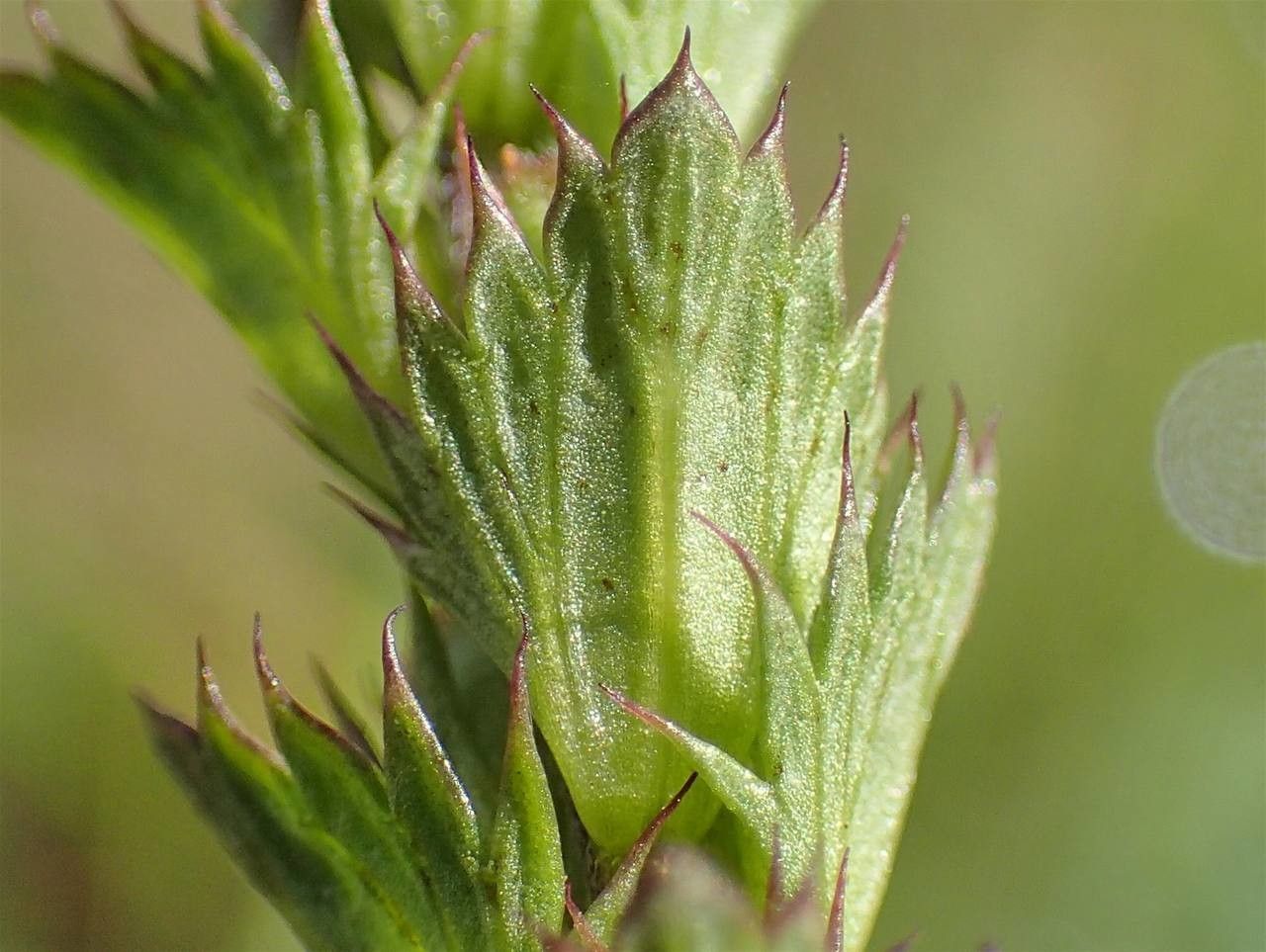
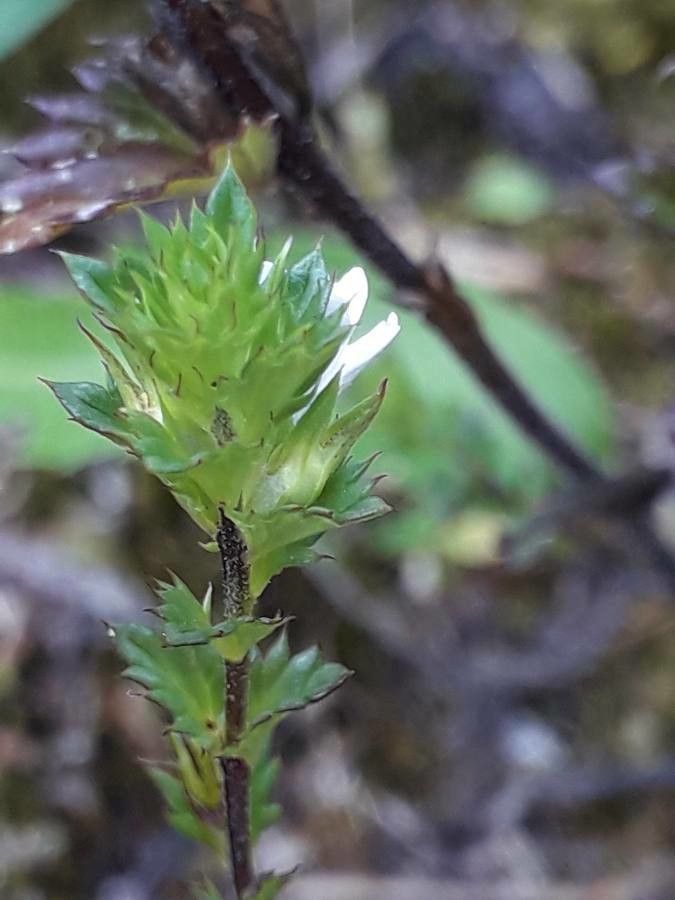
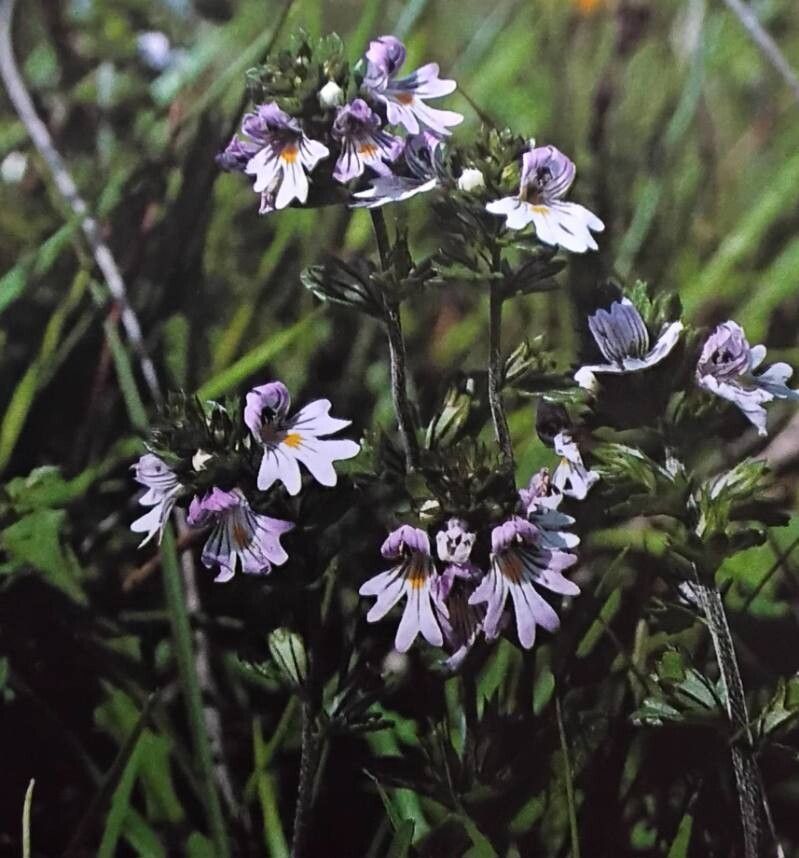
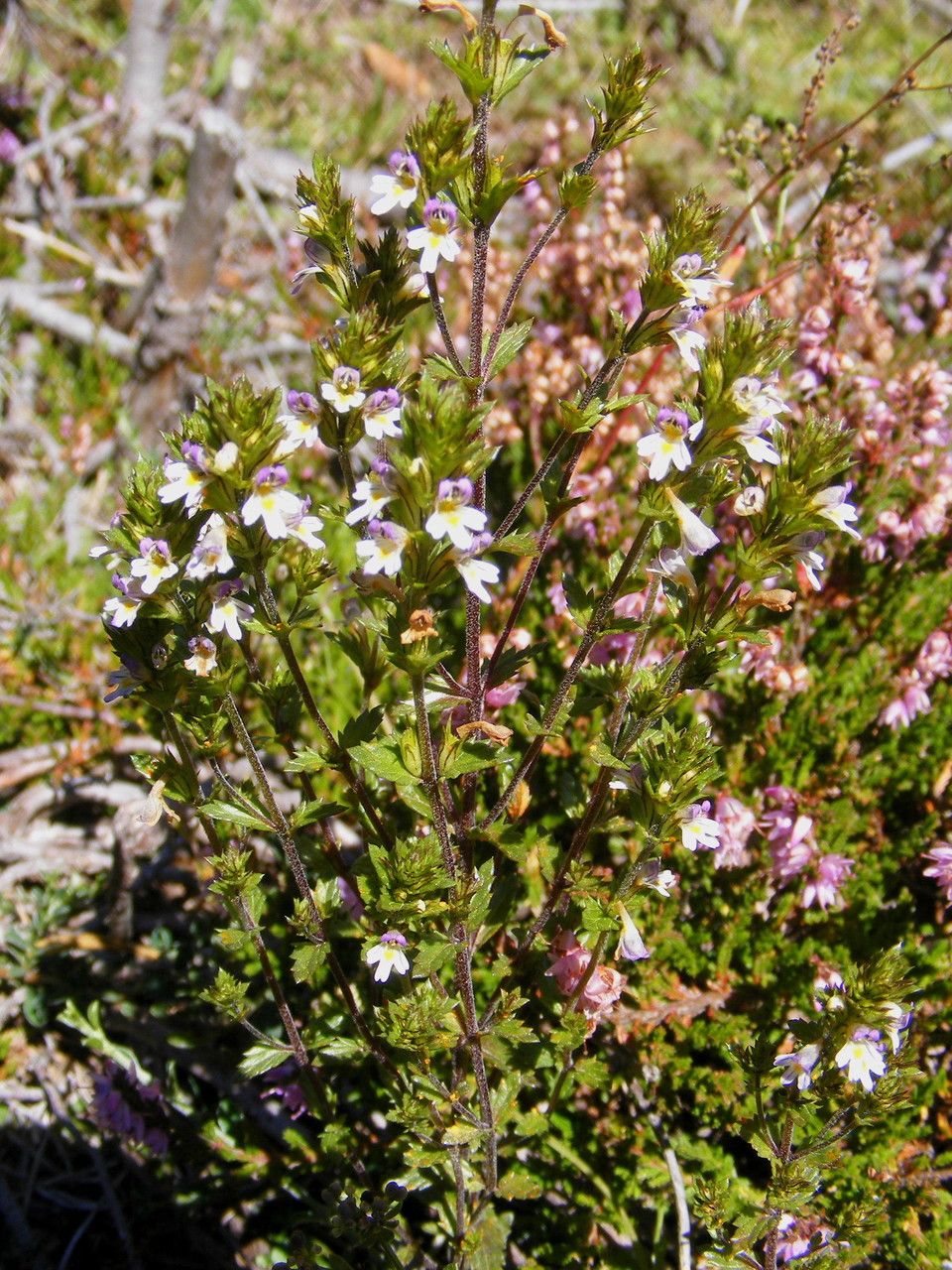
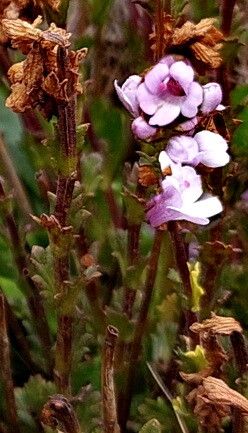
Euphrasia stricta, the drug eyebright, is an annual forb in the genus Euphrasia.It has been introduced in northeastern North America, where it is found in New England (except Connecticut), New York, Pennsylvania, Nova Scotia, New Brunswick, Prince Edward Island, Ontario, Quebec, the upper peninsula of Michigan, northern Wisconsin, Minnesota and Illinois. It is also found in Central Europe and Pyrenees The preferred growing location is on moist, calcareous sands, such as those on some moors and dunes. The plant is a hemiparasite and can steal water and salts from grasses.
Drug eyebright has strong disease resistance and is generally unlikely to suffer from illnesses. Still, it can be vulnerable to pests and diseases present in its environment. Such infections are usually mild. In terms of care, this plant requires moderate maintenance. It should be pruned regularly to maintain a good appearance and healthy growth. Fertilizing can also help encourage flowering. Drug eyebright is well suited for anyone with outdoor space, such as a garden or patio, and does not demand much experience in plant care. It may need more attention when grown indoors.
How to keep Euphrasia Stricta.
Light
Drug eyebright comes from habitats with dappled light, like forest understories or rocky places that offer natural shade. It thrives in partial sun but can also adapt to full sun conditions.
Water
Originating from moist, temperate regions, drug eyebright thrives in conditions with consistent moisture and some tolerance for moderate drought. To maintain optimal soil moisture without causing waterlogging, it should be watered twice a week. When grown indoors, it requires careful humidity management to support its delicate flowering process.
Temperature
Drug eyebright can tolerate a wide range of temperatures, but its distribution may still be constrained by certain combinations of moisture and heat. It grows best in warm summer climates with sufficient rainfall or watering. Extended periods of cloudy, rainy weather or sustained high temperatures raise the risk of Drug eyebright dying. In winter, adequate protection from cold can increase the plant's chances of survival.
Fertilizer
Drug eyebright benefits from regular, light applications of fertilizer to encourage healthy leaf growth. You should fertilize Drug eyebright about once a month during the summer months. Nitrogen is essential for foliage, and adding nitrogen-rich sources helps Drug eyebright thrive.
Pruning
Eyebright is a small herbaceous plant valued for its medicinal properties. To encourage healthy growth and airflow, prune the plant from early to late spring by removing any dead stems. Be careful not to over-prune, as this can lead to stunted growth. Always use clean tools to reduce the risk of disease.
Botanical profile.
- Plant Type
- Herb
- Life Cycle
- Annual
- Genus
- Euphrasia
- Family
- Orobanchaceae
- Hardiness Zone
- 5-9
- Mature Height
- 15 cm to 46 cm
- Mature Spread
- 5 cm to 15 cm
- Leaf Color
- Green
- Leaf Type
- Semi-evergreen
- Flower Color
- White, Purple
- Flower Size
- 2.54 cm to 5.08 cm
- Bloom Time
- Summer
- Planting Time
- Spring, Summer
- Harvest Time
- Late summer, Early fall, Mid fall
- Native Area
- Austria, Sweden, Slovakia, Montenegro, Croatia, Slovenia, Belarus, Russia, Germany, Estonia, Romania, Latvia, Belgium, France, Netherlands, Czech Republic, Bulgaria, Poland, Greece, Ukraine, Serbia, Lithuania, Norway, Italy, Kazakhstan, Spain, Switzerland, Denmark, Finland, Albania, Hungary
Other names.