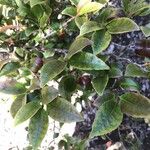
Eurya japonica
East Asian eurya · Wild tea
Description
Source: leafsnapEurya japonica, known as East Asian eurya, is a 1–3.5 m tall shrub in the Pentaphylacaceae family found in eastern China, Korea, and Japan. It is used as an ornamental plant. In shinto it is a sacred tree, whose leaves are used as sacrificial offerings.
Care Guide
💧 Water Every 2 weeks
The East Asian Eurya thrives in understory environments with intermittent moisture, demonstrating a moderate tolerance for drought. For optimal growth as an ornamental shrub indoors, water it every two weeks and maintain adequate humidity. Its evergreen foliage and ability to tolerate low light make it an attractive choice for indoor cultivation.
How should I water my East Asian eurya plant?
When watering your East asian eurya, you have a lot of flexibility in choosing how to do it. You can use common tools like watering cans, hoses, or even cups. It's important to apply the water directly to the soil and make sure all areas of the soil get evenly moistened, so that every part of the root system gets enough water. Using filtered water can be a good idea because tap water might contain harmful particles. It's also better to use water that is at or slightly above room temperature, as very hot or cold water can shock the plant. However, overall, the East asian eurya is usually fine with any kind of water you give it.
What should I do if I give too much or too little water to my East Asian Eurya plant?
Outdoor plants, especially newly planted ones or seedlings, are prone to inadequate watering. To ensure proper growth, remember to water them sufficiently for the first few months. Once their roots are established, East Asian eurya plants can rely on rain for hydration. When East Asian eurya is potted, overwatering becomes more likely. If you accidentally overwater your plant, take immediate action to address the situation. Stop watering to minimize the impact of overwatering. Inspect the roots by removing the plant from its pot. If no root rot is found, you can return the plant to its container. However, if there are signs of root rot, trim the affected roots and consider applying a fungicide to prevent further damage. Repot the plant in well-draining soil. For underwatered East Asian eurya, increase watering frequency. Drooping, drying, and falling leaves indicate underwatering, but they will recover quickly once watered adequately. Address underwatering promptly by adjusting your watering schedule.
How often should I water my East Asian eurya plant?
Most plants can rely on rainfall for normal growth outdoors. However, if your area lacks rainfall, you should provide adequate watering every 2 weeks in the spring and fall. In the summer, you will need to water more frequently. During the slower growth period in winter, water sparingly or not at all. Young or newly planted East asian eurya plants will require more frequent watering to help them establish and become drought-tolerant. For potted plants, you have two options to determine watering frequency. The first is a predetermined schedule of once a week or once every other week, but this may not consider the specific conditions of your East asian eurya's environment. The second option is to check the soil moisture and water when the top few inches have completely dried out. This is especially important during the plant's highest water needs in the summer.
How much water does my East Asian eurya plant need?
When watering your East Asian Eurya, you may be surprised to learn that it doesn't always require a lot of water. If the soil has only dried a few inches since your last watering, you can promote healthy growth by giving it around five to ten ounces of water each time. You can also base the volume of water on the moisture of the soil. To do this, take note of how many inches of soil have dried out between waterings. To ensure your East Asian Eurya receives adequate moisture, provide enough water to moisten all the layers of soil that have become dry since the last watering. If more than half of the soil has dried out, consider giving it more water than usual. In these cases, continue watering until you see excess water draining from the pot's drainage holes. If your East Asian Eurya is planted in an outdoor area that receives sufficient rainfall, it may not need additional watering. However, when the plant is young or establishing itself, ensure it receives 1-2 inches of rain per week. As it continues to grow and establish, it can rely solely on rainwater. Only during hot weather when there is no rainfall for 2-3 weeks should you consider giving it a full watering to prevent stress.
Am I watering my East Asian Eurya plant enough?
The East asian eurya often suffers from overwatering, which can be identified by yellowing leaves, leaf drop, and shriveled plant structure. Overwatering can also cause root rot. On the other hand, an underwatered East asian eurya will wilt and have brown or brittle leaves. If you notice signs of overwatering or underwatering, it is important to intervene and restore your plant's health.
☀️ Light Full sun
East Asian eurya thrives in full sun. This East Asian native is adapted to taking in a substantial amount of sunlight each day for optimal growth. It can also continue to develop, though more slowly, when light is somewhat reduced. Too little sunlight impedes healthy growth, and too much light can cause leaf scorching.
How many hours of sunlight per day do East Asian eurya plants need to grow healthily?
To ensure healthy growth, East Asian eurya should receive a minimum of 3-6 hours of sun daily. While this is the minimum requirement, plants that can tolerate part sun can also thrive in full sun. These plants are more flexible because they require less light for photosynthesis, unlike plants that specifically need either full sun or part shade.
What kind of sunlight does East Asian eurya require?
For optimal growth, East Asian Eurya thrives when placed in either full or partial sun. Ideally, they should receive direct morning sunlight. However, during summer, it is important to shield them from the intense afternoon sun. Excessive exposure to hot afternoon sun in moderate climates can result in leaf burn, which negatively affects the plant's overall health and aesthetic.
Can the sun harm East Asian eurya? How can we keep East Asian eurya safe from the sun and heat?
Indoor East Asian eurya plants can be harmed by direct sunlight if they are suddenly moved outdoors. To avoid this, it is best to gradually move the pots from a shaded area to a brighter spot. However, even plants that are used to the sun in the summer can be damaged by excessively hot weather. During a heatwave, it is crucial to keep the soil consistently moist to help the plants handle the extreme heat. To protect sensitive East Asian eurya plants during severe weather, you can either move them to areas with afternoon shade or cover them with a shade cloth.
Should East Asian eurya avoid the sun?
East Asian Eurya benefits from bright morning sun and some full sun exposure. However, it cannot handle the harsh, hot midday sun of summer. When planted in the ground, it can gradually adapt to the increasing intensity of the summer sun. However, a potted plant that has been indoors or in a protected location may suffer injury if suddenly exposed to direct summer sun during the hottest part of the day. To protect the plant from the strong afternoon sun, it is advisable to plant or place it in a shaded area during midday. This can be achieved by positioning it beneath taller trees or plants, or by using a building or landscape feature to provide shade.
What happens if East Asian eurya doesn't get enough sunlight?
When East Asian eurya plants do not receive enough sunlight, they may turn pale green or have drooping, yellow leaves. It is normal for some leaves to fall, but if no new leaves are growing back, it indicates a problem. If East Asian eurya plants that lack proper light do manage to grow, the new growth is usually weak, pale, and susceptible to bugs. By noticing these signs and adjusting the lighting conditions, significant improvements can be made.
🌡️ Temperature 15–37.8°C
East Asian eurya is an adaptable plant indigenous to temperate zones, usually doing well in conditions where temperatures range from 59 to 100.4 °F (15 to 38 ℃). During colder months, a warm indoor space or a heated greenhouse is recommended.
What temperature is best for East Asian eurya?
Plants are affected by colder temperatures because they have the same temperature as the surrounding air. When exposed to the sun, they can warm up again, but this doesn't happen in winter. The East Asian eurya thrives in a temperature range of 70~85℉(21~30℃). It can tolerate temperatures as low as 20~30℉(-6~0℃), and maybe even 15℉(-10℃), but not for extended periods because it can lead to frost damage. To ensure their well-being, the maximum temperatures should be around 70~85℉(21~30℃). Additionally, it is important to water them regularly and provide some shade to prevent wilting.
Do I need to change the temperature for East Asian Eurya as it grows at different stages?
When growing East Asian eurya, it's important to research and ensure the temperature is suitable. Some growers might consider lowering the plants' thermostats to save on HVAC costs. However, it's crucial to understand that temperature can impact the plants' flowering, pest management, and overall quality. During winter, East Asian eurya species may enter a dormant state, causing growth to halt. As the season changes and temperatures rise, the base temperature increases, leading to faster growth. Species naturally found in warmer habitats have higher optimal temperatures compared to those thriving in cooler climates. Exposing East Asian eurya seeds to cool temperatures may result in reduced uniformity and delays. For flowering, it may be beneficial to lower the temperature, but not during other phases. Cooler nighttime temperatures also require less watering, so adjust irrigation accordingly.
How can I make sure that my East Asian eurya stays warm during the cold seasons?
To help the plant adapt to colder temperatures, stop using fertilizer to prevent new growth and instead allow the existing leaves to become more resilient. To keep the East Asian eurya warm, consider constructing cages or trellises around it. Another option is to use heat mats to gently warm the soil, providing constant ideal temperature conditions for the plant.
How can I prevent East asian eurya from getting damaged by temperature?
To protect the East Asian Eurya from frost during winter, cover it with cloths, tarps, burlaps, sheets, or plastic buckets. Just make sure to keep them secured so they stay in place and act as insulators without being blown away by the wind. However, be careful not to let plastic sheets or burlap covers touch any part of the fruit or foliage, as this can transfer the cold temperatures and cause burns. Once the daytime temperatures start to rise, it's safe to remove the covers.
Should I change the temperature for East asian eurya during different seasons?
When growing the East Asian Eurya in spring, it's important to increase the humidity because the air temperature tends to be cooler at that time. A dry temperature can be stressful for various species, so increasing humidity can be helpful. In summer, the large greenhouse cover and warm temperature will naturally result in higher humidity in the air. However, excessive humidity can lead to issues such as condensation on the greenhouse walls, which can affect pollination and lead to infections when the water drips onto the leaves. Therefore, it is important to make adjustments based on the temperature and consider spraying water on hotter days of the year.
💨 Humidity
🪴 Soil 5-7
🌱 Fertilizer
Timing is important when fertilizing East Asian Eurya. Apply fertilizer in early spring and continue monthly through early summer. Fertilizer encourages attractive blooms and supplies energy during both dormant and active growth phases.
Why should I put fertilizer on my East Asian eurya plant?
There are several important reasons to fertilize your East Asian Eurya. One obvious reason is that it will help produce beautiful blooms. Fertilizing in early spring is a great way to ensure excellent flowers during that season. Additionally, fertilizer provides the plant with energy that can be stored in the ground during its dormant phases. By giving your East Asian Eurya extra nutrients during fall planting or late spring, it will have more energy to use when active growth resumes.
When should I fertilize my East Asian eurya?
Timing is crucial when it comes to fertilizing East Asian Eurya. If fertilizer is applied too early, when the plant is still dormant, it cannot be used effectively and will be washed away by rainwater, resulting in waste and pollution. To avoid this, the first application of fertilizer should be done in early spring, and then continue fertilizing monthly until early summer.
When should I not put fertilizer on my East Asian Eurya?
To ensure healthy bloom growth, it is important to be mindful of the nitrogen content in the fertilizer given to East Asian Eurya. Too much nitrogen can result in excessive leaf growth but few blooms. Look for a fertilizer with a lower nitrogen level compared to other nutrients. Avoid fertilizing East Asian Eurya after early autumn, as this can encourage rapid growth right before winter. Additionally, refrain from fertilizing during hot and dry periods, as dry soil is not as effective in delivering fertilizer and can stimulate growth that requires more water that might not be available. It's best to apply fertilizer earlier in the season when temperatures are cooler. Lastly, be cautious not to inadvertently overdose the tree/shrub with fertilizer, as East Asian Eurya can absorb fertilizer applied to nearby plants or lawns.
What kind of fertilizer does my East Asian eurya plant need?
To optimize the growth of your East Asian Eurya, it is recommended to use a fertilizer that contains a balanced mix of the three main plant nutrients, with a slightly higher concentration of phosphorus. An alternative approach is to enhance the soil by incorporating organic materials like compost, worm castings, and manure. Experienced gardeners often supplement with water-soluble fertilizers containing phosphorus during the appearance of flower buds. This practice promotes better flower development, resulting in larger and longer-lasting blooms. Fertilizers for your East Asian Eurya can take various forms, but liquids and powders are considered among the best options. Regardless of the form you choose, it is important to dilute the fertilizer and apply it while watering your East Asian Eurya.
How do I add fertilizer to my East Asian eurya plant?
To properly fertilize your East Asian eurya, always follow the specific fertilizer directions and conduct research on its usage. Over-fertilization should be avoided, therefore determining the correct amount is very important. A general guideline is to use the tree's age (if known) or trunk diameter as reference. Approximately one-tenth of a pound of fertilizer per year or per inch of trunk, with a maximum of one pound, can be estimated. Granular and organic fertilizers like blood meal should be applied by sprinkling them around the base of the tree, extending up to the drip line (below the outermost branches). However, make sure the fertilizer does not touch the trunk. Over time, the granules will break down and seep into the soil, getting absorbed by the roots. After fertilizing, it is recommended to spread a one-inch layer of compost around the tree's base and water thoroughly.
🪴 Pot & Repot
✂️ Pruning
Pruning East Asian Eurya in winter is essential for promoting healthy growth. By removing dead branches and shaping the plant during its dormant phase, you minimize stress, improve airflow, and prevent pests. These actions enhance the plant's ornamental value. Regular pruning also helps maintain its form and vitality.
🌿 Propagating
🐛 Diseases & pets
☠️ Toxicity
Characteristics
- Plant Type
- Tree, Shrub
- Life Cycle
- Perennial
- Genus
- Eurya
- Family
- Pentaphylacaceae
- Hardiness Zone
- 8-11
- Mature Height
- 0.91 m to 3.35 m
- Mature Spread
- 1.22 m to 2.74 m
- Leaf Color
- Dark Green
- Leaf Type
- Evergreen
- Flower Color
- White
- Flower Size
- 0.51 cm to 0.76 cm
- Bloom Time
- Mid spring, Late spring, Early summer
- Planting Time
- Spring, Summer, Autumn
- Harvest Time
- Mid summer, Late summer
- Native Area
- India, Indonesia, Vietnam, Myanmar, Japan, South Korea, China