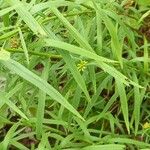
Euthamia graminifolia
Flat-Top Goldenrod · Common goldentop · Flat-top Goldentop · Grass-leaved Goldenrod · Slender Goldentop
Description
Source: leafsnapEuthamia graminifolia, the grass-leaved goldenrod or flat-top goldentop, is a North American species of plants in the family Asteraceae.It is native to much of Canada (from Newfoundland to British Columbia), and the northern and eastern United States (primarily the Northeast, the Great Lakes region, and the Ohio Valley, with additional populations in the Southeast, the Great Plains, and a few scattered locations in the Pacific Northwest). There are also introduced populations in Europe and Asia.
🌳 Grass-leaved goldenrod is frequently underestimated for its capacity to signal the presence of certain metals in the soil, including gold. Prospecting botanists sometimes search for grass-leaved goldenrod as a natural geobotanical indicator when investigating new mineral deposits. Also, because the plant prefers particular soil conditions, it is a valuable resource in ecological assessments of soil health and in restoration projects.
🎭 Currency, Fortune-telling
Care Guide
💧 Water
Grass-leaved goldenrod naturally thrives in moist meadows, preferring environments with consistent moisture. It also exhibits moderate drought tolerance. To maintain optimal moisture levels, water it weekly. This herbaceous perennial is best grown outdoors, where it benefits from natural rainfall that complements its growth cycles.
How should I water my Grass-leaved goldenrod?
To properly water the Grass-leaved goldenrod, it is best to use filtered water at room temperature. Filtered water is preferred because tap water may contain harmful particles. Additionally, the water should be at room temperature or slightly warmer since the Grass-leaved goldenrod thrives in warm environments and cold water can be a shock to its system. Instead of using overhead watering, it is recommended to apply the filtered room temperature water directly to the soil until it is completely soaked. This method benefits the plant by moisturizing its roots and facilitating the spread of nutrients throughout the soil.
What should I do if I give my Grass-leaved goldenrod too much or too little water?
Overwatering is a common issue for Grass-leaved goldenrod, causing wilting and yellowing of the stems and leaves. It can also lead to diseases like root rot, mold, and mildew, which can be fatal for the plant. Underwatering is less common, but it can make the leaves brittle and brown. It is important to recognize the signs of overwatering early to prevent irreversible damage. Reduce watering and improve soil drainage if overwatering is detected. Increase watering if signs of underwatering are present.
How frequently should I water my Grass-leaved goldenrod plant?
If your Grass-leaved goldenrod is in a pot, the best way to determine if it needs water is by checking the soil. Stick your finger into the soil and if the top two to three inches are dry, then it's time to water. If you have your Grass-leaved goldenrod planted in the ground outdoors, you can also use this method to test the soil. When you find that the first few inches of soil have dried out, it's time to water. In the spring and early fall, you will usually need to water this plant about once a week using this method. However, during extremely hot weather, you may need to water it two or more times per week. It's worth noting that mature, well-established Grass-leaved goldenrod plants have a great ability to withstand drought.
How much water does my Grass-leaved goldenrod plant need?
To properly water your Grass-leaved goldenrod, you should not hesitate to give it a generous amount of water. Check the soil first - if the top two to three inches are dry, it's time to water. Make sure to thoroughly soak the soil, allowing the water to reach every part. It should be enough water to make excess water flow out through the pot's drainage holes. If you don't see any excess water draining, you have probably not watered enough. However, be careful not to let the water build up inside the soil, as this can harm the plant. On the other hand, if water is not draining through the pot, it may indicate that the soil doesn't have good drainage, which is harmful to the plant. Avoid this by using well-draining soil. If the plant is outdoors, providing it with 1 inch of rain per week should be sufficient.
How do I water my Grass-leaved goldenrod as it grows?
The water needs of the Grass-leaved goldenrod vary depending on its growth stages. In the first few years of the plant's life or when it's newly transplanted, it requires more water than usual. During this phase, the Grass-leaved goldenrod focuses on developing new roots to support future growth, and these roots perform best with slightly more moisture. As the plant matures, it will require less water. Additionally, during the bloom period, when flowers are developing, the Grass-leaved goldenrod may need increased watering due to the significant amount of moisture required for optimal flower growth.
☀️ Light Full sun
Grass-leaved goldenrod performs best with abundant sunlight, though it can tolerate partial shade. Native to sunny habitats, it has adapted to make full use of plentiful light. Both too little and too much light can impede its healthy growth and development.
What are the sunlight requirements for grass-leaved goldenrod?
Grass-leaved goldenrod requires generous sun exposure for optimal growth, thriving best in full sun conditions, which means it should receive more than 6 hours of sunlight daily. However, it can also endure partial sun, receiving about 3-6 hours of sunlight. It's important to watch how sunlight moves through your garden and choose spots that offer a balance of light and shade, ensuring the plant's happiness.
How can artificial lighting be used for indoor grass-leaved goldenrods?
For grass-leaved goldenrods grown indoors, adequate lighting is crucial, especially when natural sunlight is insufficient. Artificial lights, such as LEDs, are recommended because they can be customized to provide specific wavelengths of light. Full sun plants need 30-50W/sq ft, partial sun plants 20-30W/sq ft, and full shade plants 10-20W/sq ft of artificial light. The light source should be placed 12-36 inches above the plant, mimicking natural sunlight for 8-12 hours per day to ensure healthy growth.
What are the symptoms of inadequate lighting for grass-leaved goldenrod?
Symptoms of light deficiency in grass-leaved goldenrod include smaller new leaves, leggy or sparse growth due to elongated spaces between leaves or stems, faster leaf drop as the plant sheds older leaves to conserve resources, slower or halted growth, and lighter-colored new leaves indicating a lack of chlorophyll. Excessive sunlight can also lead to chlorosis (yellowing leaves due to chlorophyll breakdown), sunscald (damage from intense light exposure), leaf curling (a defense mechanism against sunlight), wilting from excessive water loss, and leaf scorching (brown or crispy leaf edges from too much sun).
How can I manage sunlight exposure for grass-leaved goldenrod to promote healthy growth?
To manage sunlight exposure for healthy growth of grass-leaved goldenrod, gradually move plants to sunnier locations each week until they receive at least 6 hours of direct sunlight daily. Use a south-facing window for indoor plants, keeping curtains open during the day. Consider artificial light if the plant is large or not easily movable, ensuring it gets at least 8 hours of light daily. For outdoor plants, it's crucial to avoid sudden changes in light intensity to prevent sunburn. Reducing obstructions like trees by pruning and transplanting smaller plants during their dormant period can also improve sunlight exposure.
🌡️ Temperature 0–35°C
The grass-leaved goldenrod favors temperatures between 32 and 95 °F (0 and 35 °C). It comes from temperate regions with moderate temperatures. In summer, the grass-leaved goldenrod can withstand higher heat if it is kept consistently moist. In winter, the plant must adapt to colder conditions by entering dormancy.
What are the temperature preferences and native regions for grass-leaved goldenrod?
Grass-leaved goldenrod, or Euthamia graminifolia, thrives in temperatures ranging from 32 to 95°F (0 to 35°C), making it well-suited to temperate regions with moderate temperatures. The plant can tolerate the higher end of its temperature range during summer if it is kept consistently moist. In contrast, during winter, it naturally adjusts by entering a dormant state. It exhibits strong resistance to cold, generally not requiring special frost protection measures, except in extreme conditions where temperatures drop below -35°C.
How should grass-leaved goldenrod be cared for in winter?
To prepare grass-leaved goldenrod for winter, especially if temperatures are anticipated to fall below -35°C, it's advisable to protect it from the cold. This can be done by covering the plant with soil or straw. Additionally, it's recommended to water the plant abundantly before the first freeze of autumn to ensure the soil is moist when it freezes. This practice helps prevent drought and water scarcity for the plant during the winter and the early spring months.
What are the symptoms of grass-leaved goldenrod being affected by low temperatures?
Though grass-leaved goldenrod is generally cold-tolerant and fares best above 0°C, keeping it above -30°C during winter is advisable. If temperatures fall below -35°C, the plant may not show immediate damage in winter, but there could be a noticeable decline in sprouting come spring, or it might not sprout at all. The recommended solution for this issue is to remove any parts of the plant that have failed to sprout in the spring.
How does high temperature affect grass-leaved goldenrod and what are the solutions?
During the summer months, it's important to prevent the temperature around grass-leaved goldenrod from exceeding 35°C. Exposure to temperatures above 38°C can cause the leaves to lighten in color, curl, become susceptible to sunburn, and, in severe cases, lead to the entire plant wilting and drying out. To counteract this, trim away any sunburned or dried parts of the plant. Moving the plant to provide shade during the midday and afternoon sun or using a shade cloth can offer protection. Additionally, watering the plant in the morning and evening will help maintain soil moisture.
💨 Humidity
🪴 Soil 6-7
🌱 Fertilizer
A single application of fertilizer in spring is generally enough for Grass-leaved goldenrod, although repeated feedings can maximize growth. Apply fertilizer about once a month to every six weeks. Fertilization improves the leaves' appearance and function, helping maintain uniform color and a healthy texture. It also promotes root development and nutrient uptake, supporting the plant's long-term health.
🪴 Pot & Repot 2-3 years
When repotting Grass-leaved goldenrod, select a pot 1–2 inches (2.5–5.1 cm) larger with ample drainage. Use a well-draining, potting mix. Repot in spring or fall, ensuring the root ball sits slightly lower than the rim of the flower pot. Water thoroughly after repotting and place in a warm spot with indirect sunlight.
✂️ Pruning
Grass-leaved goldenrod is a plant known for its tall stems and vibrant yellow flowers. To keep it healthy and looking its best, it benefits from pruning between early to late spring. By removing spent blooms and any leggy growth, you can encourage denser foliage and help the plant maintain its shape. Pruning not only helps with appearance but also improves airflow and sunlight penetration, which promotes strong growth and abundant flowering. For detailed pruning methods, consult specific guides.
🌿 Propagating
🐛 Diseases & pets
☠️ Toxicity
Characteristics
- Plant Type
- Herb
- Life Cycle
- Perennial
- Genus
- Euthamia
- Family
- Asteraceae
- Hardiness Zone
- 3-9
- Mature Height
- 0.61 m to 1.22 m
- Mature Spread
- 30 cm to 61 cm
- Leaf Color
- Green
- Leaf Type
- Evergreen
- Flower Color
- Yellow
- Flower Size
- 2.54 cm
- Bloom Time
- Mid summer
- Planting Time
- Spring
- Harvest Time
- Mid summer, Late summer, Early fall