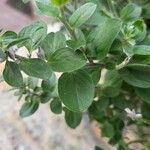
Evolvulus glomeratus
Blue daze · Brazilian dwarf morning-glory · Dwarf morning glory
Description
Source: leafsnapEvolvulus glomeratus, commonly known as Blue Daze or Brazilian Dwarf Morning Glory, is a low-growing perennial plant belonging to the Convolvulaceae family. Native to Brazil and other parts of South America, it has been widely cultivated worldwide for its attractive blue flowers and easy-to-grow nature. The plant typically grows up to 30 cm in height and spreads up to 60 cm in width. It features small, oval-shaped green leaves covered with fine hairs. The trumpet-shaped flowers, about 2 cm in diameter, appear in clusters at the ends of stems throughout the summer. Evolvulus glomeratus prefers full sun exposure but can tolerate partial shade. It thrives in well-drained soil rich in organic matter but can also grow in poorer soils, provided it receives adequate water. Regular watering is essential during dry spells or hot weather, as the plant does not tolerate drought well. However, overwatering should be avoided to prevent root rot and other fungal diseases. Due to its low-growing habit and attractive blue flowers, Evolvulus glomeratus is commonly used for ground cover purposes, blooming from summer through fall. It also makes an excellent container plant for patios or balconies, where its trailing stems can spill over the edges, creating an eye-catching display. Overall, Evolvulus glomeratus is a beautiful ornamental plant that requires minimal care while providing maximum visual impact wherever it's planted!
Care Guide
💧 Water Every 7 days
Blue daze, which originates from tropical regions, thrives in humid conditions and needs watering every 1-2 weeks. The soil should be kept evenly moist but not soggy. This resilient plant adapts well to different rainfall patterns, making it a versatile choice for various climate zones.
☀️ Light Full sun
Blue daze comes from open environments, like sunny meadows and forest edges, which provide ample light. It thrives in full sun but can also tolerate partial sun, adapting well to various sunlight conditions.
🌡️ Temperature 20–37.8°C
Blue daze is well adapted to temperature, able to endure high heat and wide temperature swings. In hot weather, attention should be paid to watering and providing suitable shade to avoid sunburn. However, Blue daze has limited tolerance for low temperatures. While it can handle some cold, very low temperatures can cause frost damage.
💨 Humidity
🪴 Soil 5-7
🌱 Fertilizer
🪴 Pot & Repot
✂️ Pruning
Because these plants self-clean, deadheading isn't necessary to remove spent blooms. Trimming these plants back during the growing season, on the other hand, will keep them bushy and less sprawling.
🌿 Propagating
🐛 Diseases & pets
☠️ Toxicity
The dwarf morning glory has no known toxic trait.
Characteristics
- Plant Type
- Shrub
- Life Cycle
- Annual
- Genus
- Evolvulus
- Family
- Convolvulaceae
- Hardiness Zone
- 10-12
- Mature Height
- 15 cm to 46 cm
- Mature Spread
- 61 cm to 91 cm
- Leaf Color
- Green, Dark Green
- Leaf Type
- Evergreen
- Flower Color
- Blue
- Flower Size
- 2.54 cm
- Bloom Time
- All year round
- Planting Time
- Spring, Summer, Autumn
- Harvest Time
- All year round
- Native Area
- North and South America