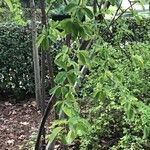
Exochorda racemosa
Common pearlbrush · Common pearlbush · Pearlbrush · Pearlbush
Description
Source: leafsnapExochorda racemosa, commonly known as the Pearl Bush or Bride's Bush, is a deciduous shrub in the Rosaceae family. Native to China, this plant has been widely cultivated in gardens and parks around the world for its stunning white spring blossoms. It can grow up to 3 meters tall and features a rounded shape with arching branches. The leaves of Exochorda racemosa are oval-shaped, dark green, and have serrated edges. The plant produces flowers on long racemes, which can reach up to 15 cm in length. Each flower has five pure white petals with a yellow center. Exochorda racemosa thrives in well-drained soil and can be grown in full sun or partial shade. It is relatively easy to care for, requiring minimal maintenance once established, though it may benefit from pruning after flowering to maintain its shape. This shrub's ornamental value makes it an excellent choice for garden borders or as an accent plant in mixed borders or containers. Its delicate white flowers, resembling pearls on a string, are highly favored by florists for wedding bouquets. Overall, Exochorda racemosa is an attractive shrub that adds elegance and charm with its beautiful spring blooms wherever it is planted.
💡 Exochorda racemosa, a deciduous shrub native to northern China, blooms early in the season and can reach a height of up to 4.5 meters.
Care Guide
💧 Water Every 7 days
The common pearlbrush thrives in temperate climates where consistent moisture is present during the growing season. Once it is established, this plant becomes drought-tolerant and prefers watering every two weeks. It performs better outdoors than indoors and enters dormancy during the colder months, needing significantly less water to conserve resources during this time.
☀️ Light Full sun
Common pearlbrush does best with abundant sunlight but can also tolerate moderate sun exposure. In its native habitat it receives ample sun, which promotes healthy growth. However, too much or too little light can adversely affect the plant, resulting in damage or stunted growth.
What are the sun requirements for Common Pearlbrush?
Common Pearlbrush flourishes when exposed to more than 6 hours of sunlight daily, categorizing it as requiring full sun. However, it can also adapt to partial sun conditions, which entail about 3-6 hours of sunlight per day. To ensure the plant's health and growth, observe the movement of sunlight through your garden, aiming to place your plants in locations that offer a beneficial light and shade balance.
Can Common Pearlbrush thrive under artificial lighting?
Yes, Common Pearlbrush can grow under artificial lighting, which becomes particularly useful in environments where natural sunlight is scarce, such as during winter or in less sunny indoor spaces. Artificial lights, like LEDs that provide specific light wavelengths, can supplement plant growth. For optimal results, full sun plants require 30-50W per square foot, partial sun plants need 20-30W per square foot, and full shade plants should have 10-20W per square foot of artificial light. It’s important to place the light source 12-36 inches above the plant and ensure it receives 8-12 hours of light daily, mimicking natural sunlight conditions as closely as possible.
What symptoms indicate Common Pearlbrush is getting insufficient light?
Symptoms of insufficient light for Common Pearlbrush include smaller new leaves, leggy or sparse growth, faster leaf drop, slowed or halted new growth, pale or irregularly colored new leaves indicating a lack of chlorophyll, chlorosis or yellowing of leaves, sunscald, leaf curling as a defense mechanism against overexposure, wilting due to water loss, and leaf scorching. These symptoms suggest the need for increased sunlight exposure or the use of artificial lighting to promote healthier growth.
How can I address insufficient sunlight exposure for my Common Pearlbrush?
To combat insufficient sunlight exposure for Common Pearlbrush, consider gradually moving your plants to sunnier locations, ensuring at least 6 hours of direct sunlight daily. For indoor plants, use south-facing windows or artificial grow lights for 8 hours a day. For outdoor plants, move them to better-lit areas gradually to prevent sunburn. Removing obstructions can also help, such as pruning trees that block sunlight. For smaller plants, consider transplanting to a sunnier spot during their dormant period, usually late winter or early spring, ensuring to move the root and soil ball together to a location with ample sunlight and good drainage.
🌡️ Temperature 5–32.2°C
Common pearlbrush is native to temperate regions and prefers temperatures in the range of 41 to 89.6 °F (5 to 32 ℃). It favors cooler climates and should be moved to a shaded spot when temperatures rise. In winter, protect it from severe frosts since it prefers mild conditions.
What is the native climate for Common pearlbrush?
Common pearlbrush, botanically known as Exochorda racemosa, is native to temperate regions and thrives in temperatures ranging from 41 to 89.6 °F (5 to 32 °C). It prefers cooler climates and should be moved to a shaded area when temperatures rise. The plant is well-adapted to mild conditions during winter and has significant cold resistance, although it should be protected if temperatures are expected to drop below -30°C.
How do you protect Common pearlbrush in winter?
To protect Common pearlbrush during winter, particularly if temperatures are forecasted to fall below -30°C, it's important to wrap the trunk and branches with insulating materials such as non-woven fabric or cloth. Additionally, it's recommended to water the plant abundantly before the first freeze in autumn to ensure the soil remains moist and enters a frozen state. This helps prevent drought and water scarcity for the plant during winter and early spring.
What are the key symptoms of temperature stress in Common pearlbrush and how can they be addressed?
Common pearlbrush shows specific symptoms under temperature stress. For low temperatures below -30°C, although cold-tolerant, the plant's branches may become brittle and dry by spring, with no new shoots emerging. It is important to prune away any dead branches in spring. Under high temperatures, specifically above 35°C, leaves may lighten in color, tips may dry and wither, and the plant can become more susceptible to sunburn. To combat this, trim the sunburned parts, provide shade during intense midday and afternoon sun, and ensure the soil remains moist by watering in the morning and evening.
💨 Humidity
🪴 Soil 6-7
🌱 Fertilizer
The timing of fertilization is important for Common pearlbrush. Apply fertilizer in early spring and repeat it monthly through early summer. Fertilizer encourages attractive blooms and supplies energy both during dormant periods and during active growth.
🪴 Pot & Repot 2-3 years
The common pearlbrush is a medium-sized shrub that requires repotting every 2 to 3 years, ideally in early spring. When repotting, use a larger container with well-draining soil to ensure the plant remains healthy. Keep the soil consistently moist but avoid waterlogging. Ensure the shrub receives plenty of sunlight and is sheltered from strong winds for optimal recovery and growth.
✂️ Pruning
The common pearlbrush is known for its striking white blooms in the spring. To keep the plant healthy and looking its best, prune it after it has finished flowering. This involves removing dead wood, thinning out some branches, and shaping the plant. Avoid heavy pruning, as this can be harmful. Regular pruning improves air circulation, reduces the risk of disease, and helps maintain the plant's visual appeal.
🌿 Propagating
🐛 Diseases & pets
☠️ Toxicity
Characteristics
- Plant Type
- Shrub
- Life Cycle
- Perennial
- Genus
- Exochorda
- Family
- Rosaceae
- Hardiness Zone
- 4-8
- Mature Height
- 3.05 m to 4.88 m
- Mature Spread
- 3.05 m to 4.57 m
- Leaf Color
- Green
- Leaf Type
- Deciduous
- Flower Color
- White
- Flower Size
- 2.54 cm to 3.56 cm
- Bloom Time
- Mid spring, Late spring
- Planting Time
- Spring, Autumn
- Harvest Time
- Early summer, Mid summer
- Native Area
- Uzbekistan, Tajikistan, China, Kyrgyzstan