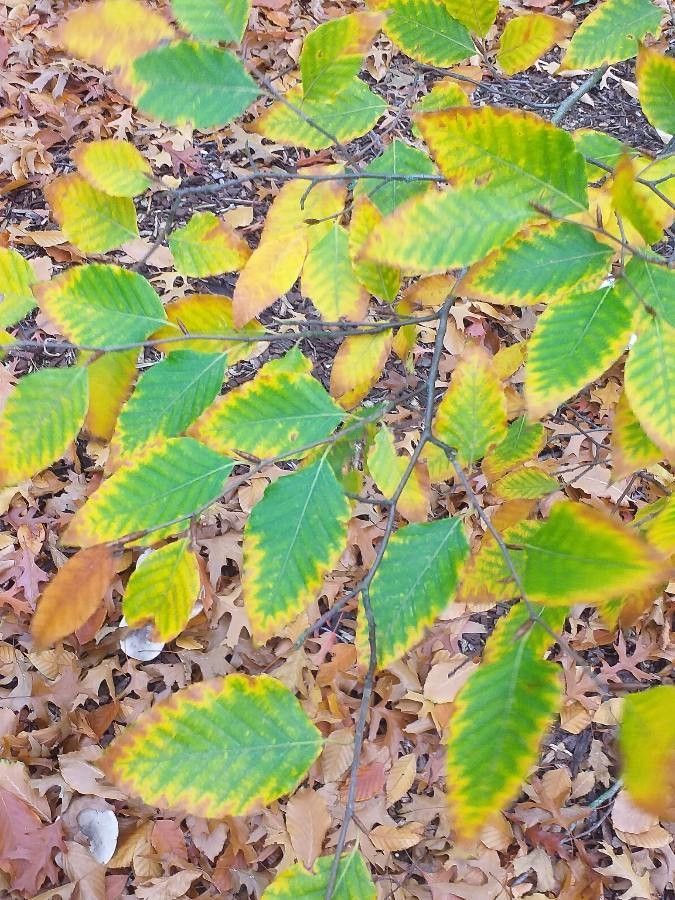
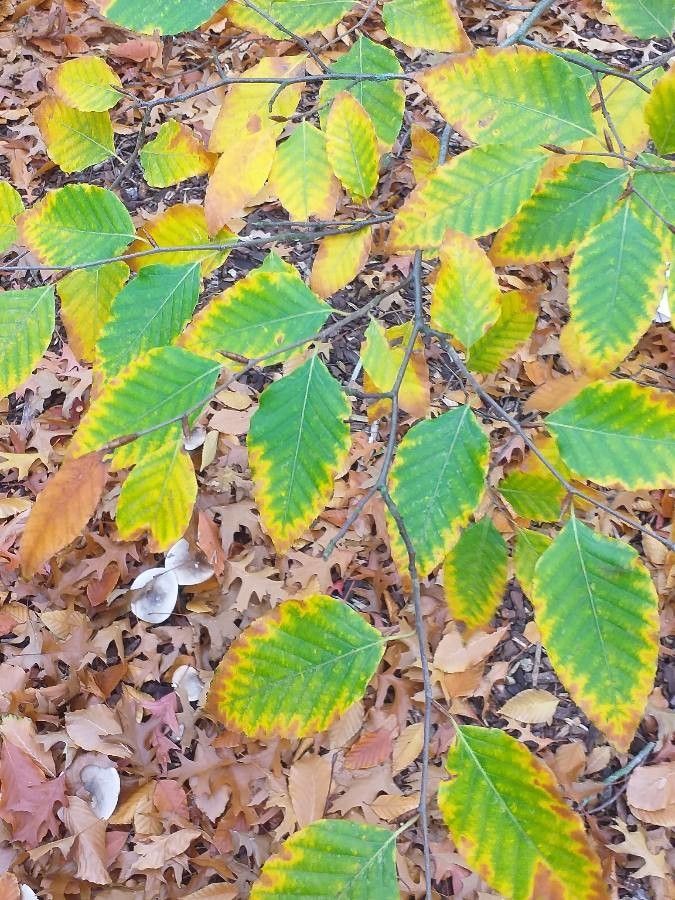
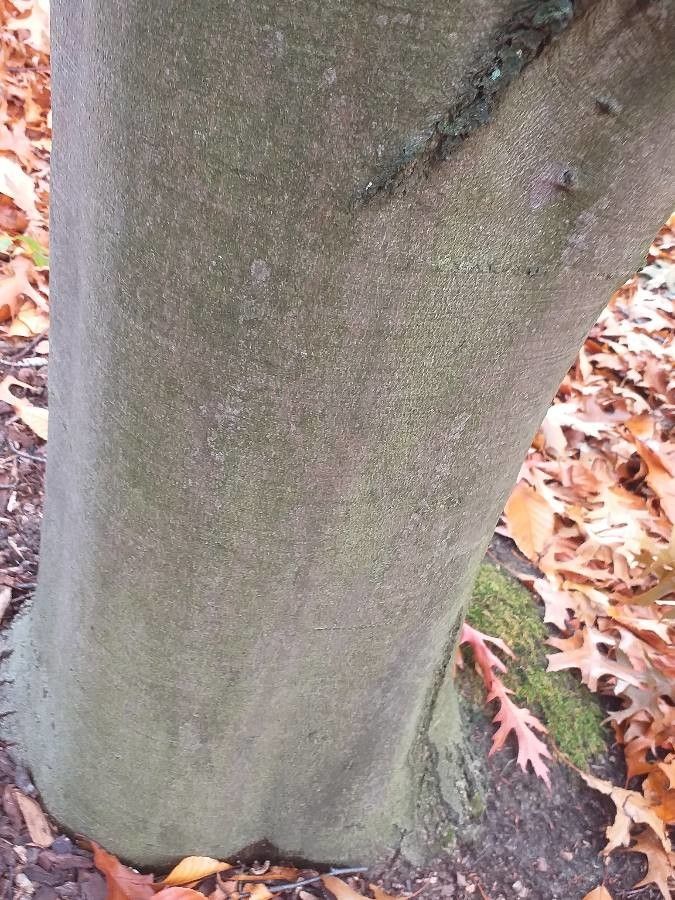
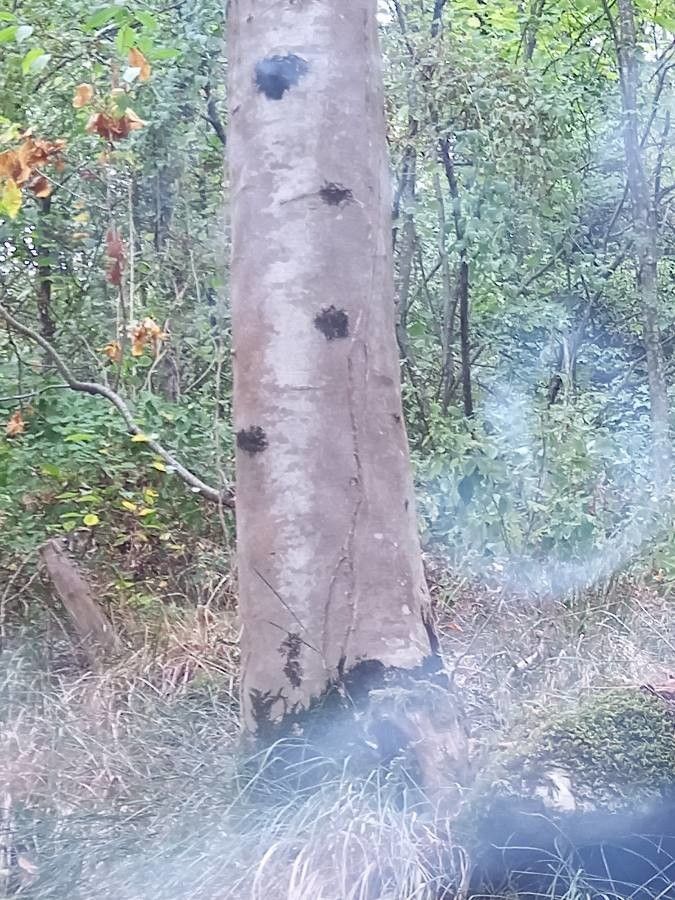
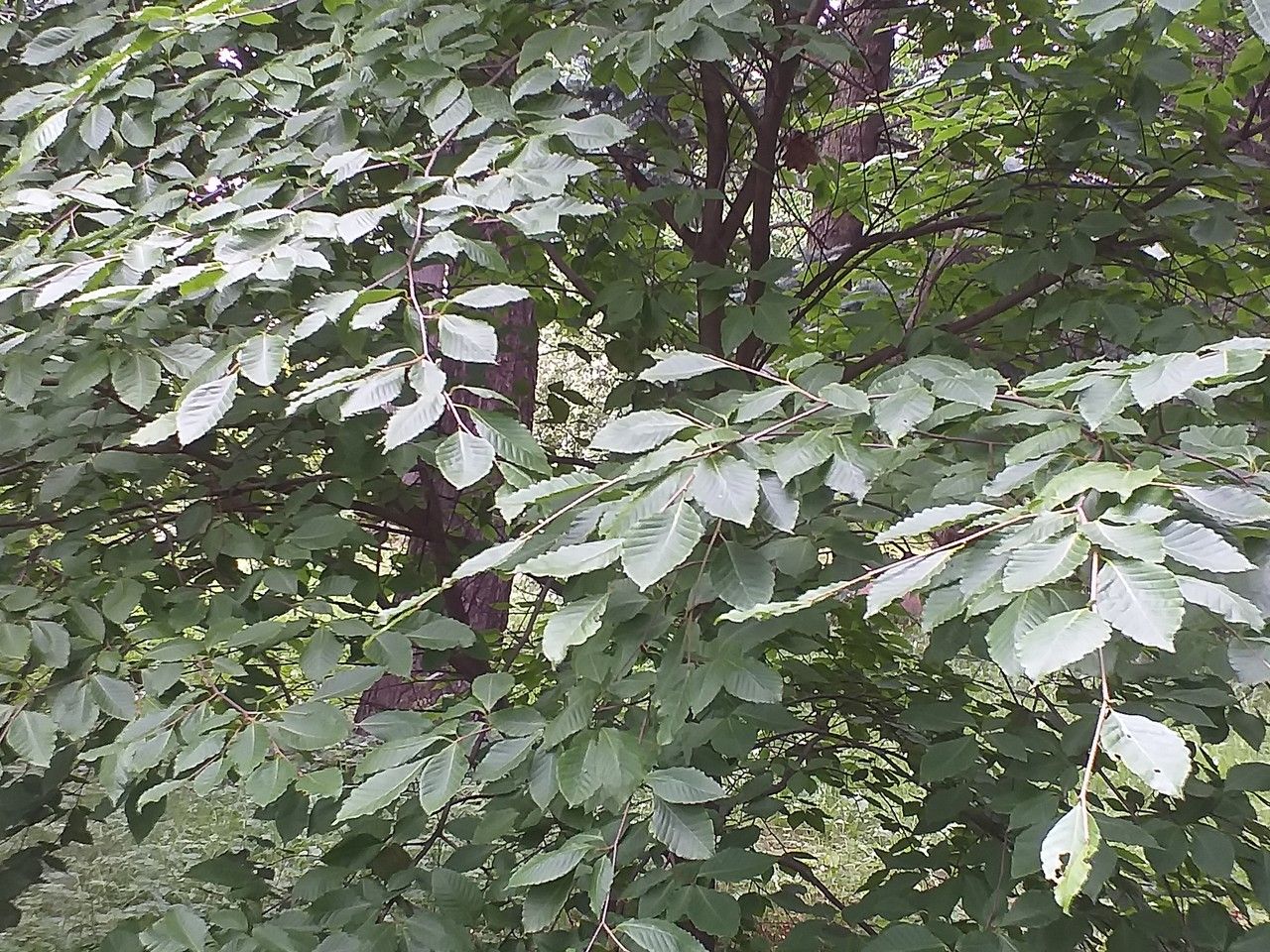
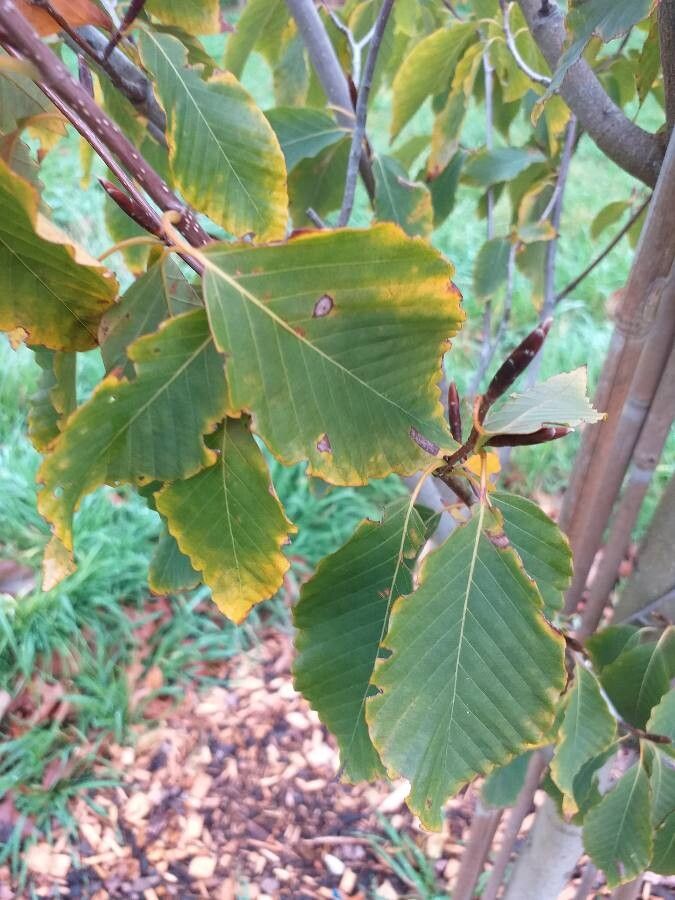
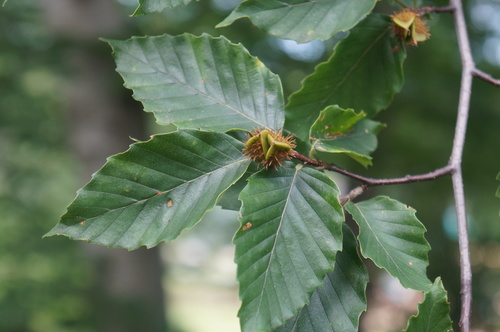
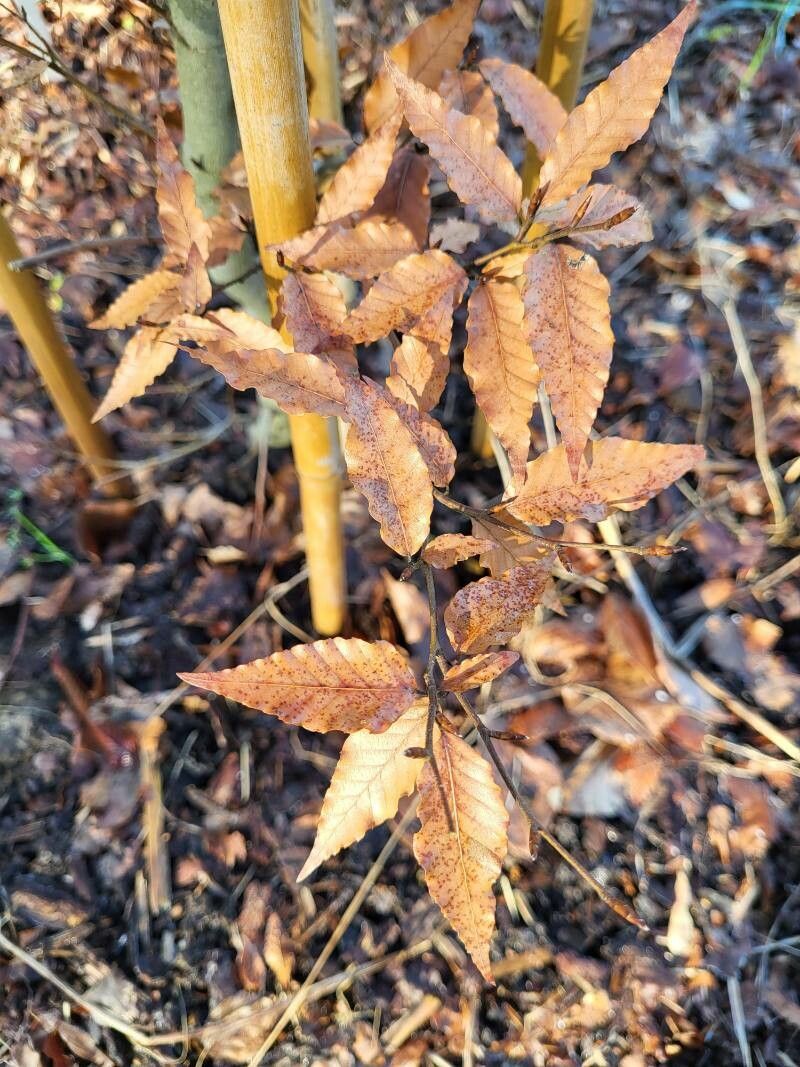
Fagus lucida is a species of tree in the family Fagaceae. It is a tree up to 25 metres (82 ft) tall native to southern and eastern China. Seeds and young leaves are edible.
Shining beech is fairly disease-resistant and is usually not prone to illnesses. Regarding care, the plant is relatively low-maintenance. When grown outdoors it needs only minimal watering, and larger specimens typically do not require pruning. Smaller plants, however, should be pruned after they finish blooming. Shining beech is suitable for anyone with outdoor space, such as a garden or deck, and does not require much care experience.
How to keep Fagus Lucida.
Light
Shining beech naturally occurs in places like forest understories and rocky areas, where it experiences natural shade. It prefers partial sun but can tolerate both full sun and full shade, showing its versatile, hardy nature.
Water
The shining beech originates from moist, temperate forests and thrives in high humidity and consistent moisture. It requires watering twice a week. As a shade-loving outdoor plant, it benefits from mulching to help retain soil moisture, which mimics the leaf litter found in its natural habitat.
Temperature
Shining beech shows strong adaptability to different climate conditions, from hot summers to cold winters. Nonetheless, it has an optimal temperature range for growth. If temperatures become too high, the plant is vulnerable to heat and humidity stress, which can lead to its death. In areas where temperatures approach the lower limit of its cold tolerance, providing insulation to protect the plant is important.
Fertilizer
Fertilize your Shining beech in early spring to encourage healthy growth. Regular feeding boosts its overall health, producing vigorous growth, increased resilience to tough conditions, and improved resistance to diseases and pests. Keep to a defined fertilization schedule for your Shining beech to maintain foliage that is vibrant, richly colored, and lush in appearance.
Pruning
The shining beech tree is known for its glossy leaves and smooth bark. To maintain its health and appearance, it benefits from pruning in early spring. Start by removing any dead or diseased branches, and make thinning cuts to improve air circulation. Avoid heavy pruning, as it can cause stress to the tree. Instead, opt for regular, light pruning, which promotes healthy growth and enhances its appearance. This advice is supported by reliable horticultural sources.
Botanical profile.
- Plant Type
- Tree
- Life Cycle
- Perennial
- Genus
- Fagus
- Family
- Fagaceae
- Hardiness Zone
- 4-7
- Mature Height
- 24.99 m
- Mature Spread
- 14.94 m to 21.03 m
- Leaf Color
- Green, Dark Green
- Leaf Type
- Deciduous
- Flower Color
- Yellow
- Flower Size
- 0.51 cm to 1.02 cm
- Bloom Time
- Mid spring, Late spring
- Planting Time
- Spring, Summer, Autumn
- Harvest Time
- Late summer, Early fall, Mid fall
- Native Area
- China
Reader questions.
What are the sunlight requirements for a Shining Beech?
The Shining Beech, or Fagus lucida, thrives in various sunlight conditions, requiring either full or partial sun exposure. Full sun means it needs above 6 hours of sunlight a day, ideal for plants that thrive in direct exposure. Alternatively, partial sun signifies about 3-6 hours of sunlight daily, catering to plants that benefit from a mix of light and shade. It's important to observe how sunlight moves through your garden to find spots that offer the ideal balance for the Shining Beech, ensuring it receives the proper amount of light for optimal growth and health.
What is the botanic name of Shining Beech?
The botanic name of Shining Beech is Fagus lucida. It's known for its remarkable characteristics but specific details such as essential information, symptoms of its ailments, or additional noteworthy features are not provided in the available data.