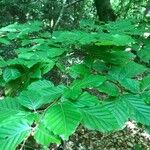
Fagus sylvatica
راش · Beech · European beech · Copper beech · Common Beech
Description
Source: leafsnapFagus sylvatica, commonly known as the European beech, is a deciduous tree native to Europe. It can grow up to 40 meters tall and features a broad, spreading crown with smooth gray bark. The oval-shaped leaves are glossy dark green, turning a golden yellow in the fall. In the spring, the tree produces small flowers that are followed by triangular nuts encased in prickly husks. European beech trees are often used as ornamental plants due to their attractive foliage and elegant shape. They also hold cultural significance; during the Renaissance period, they were commonly used for carving sculptures and making furniture. Besides their aesthetic appeal, European beech trees offer important ecological benefits. They provide habitat for wildlife and improve air quality by absorbing pollutants from the atmosphere. However, in some regions outside their native range, they can become invasive. Overall, Fagus sylvatica is a significant species with both cultural and ecological value within its natural habitat.
🌳 Although chiefly recognized for its durable wood, the European beech has a number of lesser-known uses. Its leaves have traditionally been used to feed livestock. Additionally, because of its dense canopy, the European beech acts as an effective natural air filter and contributes to anti-pollution strategies. Its traits also allow it to indicate certain metals in the soil, such as iron, with its leaves reflecting metal concentrations that aid environmental monitoring.
🎭 Affluence, feminine power, wisdom
Care Guide
💧 Water Every 7 days
The European beech flourishes in temperate regions with moderate moisture levels. It prefers consistent humidity and can tolerate some drought. Water the tree every 1–2 weeks, making sure the soil stays moist but not waterlogged. In the colder months, when the tree is dormant, reduce the watering frequency to match the lower rates of evaporation and its slower growth cycle.
When Should I Water My European Beech?
To determine the ideal watering times for your European Beech (Fagus sylvatica), you should look for key indicators such as soil moisture and visual signs from the plant itself. Insert your finger into the soil up to 1-2 inches deep; if it feels dry, it's time to water. Watch out for wilting leaves, a sign that the tree is under-watered. Yellow or brown leaves can indicate a lack of water, while darker green, lusterless leaves suggest overwatering. Stunted growth and fewer new leaves are also signs that your beech may need more water, especially under hot, dry conditions or during its active growth seasons. Conversely, overwatering or watering when the soil is not sufficiently dry can lead to root diseases. Adjust your watering schedule according to the season, watering more frequently in the summer and less so in the winter when the tree is dormant. Recognizing these signs will help ensure your European Beech remains healthy and thriving.
How Should I Water My European Beech?
Watering your European Beech properly involves several techniques and considerations to ensure its health. Use a watering can with a long spout to aim water directly at the base of the tree, minimizing wetness on the leaves to avoid fungal diseases. For larger trees, a soaker hose can provide deep watering directly to the root zone, ensuring the soil is moist but not waterlogged. Utilizing a moisture meter can help in determining the right time to water by checking the soil's moisture level near the tree's roots. Always focus your watering on the base of the plant and avoid wetting the foliage. Mulching around the base with organic material can help retain soil moisture and regulate temperature. These methods, combined with monitoring for signs of both over and under-watering, will help keep your European Beech healthy.
How Much Water Does European Beech Really Need?
The European Beech requires a moderate amount of water, with the exact amount varying according to factors like pot size, root depth, and overall plant size. A mature European Beech in a medium-sized pot generally needs about 1 to 2 liters of water per session. Ensure thorough watering until excess water drains out, signaling the whole root system has been adequately moistened. A well-hydrated beech will display healthy, glossy, and vibrant leaves. To prevent over or underwatering, monitor the soil by feeling its top inch; water when it feels dry and hold off if it's still moist. Incorporating organic mulch around the plant can also help maintain appropriate soil moisture levels.
What Kind of Water is Best for European Beech?
European Beech trees are sensitive to the chlorine and fluoride found in tap water. It's best to use rainwater or filtered water to avoid these chemicals and reduce potential leaf tip burn or growth issues. If tap water is your only option, allow it to sit out for 24 hours to permit chlorine to evaporate and ensure it's not too hard or chemically enhanced. European Beech also benefits from water that's room temperature to avoid shocking its roots. To address mineral sensitivity and promote healthy growth, water treatments like decalcification or dechlorination are beneficial, and supplementing distilled or filtered water with a gentle feed can reintroduce necessary nutrients.
How Do European Beech's Watering Needs Change with the Seasons?
The watering needs of European Beech change with the seasons due to varying growth cycles and weather conditions. In spring, water the plant when the top few inches of soil feel dry, supporting the tree's exit from dormancy. Summer demands more frequent watering due to higher temperatures and evaporation rates, though it's crucial not to overwater. In autumn, reduce the watering frequency as the tree prepares for dormancy, relying more on rainfall to meet its water needs. During winter, the tree's water needs drop significantly; water sparingly, only during prolonged dry spells, keeping in mind the plant's cold-tolerant nature while ensuring good drainage to avoid root damage.
☀️ Light Full sun
European beech flourishes most effectively in open places where they receive the maximum amount of sunlight. Nonetheless, they can adjust to locations with moderate sunlight. Their preference for plentiful light ties back to their original habitats, in areas abundant with radiance, with extreme shade possibly causing negative impacts on their growth cycle. This reaction to light remains constant throughout various stages of development.
What are the sunlight requirements for European Beech?
European beech requires full sun to thrive, meaning it needs above 6 hours of sunlight. It can also handle partial sun conditions, about 3-6 hours of sunlight. It's crucial to observe the movement of sunlight in your garden to identify spots that offer the right balance of light and shade, ensuring the plants' growth and happiness.
How do European beech trees respond to sunlight?
European beech trees thrive best in fully uncovered areas with maximum sunlight exposure but can adapt to areas with moderate sunlight. Their native habitat is characterized by abundant light, and excessive shade could negatively impact their growth. This light requirement remains consistent across their different growth stages.
Can artificial lighting support the growth of European Beech?
Yes, artificial lighting can support European Beech growth, especially for indoor plants when natural sunlight is insufficient. Optimal growth can be achieved with adequate lighting, for example, using LED lights that can be customized to the plant's needs. Full sun plants require 30-50W/sq ft of artificial light, partial sun plants need 20-30W/sq ft, and full-shade plants need 10-20W/sq ft. The artificial light source should be placed 12-36 inches above the plant, and most plants need 8-12 hours of light per day.
What symptoms indicate European beech is not getting enough light?
Symptoms of insufficient light for European Beech include smaller new leaves, leggy or sparse growth, faster leaf drop, slower or no new growth, and lighter-colored new leaves. These symptoms suggest the plant might be stressed due to inadequate sunlight, impacting its growth and health.
How can you address symptoms of light deficiency in European Beech?
To address light deficiency in European Beech, gradually increase sunlight exposure to ensure the plant receives at least 6 hours of direct sunlight daily. For indoor plants, use artificial lighting, such as desk or ceiling lamps, for at least 8 hours daily, or invest in professional plant grow lights. Outdoor plants should be gradually acclimatized to sunnier spots to avoid sunburn. Trimming obstructions like tree branches can also improve sunlight access.
🌡️ Temperature 0–35°C
The European beech, a plant native to Europe, necessitates a moderate climate with temperatures fluctuating between 41 and 90 ℉ (5 and 32 ℃). It is resilient to cold winters and hot summers, adapting to temperatures from 32 to 68 ℉ (0 to 20 ℃) in the wintertime and to a maximum of 86 ℉ (30 ℃) in summertime. To avoid excessive heat, it is advised to plant it in a semi-shaded spot during the summer season.
What is the ideal climate for the European Beech?
The European Beech, botanically known as Fagus sylvatica, thrives in a temperate climate. It is well-suited to temperatures ranging from 41 to 90°F (5 to 32°C), capable of enduring both cold winters and warm summers. In winter, it adjusts to temperatures between 32 to 68°F (0 to 20°C), and in summer, it can withstand up to 86°F (30°C). To prevent overheating during the hotter months, it's advisable to plant it in a partially shaded area. The European Beech is remarkably tolerant of cold and doesn't require additional frost protection measures. However, it's recommended to water the plant generously before the first freeze of autumn to maintain soil moisture through the winter and early spring.
How does the European Beech respond to low temperatures?
The European Beech is extremely tolerant of low temperatures, but it is important to keep the winter temperature above 32°F (0°C) to prevent adverse effects. While you may not notice immediate changes during the winter if temperatures drop below this threshold, the plant might show signs of distress in spring with brittle and dry branches, and no new shoots emerging. To mitigate this, prune away any dead branches in spring to promote the growth of new leaves.
What should I do if the European Beech experiences high temperatures?
The European Beech does not tolerate high temperatures well. If the temperature exceeds 86°F (30°C), the plant may lose leaves significantly, and in severe cases, it could entirely wither and die. To address this, remove any sunburned and dried parts of the plant. Relocate it to a shaded spot, particularly away from the midday and afternoon sun, or use a shade cloth. Additionally, ensure the soil remains moist by watering it in the morning and evening.
💨 Humidity normal (40-60%)
This plant will thrive in moderate humidity, which is probably the level in your home. However, misting it a few times a week can be very beneficial. Make sure the room has good ventilation.
🪴 Soil 6-7
🌱 Fertilizer
For optimal health and growth, nurture your European beech with fertilizer in the early spring. Regular fertilizing bolsters general health, which in turn drives strong growth, boosts resilience against harsh conditions, and strengthens disease and pest defense mechanisms. To achieve lush, deeply colored foliage, adhere to a specific fertilizer schedule for your European beech.
Why should I give my European beech tree fertilizer?
No matter which type of European beech you have, regularly fertilizing it will improve its overall health. When you provide the proper nutrients, the tree will grow stronger and become more resistant to difficult conditions, as well as better equipped to fight off diseases and pests. It's important to maintain the foliage of your European beech, as it is one of its most attractive features. To do this, establish and stick to a regular fertilization schedule that is tailored to your specific tree. By doing so, your European beech will develop vibrant, lush leaves.
When should I add fertilizer to my European beech tree?
To give your European beech the nutrients it needs for healthy growth, it's best to fertilize it in late winter or early spring. This will prepare it for the warmer weather ahead. In warm climate regions, it can also be beneficial to provide another fertilizer feeding in early fall. This will supply additional nutrients for the next growing season and help the European beech withstand winter cold without foliage damage. Fertilizing earlier ensures that new branches have enough time to grow and withstand the cold winter.
When is it best to not add fertilizer to my European beech tree?
There are a few times of the year when you should avoid fertilizing your European beech. The first is during the early and mid-winter when the plant is dormant and does not require feeding. It is also not recommended to fertilize in late spring and summer because the weather is hotter and drier, which can have a negative impact on the plant if fertilized. To prevent any issues, it is best to follow a fertilization schedule that only involves feeding in early spring and early fall.
What kind of fertilizer does my European beech tree need?
The most important nutrient for a European beech is typically nitrogen, but phosphorus and potassium are still important. A balanced fertilizer like 10-10-10 is effective because the tree needs all three nutrients in decent amounts. However, a more precise ratio of nutrients, such as 10-6-4, often leads to optimal growth. Higher nitrogen ratios tend to work better. You can choose between granular or liquid-based fertilizer when fertilizing.
How should I add fertilizer to my European beech tree?
"To fertilize your European beech tree, you have two options
🪴 Pot & Repot Every 12 months
✂️ Pruning
The European beech is known for its smooth, gray bark and broad crown. To maintain its health and appearance, prune the tree in early spring. Begin by removing any dead or diseased branches and thinning out crowded areas to improve air circulation. These practices not only promote healthy growth and help manage the tree's size but also reduce the risk of fungal infections.
🌿 Propagating
🐛 Diseases & pets
☠️ Toxicity
The European beech tree is highly toxic to pets but considered mildly toxic to people. This is because pets are more likely to ingest the husk of the beechnut which contains the highest concentration of the tree’s toxin.
Characteristics
- Plant Type
- Tree
- Life Cycle
- Perennial
- Genus
- Fagus
- Family
- Fagaceae
- Hardiness Zone
- 4-7
- Mature Height
- 24.99 m to 39.93 m
- Mature Spread
- 14.94 m
- Leaf Color
- Green, Brown, Yellow, Red, Orange, Gold
- Leaf Type
- Deciduous
- Flower Color
- Green, Yellow
- Flower Size
- 0.51 cm to 1.02 cm
- Bloom Time
- Mid spring, Late spring
- Planting Time
- Spring, Autumn
- Harvest Time
- Mid summer
- Native Area
- Europe