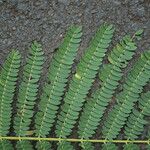
Falcataria moluccana
Albizia · Molucca albizia · Moluccan-sau · Batai · Bataiwood
Description
Source: leafsnapFalcataria falcata (syns. Albizia falcata, Falcataria moluccana and Paraserianthes falcataria), commonly known as the Moluccan albizia, is a species of fast-growing tree in the family Fabaceae. It is native to the Maluku Islands, New Guinea, the Bismarck Archipelago, and the Solomon Islands. It is cultivated for timber throughout South Asian and Southeast Asian countries. This tree is considered to be invasive in Hawaii, American Samoa and several other island nations in the Pacific and Indian Oceans. It reaches about 30 m (100 ft) tall in nature, and has a massive trunk and an open crown.
Care Guide
💧 Water
Molucca Albizia flourishes in environments with high humidity and has moderate tolerance to drought. To maintain optimal moisture levels without causing waterlogging, water the plant every 2-3 weeks. When grown indoors, regular misting can be beneficial, making Molucca Albizia well-suited for areas with higher humidity.
☀️ Light Full sun
The molucca albizia plant flourishes optimally when it is subjected to sunlight for most of the day, indicating its requirement for substantial light intensity. Its usual environment is characteristic of regions with plentiful sunlight. Any shortage or surplus of light exposure might detrimentally affect its robust growth.
What are the sunlight requirements for Molucca Albizia?
Molucca albizia requires full sun exposure, defined as more than 6 hours of sunlight per day, to thrive best. It’s essential to observe your garden throughout the day to find spots that offer a balanced environment of light and shade, ensuring the plant's optimal growth. The natural habitat of Molucca albizia is characterized by abundant sunlight, indicating its significant need for ample irradiance. A lack or excess of light can adversely affect the plant's health.
How can artificial lighting support Molucca Albizia growth indoors?
When natural sunlight is not sufficient, especially during winter or in less sunny indoor spaces, artificial lighting becomes crucial for supporting Molucca albizia's growth. LED lights are recommended due to their ability to mimic the specific wavelengths of light needed by plants. For full sun plants, 30-50W per square foot is needed; partial sun plants require 20-30W per square foot, and full shade plants need 10-20W per square foot. The light source should be placed 12-36 inches above the plant to simulate natural sunlight conditions, and most plants require 8-12 hours of light daily.
What are the symptoms of insufficient light for Molucca Albizia?
Symptoms of light deficiency in Molucca albizia include smaller new leaves, leggy or sparse growth, faster leaf drop, slower or halted growth, lighter-colored new leaves, chlorosis (yellowing leaves indicating breakdown of chlorophyll), sunscald, leaf curling as a defense mechanism, wilting due to loss of turgor pressure, and leaf scorching with brown, dry edges. These symptoms can help identify when the plant is not receiving adequate sunlight.
What solutions are available for Molucca Albizia experiencing insufficient sunlight?
For indoor Molucca albizia, gradually moving the plant to a sunnier location each week until it receives at least 6 hours of direct sunlight daily is recommended. Utilizing south-facing windows and keeping curtains open during the day can maximize sunlight exposure. If the plant is large or not easily movable, providing additional light using desk lamps or investing in professional plant grow lights for at least 8 hours daily can help. For outdoor plants, it's crucial to gradually adapt them to sunnier spots to avoid sunburn, observing and potentially reducing obstructions like trees by pruning. Transplanting smaller plants during their dormant period to a location with ample sunlight and good drainage can also improve their sunlight exposure. It's important to note that parts of the plant already affected by insufficient light may not recover, but new growth should be healthy with increased light exposure.
🌡️ Temperature 20–37.8°C
The Molucca albizia originates from a region where temperatures range between 68 and 100.4 °F (20 to 38 ℃), indicating a preference for hotter environments. Its health could be negatively affected by colder conditions. During the cooler seasons, the application of supplementary heating may be necessary.
What is the ideal temperature range for Molucca albizia?
Molucca albizia flourishes in warmer conditions, preferring a temperature range of 68 to 100.4 °F (20 to 38 °C). It is crucial to maintain temperatures above 20°C, especially during winter, to support its growth. The plant is extremely sensitive to cold temperatures, and exposure to conditions near or below 5°C can be harmful. Therefore, it is recommended to provide additional heating during colder months and bring outdoor plants indoors, placing them near a bright window yet away from heaters to avoid cold damage.
How should I care for Molucca albizia in low temperature conditions?
For Molucca albizia, low temperatures are a challenge as the plant thrives above 20°C and must be kept above 5°C during winter. Exposure to temperatures below 1°C may cause the leaves to lighten in color and, following frost damage, turn brown or black, leading to wilting and drooping. To mitigate damage, trim off the frost-affected parts and move the plant to a warmer indoor environment immediately. Placing it near a south-facing window ensures ample sunlight without the risks associated with being too close to heaters or air conditioners, which can dry out the air excessively.
What should I do if my Molucca albizia is exposed to high temperatures?
Molucca albizia should ideally be kept below 38°C during the summer months. Temperatures exceeding 43°C can lighten the color of the leaves and increase susceptibility to sunburn. If your plant has suffered from high temperature or sunburn, trim away the damaged parts and relocate it to a spot where it can be shielded from the harsh midday and afternoon sun. Maintaining soil moisture through watering in the morning and evening is also crucial to help the plant cope with high temperatures.
💨 Humidity
🪴 Soil 6-8
🌱 Fertilizer
It's vital to the care of Molucca albizia to provide regular fertilization. Maintaining consistent nutrients during its growth period is essential for vibrant leaves and promoting overall growth. Ignoring the need for fertilization may lead to unhealthy leaves, reduced decorative attractiveness, and impeded or frail growth susceptible to damage.
🪴 Pot & Repot
✂️ Pruning
Molucca albizia benefits from annual pruning, which should ideally be done from early to late winter. This timing helps the tree recover during its dormant phase. During pruning, remove any dead or crowded branches to enhance air circulation and increase sunlight exposure. Regular thinning improves the tree's structure, prevents limb breakage, and promotes healthier growth, thereby enhancing its overall appearance.
🌿 Propagating
🐛 Diseases & pets
☠️ Toxicity
Characteristics
- Plant Type
- Tree
- Life Cycle
- Perennial
- Genus
- Falcataria
- Family
- Leguminosae
- Hardiness Zone
- 10-12
- Mature Height
- 29.87 m
- Mature Spread
- 14.94 m
- Leaf Color
- Light Green
- Leaf Type
- Evergreen
- Flower Color
- White
- Flower Size
- 20.32 cm
- Bloom Time
- Late spring, Summer
- Planting Time
- Spring, Summer, Autumn
- Harvest Time
- Late summer, Fall
- Native Area
- Papua New Guinea, Indonesia, Solomon Islands, Malaysia