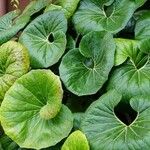
Farfugium japonicum
Leopard Plant · Ligularia · Tractor seat plant · Green leopard plant · Farfugium
Description
Source: leafsnapFarfugium japonicum (syn. Ligularia tussilaginea) is a species of flowering plant in the family Asteraceae, also known as leopard plant, green leopard plant or tractor seat plant. It is native to streams and seashores of Japan, where it is called tsuwabuki (石蕗).
💡 A highly popular and garden-worthy cultivar of the leopard plant is the Giganteum, known for its impressive size. This giant leopard plant is prized for its exceptionally ornamental, large solid leaves that can range from 13 to 46 cm in width, as well as its charming, daisy-like flowers.
🌳 The leopard plant is mainly recognized in landscaping, where its abundant foliage serves as a focal point in gardens. Although not widely noted, its leaves can potentially be used to produce green dyes because of their rich pigments. Furthermore, while not a common practice, there are still unexplored possibilities for using the leopard plant as a bioindicator of soil health, given its sensitivity to certain soil conditions.
🎭 Despite difficulties
Care Guide
💧 Water Every week
The leopard plant, native to the woodlands of East Asia, thrives in humid environments. It grows best in consistently moist, well-draining soil and needs to be watered weekly. As an evergreen perennial, the leopard plant benefits from higher indoor humidity, which helps maintain its lush foliage despite dry air conditions.
☀️ Light Full shade
The leopard plant does best in locations shielded from strong sunlight. It can tolerate areas that receive some sun, but very bright light can damage its leaves. In its native environment, the plant grows protected from direct sun. Too little light can cause reduced growth.
What are the sunlight requirements for Leopard plants?
Leopard plants thrive in specific light conditions to support their growth and health. They prefer full shade, receiving less than 3 hours of direct sunlight daily, or partial sun with about 3-6 hours of sunlight. It's crucial to observe how sunlight moves through your garden throughout the day to find spots that offer a balanced light environment, ensuring the plants' well-being. Leopard plants are native to areas where they are naturally shielded from intense sunlight, and too much direct light can harm their leaves, indicating that they prefer environments where harsh solar radiation is avoided.
How can artificial lighting support Leopard plant growth indoors?
Artificial lighting is essential for indoor Leopard plants, especially when natural sunlight is insufficient. Optimal growth requires adequate lighting; thus, in low-light conditions like winter or less sunny spaces, artificial lights can be a crucial solution. LED lights are ideal for providing the necessary wavelengths of light. The required intensity varies by plant type; full sun plants need 30-50W/sq ft, partial sun plants need 20-30W/sq ft, and full shade plants need 10-20W/sq ft of artificial light. The light source should be placed 12-36 inches above the plant to simulate natural sunlight and should remain on for 8-12 hours per day to mimic the natural daylight hours specific to the plant species.
What are common symptoms of insufficient light in Leopard plants?
Leopard plants may exhibit several symptoms when exposed to inadequate light levels, especially indoors. Common signs include small leaves, where new leaves are smaller than older ones; leggy or sparse growth, characterized by increased spaces between leaves or stems; faster leaf drop as the plant sheds older leaves to conserve energy; slower or halted growth due to entering a survival mode; lighter-colored new leaves indicating a lack of chlorophyll; chlorosis, where leaves lose their green color; sunscald, causing damage from intense sunlight; leaf curling as a defense against excessive sunlight; wilting from excessive water loss; and leaf scorching marked by brown, dry, and crispy leaf edges. These symptoms suggest that the plant is struggling with light conditions.
What solutions are recommended for addressing insufficient light for Leopard plants?
To combat insufficient light for Leopard plants, consider the following solutions tailored to different settings: Indoor plants can benefit from being moved closer to a window to enjoy ample filtered light, including brief periods of direct morning sunlight, ideally positioned 1-2 meters away from a window. In cases where plants are large or hard to move, supplementing with artificial light, such as desk or ceiling lamps for at least 8 hours daily or using professional plant grow lights, could provide adequate light. Outdoors, it's crucial to gradually acclimate plants to sunnier spots, avoiding sudden exposure to intense light to prevent sunburn. For plants in the ground, reducing obstructions like pruning overhanging branches or moving smaller plants during their dormant period to sunnier locations with good drainage can help. Remember, parts of the plant already affected by insufficient light may not fully recover, but new growth should be healthy with improved light conditions.
🌡️ Temperature 15–35°C
The leopard plant plant originates from Japan and Korea, where it grows in temperate areas with average temperatures of 15 to 25 ℃ (59 to 77 ℉). It favors a temperature span of 15 to 35 ℃ (59 to 95 ℉) with moderate humidity. In winter it can tolerate temperatures as low as 10 ℃ (50 ℉), but in the summer months it may need to be placed in a cooler spot to prevent heat stress.
What is the native habitat and preferred temperature range for the Leopard plant?
The Leopard plant, botanically known as Farfugium japonicum, is native to Japan and Korea, thriving in temperate regions. The ideal temperature range for the Leopard plant is between 15 to 35°C (59 to 95°F), with moderate humidity. It can also tolerate temperatures as low as 10°C (50°F) during winter. However, in summer months, it's advisable to keep the plant in a cooler location to prevent heat stress. The plant has a certain degree of cold tolerance and usually does not require special protection if the temperature is above -5°C, but protective measures should be taken when the temperature falls below this threshold.
How does the Leopard plant react to low temperatures and what are the recommended solutions?
The Leopard plant possesses a moderate tolerance to low temperatures, performing best above 15°C. When temperatures drop below -10°C, the plant's leaves might droop, and in severe cases, they can wilt and drop off. To combat this, it's advisable to trim any frost-damaged parts and wrap the plant with non-woven fabric or cloth. Additionally, constructing a wind barrier can provide extra protection against cold winds.
What should be done if the Leopard plant is exposed to high temperatures?
During the summer, the Leopard plant should be kept at temperatures below 35°C to avoid heat stress. Exposure to temperatures above 41°C can result in lighter leaf color, dry and withered leaf tips, leaf curling, and an increased risk of sunburn. To mitigate these issues, trim away sunburned and dried-up parts and relocate the plant to a shadier spot or use a shade cloth to protect it from direct midday and afternoon sun. Ensuring the plant is adequately watered in the morning and evening will help maintain soil moisture and overall plant health.
💨 Humidity normal (40-60%)
This plant will thrive in moderate humidity, which is probably the level in your home. However, misting it a few times a week can be very beneficial. Make sure the room has good ventilation.
🪴 Soil 5-6
🌱 Fertilizer
One spring application of fertilizer is generally enough for the Leopard plant, though several feedings can maximize growth. Apply fertilizer every one to one and a half months. Fertilization improves the leaves' appearance and function, helping maintain even color and a healthy texture. It also encourages root development and nutrient uptake, supporting the plant's long-term health.
🪴 Pot & Repot 2-3 years
When repotting a Leopard plant, select a pot 1–2 inches (2.5–5.1 cm) larger with sufficient drainage. Use a well-draining potting mix. Repot in spring or fall, making sure the root ball sits slightly below the rim of the flower pot. Water thoroughly after repotting and set the plant in a warm location with indirect sunlight.
✂️ Pruning
The leopard plant is known for its large, glossy leaves and vibrant yellow flowers. To ensure optimal growth, it's best to prune the plant from early to late spring. During this time, remove any dead foliage and spent flower stalks. Make sure to use clean, sharp tools to prevent disease. This not only enhances the plant's appearance but also encourages robust growth and flowering.
🌿 Propagating
🐛 Diseases & pets
☠️ Toxicity
Characteristics
- Plant Type
- Herb
- Life Cycle
- Perennial
- Genus
- Farfugium
- Family
- Asteraceae
- Hardiness Zone
- 8-10
- Mature Height
- 61 cm
- Mature Spread
- 61 cm
- Leaf Color
- Green, Yellow
- Leaf Type
- Evergreen
- Flower Color
- Yellow
- Flower Size
- 2.54 cm to 5.08 cm
- Bloom Time
- Late summer, Early fall
- Planting Time
- Spring
- Harvest Time
- Mid fall, Late fall, Winter
- Native Area
- South Korea, Japan, China