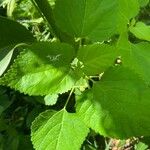
Fatoua villosa
Hairy crabweed · Mulberry-weed · Fat weed · Watersnake hemp
Description
Source: leafsnapFatoua villosa is a small annual plant that belongs to the family Moraceae. It is commonly found in the tropical and subtropical regions of Asia, Africa, and Australia. The plant features a slender stem that can grow up to 50 cm in height and has small green leaves with serrated edges. Its flowers are tiny and greenish-yellow, while its fruit is a small berry-like structure that turns red when ripe. Fatoua villosa is renowned for its medicinal properties, as it contains various bioactive compounds such as flavonoids, alkaloids, terpenoids, and phenolic acids. These compounds exhibit anti-inflammatory, antioxidant, and antimicrobial properties, making the plant useful for treating various ailments, including feverish conditions like malaria. The plant also holds cultural significance among some communities, where it is used in traditional medicine practices or even consumed as food due to its high nutritional value. Overall, Fatoua villosa is an intriguing plant with both medicinal value and cultural importance, making it a vital part of many communities around the world.
🌳 Although mulberry weed is frequently seen as an undesirable plant, its fibrous qualities have untapped value. Craft sectors could make use of mulberry weed fibres to produce handmade paper, entering the niche of sustainable and eco-friendly products. This atypical application corresponds with the rising interest in repurposing invasive species for commercial purposes, turning "trash" into treasure — a demonstration of how otherwise troublesome plants can be innovatively reused.
Care Guide
💧 Water Every 7 days
Mulberry weed thrives in environments with moderate moisture, needing consistently moist soil and weekly watering. It's important to avoid waterlogging. Although it has average drought tolerance, it adapts well to different rainfall patterns and demonstrates resilience across various climate zones. This makes it suitable for outdoor gardens.
How should I water my Mulberry weed?
To water Mulberry weed, there are various tools you can use such as a garden hose with a spray nozzle or a watering can. Mulberry weed is not too particular about the type of water it receives, whether it's from rain, tap, or filtered water. However, it's generally recommended to avoid watering this plant overhead as it can harm the leaves, flowers, and potentially lead to disease. Instead, a drip irrigation system is often the best method for watering this plant as it ensures even and direct watering to the soil. When it comes to watering a container-grown Mulberry weed, you can apply water directly to the soil using tools like a cup, watering can, or even just your tap.
What should I do if I give my Mulberry weed too much or too little water?
To remedy underwatering of Mulberry weed, simply water it more regularly when you notice lack of moisture. Overwatering, however, is a more serious problem that can lead to diseases and the plant's decline or death. To avoid this, choose a growing location with plenty of sunlight and proper drainage to prevent waterlogged soil. If you have overwatered a potted Mulberry weed, consider changing it to a new pot with good soil drainage and sufficient holes. During repotting, use loose soil and an efficiently draining pot.
How often do I need to water my Mulberry plant?
Mulberry weed requires regular watering throughout its growing season. In spring, you should water it once a week. As the season gets warmer, you may need to increase watering to two to three times a week. However, watering more than this can harm the plant. Remember to maintain moist, but not wet, soil for your Mulberry weed. When watering a Mulberry weed in a pot, you should increase the frequency since pot soil can dry out faster. Generally, watering a container-grown Mulberry weed a few times a week is recommended, compared to just once a week for an in-ground plant.
How much water does my Mulberry weed require?
Determining how much water to give your Mulberry weed can be done in a few different ways. Some gardeners prefer to gauge the moisture by feeling the soil, aiming to water until the top six inches feel moist. Alternatively, a general guideline is to provide about two gallons of water per week, adjusted according to temperature and soil dryness. However, rigidly following this guideline may cause overwatering if your plant needs less. When growing Mulberry weed in a container, a different approach is necessary. Make sure to moisten all the dry soil layers by either checking with your finger or allowing excess water to trickle out through the drainage holes.
How do I know if I'm giving enough water to my Mulberry weed?
Avoiding overwatering your Mulberry weed can be a bit challenging. These plants have deep roots that need weekly watering, yet they are prone to root rot and browning if they receive too much water. Underwatering is less of a concern for Mulberry weed, as they can survive without additional watering for some time, but they may wilt and develop dry leaves if left without water for too long.
☀️ Light Partial sun
Mulberry weed is a hardy plant that grows best in locations receiving moderate amounts of sunlight, like places with partial or scattered sun. It is adaptable and can also tolerate sites with full sun or mostly shade. Too much or too little light may somewhat reduce its ideal growth, but the species is generally tolerant.
What are the sunlight requirements for Mulberry weed?
Mulberry weed (Fatoua villosa) thrives in a range of sunlight conditions. It prefers partial sun, requiring about 3-6 hours of sunlight daily, but it can also grow in full sun or full shade conditions, where it receives more than 6 hours of sunlight. The plant is resilient and adapts well to different light exposures, though overexposure or deficiency in sunlight may slightly affect its optimal growth. It's important to observe the sunlight moving through your garden to find spots that offer a good balance of light and shade to ensure the plant’s happiness.
Can Mulberry weed grow under artificial lighting?
Yes, Mulberry weed can grow under artificial lighting, which is especially helpful in conditions where natural sunlight is insufficient, such as during winter or in less sunny spaces. For optimal growth under artificial lights, you might consider LED lights due to their ability to provide specific wavelengths needed by plants. Full sun plants should receive 30-50W/sq ft, partial sun plants 20-30W/sq ft, and full shade plants 10-20W/sq ft of artificial light. The light source should be placed 12-36 inches above the plant, and most plants will need 8-12 hours of light per day to mimic natural daylight hours.
What are the symptoms of incorrect lighting for Mulberry weed?
Symptoms of incorrect lighting for Mulberry weed include small leaves, leggy or sparse growth, faster leaf drop, slower or no new growth, lighter-colored new leaves, and conditions such as chlorosis, sunscald, leaf curling, wilting, and leaf scorching. These symptoms indicate either too much or too little light, affecting the plant's ability to grow healthily and maintain its coloring and structure. Adequate lighting is crucial for the plant's photosynthesis process and overall health.
How can I adjust the light conditions for my Mulberry weed?
To adjust light conditions for your Mulberry weed, consider the following strategies: For indoor plants, gradually shift them to sunnier spots each week until they receive 3-6 hours of direct sunlight daily. Use artificial lighting, such as desk or professional grow lights, for at least 8 hours daily if the plant is large or immovable. For outdoor plants, move them gradually to optimal sunlight spots to avoid sunburn, making sure to adapt to sunlight changes gradually. If sunlight is obstructed, prune surrounding trees or relocate smaller plants to sunnier locations, especially during their dormant periods, to ensure they receive ample sunlight and good drainage. Note that parts of the plant damaged by insufficient light may not recover, but new growth should be healthy with improved light conditions.
🌡️ Temperature 5–25°C
Mulberry weed is indigenous to areas with temperatures ranging from 68 to 95 °F (20 to 35 ℃). It performs best within that range. Adjusting temperatures in accordance with seasonal changes would be advantageous to replicate its native conditions.
What is the native temperature range for mulberry weed?
Mulberry weed, scientifically known as Fatoua villosa, thrives in environments where temperatures range from 68 to 95 °F (20 to 35 °C). This temperature range is ideal for mimicking the plant's native conditions, suggesting that adjusting temperatures according to seasonal changes would be beneficial for its growth.
How does mulberry weed adapt to cold temperatures?
Mulberry weed is highly cold-tolerant and does not require additional protection from frost during winter. However, it is recommended to water the plant generously before the first freeze of autumn. This ensures that the soil remains moist and enters a frozen state, helping to prevent drought and water scarcity for the plant during the colder months.
What happens if mulberry weed is exposed to temperatures below -25°C?
Although mulberry weed is extremely cold-tolerant, winter temperatures should ideally be maintained above -25°C. Exposure to temperatures below this threshold might not show immediate changes during winter, but it can lead to a decrease in sprouting or even a complete lack of sprouting during springtime. To manage this, it's suggested to remove any parts of the plant that have failed to sprout in spring.
How does mulberry weed respond to high temperatures?
Mulberry weed does not tolerate high temperatures well. When temperatures exceed 35°C, the plant's growth will halt, and it becomes more susceptible to rot. To alleviate stress from high temperatures, it's advisable to trim away any sunburned and dried-up parts. The plant should be moved to a shaded location or protected with a shade cloth during the intense midday and afternoon sun. Additionally, watering the plant in the morning and evening can help keep the soil moist and support the plant's needs.
💨 Humidity
🪴 Soil 6-7
🌱 Fertilizer
Mulberry weed benefits from regular, light applications of fertilizer to encourage healthy leaf growth. You should fertilize Mulberry weed about once a month during the summer. Nitrogen is important for foliage, and providing nitrogen-rich sources helps Mulberry weed thrive.
🪴 Pot & Repot
✂️ Pruning
🌿 Propagating
🐛 Diseases & pets
☠️ Toxicity
Characteristics
- Plant Type
- Herb
- Life Cycle
- Annual
- Genus
- Fatoua
- Family
- Moraceae
- Hardiness Zone
- 5-6
- Mature Height
- 30 cm to 76 cm
- Mature Spread
- 30 cm
- Leaf Color
- Green
- Leaf Type
- Deciduous
- Flower Color
- White, Cream, Purple, Brown
- Flower Size
- 0.51 cm
- Bloom Time
- Early summer, Mid summer
- Planting Time
- Spring
- Harvest Time
- Mid summer, Late summer
- Native Area
- Indonesia, Vietnam, Myanmar, Japan, Philippines, South Korea, China