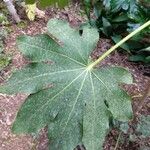
Fatsia japonica
Japanese fatsia · Japanese Aralia · Paperplant · Fatsia japonica spiders web · Fatsia
Description
Source: leafsnapFatsia japonica, commonly known as Japanese aralia or glossy-leaved paper plant, is a popular ornamental plant native to Japan and Korea. A member of the Araliaceae family, this plant can grow to heights of 6-10 feet and features large, glossy leaves that can reach up to 16 inches in diameter. The deeply lobed, palmate-shaped leaves boast a dark green color, adding a vibrant touch of greenery to any garden or indoor space. Fatsia japonica is easy to grow and thrives in partial to full shade. It prefers well-drained soil and regular watering, although it can tolerate periods of drought once established. In the fall, the plant produces small white flowers followed by black berries, which attract birds. Besides its ornamental appeal, Fatsia japonica has been used for medicinal purposes for centuries due to its anti-inflammatory properties. The leaves have been traditionally used as an herbal remedy for relieving arthritis pain and other inflammatory conditions. Overall, Fatsia japonica is a versatile and attractive addition to any garden or indoor setting, thanks to its easy care requirements and aesthetic appeal.
💡 The paperplant is often referred to as the "eight-finger plant" in Japan because its palm-shaped leaves have eight lobes, and "fatsi" is pronounced similarly to the Japanese word for "eight." It is also known as the "Japanese dragon teeth plant."
🌳 Japanese aralia may be visually attractive, but it is also notably practical. Its glossy, fan-shaped leaves can be turned into a natural cleaning agent. When crushed and mixed with water, they form a sudsy solution suited to eco-conscious cleaning. Beyond cleanliness, these leaves are used in Japan as traditional food wrappers, keeping dishes like tsukudani fresh. Surprisingly, they also provide a food staple for The Engrailed moth caterpillars, supporting a small ecosystem.
🎭 Plentiful good fortune
Care Guide
💧 Water Every 7 days
The Paperplant thrives in moist, humid environments and prefers evenly moist soil. Water it every 1 to 2 weeks, making sure the soil never completely dries out. Although it is typically grown indoors, the plant benefits from higher humidity levels. To enhance its lush appearance, consider misting the plant or placing it on a pebble tray filled with water.
How should I water my Paperplant?
Your Paperplant is not particular about how you water it, so you can use various watering tools like watering cans, hoses, or cups. It is essential to water the plant by directly applying water to the soil, ensuring that all areas are equally moistened for the root system's benefit. Using filtered water is recommended to avoid harmful particles present in tap water. Additionally, using water that is at or slightly above room temperature is beneficial as extreme temperatures can be shocking to the Paperplant. However, the Paperplant generally thrives with any type of water you provide.
What should I do if I give my Paperplant too much water or too little water?
When it comes to outdoor plants, particularly newly planted ones or seedlings, the biggest issue they face is insufficient watering. It's important to remember to consistently water them adequately for the first few months, especially when they are small or recently planted. This is because once the roots have established themselves, outdoor plants usually rely on rainwater for most of their needs. In the case of potted Paperplants, the opposite problem often arises - overwatering. If you accidentally overwater your Paperplant, you should take immediate action to address the issue. Firstly, stop watering your plant right away to minimize the effects of overwatering. Then, remove the Paperplant from its pot to check its roots. If the roots show no signs of rot, you can return the plant to its container. However, if there are signs of root rot, trim away the affected roots and apply a fungicide to prevent further damage. Lastly, ensure that you repot the Paperplant in well-draining soil. On the other hand, underwatering a Paperplant is usually easier to fix. If you notice the plant's leaves drooping, drying out, or falling off, it's a sign of underwatering. Water the plant more frequently, and you'll quickly see the leaves regain their fullness. It's important to correct your watering frequency promptly when you notice underwatering happening.
How frequently should I water my Paperplant?
When it comes to outdoor plants, most of them can rely on rainfall to grow normally. However, if there is a lack of rainfall in your area, you should provide adequate watering for your plants every two weeks in the spring and fall. In the summer, you'll need to water more frequently. During the slower growth period in winter, you can water less often or even not at all. If your Paperplant is young or has just been planted, it will require more frequent watering to help it establish and grow into a more adaptable and drought-tolerant plant. If you have potted plants, there are two main approaches to determine how often to water your Paperplant. The first is to follow a predetermined watering schedule, which suggests watering once a week or every other week. However, this method may not take into account the specific conditions of your growing environment. The watering frequency should be adjusted based on the season as well. During summer when the plant's water needs are highest, relying solely on a predetermined schedule may not be enough. An alternative approach is to monitor the soil moisture and wait until the top two to four inches of soil (about ⅓ to ½ depth of the pots) have completely dried out before watering again.
How much water do I need to give my Paperplant?
Watering the Paperplant requires attention to soil moisture levels. Instead of simply giving it a high volume of water, you should aim to give it about five to ten ounces of water each time, as long as only a few inches of soil have dried out since the last watering. To determine the appropriate water volume, monitor the moisture level of the soil and take note of how many inches have dried out. If more than half of the soil is dry, it's a good idea to provide more water. In such cases, continue watering until you observe excess water draining from the pot's drainage holes. If your Paperplant is located outdoors in an area with ample rain, it may not require additional watering. However, for young or newly established Paperplants, ensure they receive 1-2 inches of rain per week. As the plant grows and becomes established, it can mainly rely on rainwater for its water needs. Only during hot weather with no rain for 2-3 weeks should you consider giving it a thorough watering to prevent stress.
How can I know if I'm giving enough water to my Paperplant?
The Paperplant is often overwatered, which can cause several signs to appear. The leaves may turn yellow and some may even fall off. Overwatering can also cause the plant to shrivel and promote root rot. On the other hand, if the Paperplant is underwatered, it will start to wilt and the leaves may become brown or brittle. Regardless of whether you see signs of overwatering or underwatering, it's important to take action and restore the plant's health.
☀️ Light Full shade
Japanese aralia performs best in gentler, less intense light; excessive sun can injure its vigorous growth. In its native environment, surrounding plants help block stronger rays. Acceptable light levels protect its health through the various stages of growth, whereas overexposure may be damaging.
What are the sunlight requirements for Paperplant (Fatsia japonica)?
Paperplants thrive in environments that provide less intense light, requiring less than 3 hours of sunlight for full shade conditions, and about 3-6 hours of sunlight for partial sun conditions. It's important to observe how sunlight moves through your garden to ensure your plants receive the ideal balance of light and shade, which is crucial for their growth and health.
How should I manage artificial lighting for Paperplants?
For indoor Paperplants, adequate lighting is vital, especially when natural sunlight is insufficient. Artificial lights, like LED lights that can be customized to provide specific wavelengths, are beneficial. For full sun plants, 30-50W per square foot is recommended; partial sun plants require 20-30W per square foot, and full shade plants need 10-20W per square foot. The light source should be placed 12-36 inches above the plant, mimicking natural sunlight as closely as possible. Most plants will need 8-12 hours of light per day to promote healthy growth.
What are the common symptoms of light deficiency in Paperplants?
When Paperplants don't receive enough light, they may exhibit several symptoms including lighter-colored new leaves, indicating a lack of chlorophyll and essential nutrients. Growth may slow down or halt entirely, and the plant might shed older leaves earlier than usual to conserve resources. Other symptoms include chlorosis, sunscald, leaf curling, wilting, and leaf scorching. These signs indicate the plant's struggle with light conditions, either due to deficiency or overexposure.
How can I solve light-related issues for Paperplants?
To address light-related issues in Paperplants, consider moving your plants to optimal sunlight spots. Indoors, aim for ample filtered light, including brief periods of direct morning sunlight, ideally placing them 1-2 meters away from a window. If moving the plant isn't feasible, using a desk or ceiling lamp for at least 8 hours daily, or investing in grow lights, can help. Outdoors, gradually adapt your plants to sunnier locations each week to prevent sunburn. Minimizing obstructions like pruning trees or transplanting smaller plants to sunnier locations with good drainage can also improve sunlight exposure. Remember, parts of the plant damaged by insufficient light may not recover, but new growth should be healthy with improved light conditions.
🌡️ Temperature 15–35°C
The japanese aralia is indigenous to Japan and Korea and prefers temperatures from 59 to 95 ℉ (15 to 35 ℃). In summer, it can benefit from some afternoon shade to avoid overheating. In winter, it can tolerate temperatures down to 23 ℉ (-5 ℃) provided the soil is well-draining.
What is the native habitat of the Paperplant (Fatsia japonica)?
The Paperplant, also known by its botanical name Fatsia japonica, is native to Japan and Korea. This plant thrives in a temperature range between 59 to 95°F (15 to 35°C). It enjoys the warmth of the summer but may need some afternoon shade to protect it from overheating. In the winter, it is capable of tolerating cooler temperatures down to 23°F (-5°C), provided it is planted in well-draining soil. Paperplant exhibits a moderate level of cold tolerance and typically doesn't need special care above -5°C. However, in anticipation of temperatures dropping below this point, taking temporary measures such as wrapping the plant with plastic film, fabric, or other protective materials can help. It's crucial to remove this protection once temperatures rise to ensure the plant remains healthy.
How does Paperplant react to low temperatures, and what are the solutions if it gets too cold?
Paperplant has a moderate tolerance to low temperatures and performs best when the mercury stays above 15°C. When winter arrives, it's crucial to ensure the temperature does not fall below -5°C to avoid stressing the plant. If temperatures descent beyond -10°C, the leaves of Paperplant may begin to droop; if the cold is mild, they might recover, but more severe cold will cause the leaves to wilt and eventually drop. The solution for helping a Paperplant survive colder times involves trimming off any parts damaged by frost. Before cold temperatures hit again, it's advisable to wrap the plant in non-woven fabric or cloth and construct a wind barrier to shield it from chilling winds.
What should be done if a Paperplant experiences high temperatures?
During the hot months of summer, the Paperplant should ideally be kept in conditions below 35°C. Exposure to temperatures above 41°C can cause the leaves to lighten in color, tips to dry and wither, leaves to curl, and increases the risk of sunburn. If this occurs, the solution involves trimming away the parts of the plant that have been sunburned or dried up. To protect the plant from further damage, it should be moved to a place with afternoon and midday shade or covered with a shade cloth. Additionally, watering the plant in the early morning and late evening will help keep the soil moist and support the plant's well-being through high temperatures.
💨 Humidity normal (40-60%)
This plant will thrive in moderate humidity, which is probably the level in your home. However, misting it a few times a week can be very beneficial. Make sure the room has good ventilation.
🪴 Soil 6-7
🌱 Fertilizer
To encourage healthy growth, fertilize your Japanese aralia in early spring. Consistent feeding boosts overall health, leading to vigorous growth, better tolerance of harsh conditions, and increased resistance to pests and diseases. Keep to a regular fertilization schedule to preserve vivid foliage with deep color and a lush, full appearance.
Why do I have to put fertilizer on my Paperplant?
If you own a Paperplant, regular fertilization is important regardless of the type of plant you have. Providing the proper nutrients will help your plant grow stronger and be better equipped to handle difficult growing conditions, as well as fend off diseases and pests. The foliage of your Paperplant is particularly attractive, so it's crucial to maintain its health. This involves following a regular fertilization schedule that is tailored to your specific Paperplant, resulting in vibrant leaves and an overall lush appearance.
When should I put fertilizer on my Paperplant?
To help your Paperplant grow strong and healthy, it's best to fertilize it for the first time in late winter or early spring. This will provide the necessary nutrients for the plant to thrive once the weather warms up. If you live in a warm climate, it can also be beneficial to give your Paperplant an additional fertilizer feeding in early fall. This not only adds more nutrients to the soil for the upcoming growing season, but also helps the plant withstand the winter cold without foliage damage. By fertilizing earlier, you ensure that the new branches have enough time to grow and be resilient against the cold winter.
When is not a good time to add fertilizer to my Paperplant?
There are specific times throughout the year when you should avoid fertilizing your Paperplant. Firstly, during the early and mid-winter months, the Paperplant is dormant and does not require any nutrients. Additionally, it is not advisable to fertilize this plant during the late spring and throughout the summer. During this period, the weather tends to be hotter and drier, which can have a detrimental effect on the Paperplant if it is given fertilizers. To prevent any negative consequences, it is recommended to stick to a fertilization schedule that involves feeding only in the early spring and early fall.
What kind of fertilizer should I use for my Paperplant?
Nitrogen is the most crucial nutrient for a Paperplant, but phosphorus and potassium are still important. A balanced fertilizer like 10-10-10 can meet the plant's overall nutrient needs. However, a ratio that leans towards more nitrogen, such as 10-6-4, tends to promote better growth. You can choose between granular or liquid fertilizers for the application.
How can I give fertilizer to my Paperplant?
To fertilize your Paperplant, there are two options: using granular fertilizer or liquid fertilizer. If you choose to use granular fertilizer, simply sprinkle it on the soil at the right time. The nutrients will be released slowly over time. It's a good idea to lightly water the plant before applying the fertilizer. The second option is to use liquid fertilizer, although this is less common. Mix the fertilizer with water and pour it onto the soil around the base of your Paperplant. Sometimes, it's beneficial to test the soil before fertilizing to determine if any adjustments to the pH are needed.
🪴 Pot & Repot 2-3 years
When repotting Japanese aralia, select a pot 1-2 inches (2.5–5.1 cm) larger with good drainage. Use a well-draining potting mix. Repot in spring or fall, making sure the root ball sits slightly below the rim of the pot. Water thoroughly after repotting and place it in a warm spot with indirect sunlight.
✂️ Pruning
The Paperplant is an evergreen shrub that benefits from regular pruning, particularly between early and late winter. During pruning, focus on removing dead stems and thinning out overcrowded areas to improve air circulation. Consistent pruning helps prevent legginess and encourages a fuller appearance, enhancing the plant's overall health and vitality.
🌿 Propagating
🐛 Diseases & pets
☠️ Toxicity
Japanese aralia is non-toxic to people and pets. However, if your plant is sprayed with commercial insecticides, the chemical sprays may induce toxicity symptoms.
Characteristics
- Plant Type
- Shrub
- Life Cycle
- Perennial
- Genus
- Fatsia
- Family
- Araliaceae
- Hardiness Zone
- 8-10
- Mature Height
- 0.91 m to 4.88 m
- Mature Spread
- 1.22 m to 1.83 m
- Leaf Color
- Green
- Leaf Type
- Evergreen
- Flower Color
- White
- Flower Size
- 0.25 cm to 0.25 cm
- Bloom Time
- Late summer, Early fall
- Planting Time
- Spring, Autumn
- Harvest Time
- Early spring, Mid fall, Late fall, Winter
- Native Area
- Japan, South Korea