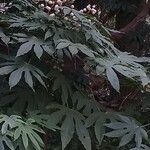
Fatsia polycarpa
False Castor Oil
Description
Source: leafsnapFatsia polycarpa, the many-fruited aralia, is a species of flowering plant in the family Araliaceae, endemic to Taiwan, where it is threatened by habitat loss. Growing to 4 m (13 ft) tall by 2.5 m (8.2 ft) broad, it is a substantial evergreen shrub with large palmate leaves to 30 cm (12 in). Spherical clusters of cream or white flowers are produced in winter, followed by black fruits in spring.Fatsia polycarpa is cultivated as an ornamental plant. In temperate climates it can be grown outside in a sheltered spot without frost. Otherwise it should be grown under glass in bright light, but not direct sunlight. The cultivar 'Green Fingers' is slightly more tender and has slightly narrower leaves.
Care Guide
💧 Water
Originating from East Asian forests, the many-fruited aralia thrives in environments with consistent moisture and partial shade. To keep the soil adequately moist, it should be watered weekly. Although it flourishes indoors, maintaining controlled humidity is essential for it to stay evergreen and vibrant, which mimics the conditions of its natural habitat.
☀️ Light Partial sun
Many-fruited aralia is native to habitats like forest understories and rocky areas, where it grows in natural shade. It prefers partial sun but can tolerate full sun or full shade, showing its versatile, hardy nature.
What are the sunlight requirements for growing Many-fruited aralia (Fatsia polycarpa)?
Many-fruited aralia (Fatsia polycarpa) has specific sunlight requirements to thrive. It requires partial sun, meaning about 3-6 hours of sunlight per day. Additionally, it can also grow in full shade conditions, which is defined as receiving less than 3 hours of sunlight daily. It's important to observe the movement of sunlight through your garden to identify spots that offer the ideal balance of light and shade. This careful selection will ensure the plants are happy and healthy.
🌡️ Temperature 15–35°C
Many-fruited aralia is native to temperate regions and prefers temperatures between 59 and 95 °F (15 and 35 ℃). This preference requires adjustments during colder winters or hotter summers to replicate its native conditions.
What is the native temperature range for Many-fruited aralia?
The Many-fruited aralia, botanically known as Fatsia polycarpa, thrives in temperate regions where the temperature ranges between 59 to 95°F (15 to 35°C). To ensure its health, environments that experience colder winters or hotter summers than this range may need to adjust their conditions to better replicate the plant's endemic climate.
💨 Humidity
🪴 Soil 6-7
🌱 Fertilizer
The timing of fertilizing Many-fruited aralia is important. Apply fertilizer in early spring and continue monthly until early summer. Fertilizer encourages attractive blooms and supplies energy during both dormant and active growth phases.
🪴 Pot & Repot
✂️ Pruning
Many-fruited aralia benefits greatly from winter pruning, which removes damaged stems and encourages new growth. Thinning the plant also improves air circulation and reduces the risk of disease. Regular pruning helps control the plant's size and enhances its appearance. To keep the plant healthy and vigorous, always sterilize your tools before pruning.
🌿 Propagating
🐛 Diseases & pets
☠️ Toxicity
Characteristics
- Plant Type
- Tree, Shrub
- Life Cycle
- Perennial
- Genus
- Fatsia
- Family
- Araliaceae
- Hardiness Zone
- 8-9
- Mature Height
- 2.44 m
- Mature Spread
- 2.44 m
- Leaf Color
- Green
- Leaf Type
- Evergreen
- Flower Color
- White
- Flower Size
- 2.54 cm
- Bloom Time
- Early winter, Mid winter
- Planting Time
- Spring, Summer, Autumn
- Harvest Time
- Late winter, Early spring, Mid spring
- Native Area
- China