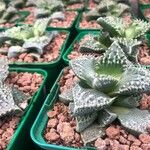
Faucaria tigrina
دندان ببری · Tiger's-jaw · Shark's jaws · Tiger’s Jaw
Description
Source: leafsnapFaucaria tigrina, commonly known as the tiger jaws plant, is a succulent belonging to the Aizoaceae family. Native to South Africa, this plant is named for its distinctive leaf shape, which resembles a pair of open jaws. The triangular leaves feature serrated edges and small, teeth-like structures, giving the plant its unique appearance. During the summer months, Faucaria tigrina produces small, daisy-like yellow flowers. The plant itself grows up to 10 cm tall and spreads up to 15 cm wide, making it ideal for indoor gardening or as a component of a rock garden. To thrive, Faucaria tigrina needs well-draining soil and moderate watering during its growing season, which lasts from spring through fall. During the winter months, it should be kept dry with minimal watering. This succulent is easy to care for and can be propagated through stem cuttings or by separating offsets from the mother plant. While it can also be grown from seeds, this method requires patience, as it takes several years for seeds to develop into mature plants. Overall, Faucaria tigrina is an excellent addition to any succulent collection, thanks to its unique leaf shape and low maintenance requirements.
🌳 Despite its fierce appearance, tiger's jaw provides nourishment to certain wild animals. Not commonly used by humans, desert animals may eat its moisture-rich leaves in dry environments, revealing a frequently overlooked ecological role. However, there are no records indicating tiger's jaw has been used to obtain essential oils, spices, or other commonly harvested plant products.
🎭 Brutality
Care Guide
💧 Water Every 7 days
Tiger's Jaw, a plant native to arid regions, is well-adapted to thrive in drought conditions due to its ability to efficiently store water. It requires watering only every 2-3 weeks. When grown outdoors, Tiger's Jaw prefers well-draining soil to prevent root rot, showcasing its natural adaptation to dry environments.
How should I water my Tiger's jaw plant?
To properly water Tiger's jaw, follow these steps: 1. Wait until spring when new leaves begin to grow. 2. Only water when the soil in the pot is completely dry. 3. Use either tap water or distilled water. 4. Avoid watering from overhead. 5. Instead, water at the base of the plant, applying water slowly and evenly across the soil surface. 6. This will keep the soil consistently moist without wetting the above-ground parts of the plant. 7. Continue watering until you see a light stream of excess water draining from the pot's hole.
What should I do if I give my Tiger's jaw plant too much water or too little water?
A Tiger's jaw plant being overwatered is more common than it being underwatered, and overwatering is very harmful to the plant's health and can cause it to die quickly. To avoid overwatering, you should wait for the soil to dry completely before watering it again. Many people make the mistake of watering the plant incorrectly, especially when it goes into dormancy. So, we will focus on how to fix overwatering. When you notice signs of overwatering in your Tiger's jaw plant, it is best to remove it from its current pot. Then, examine the roots and remove any that show signs of rot or other moisture-related diseases. Some roots may need to be removed, but others can be cleaned and will recover. Afterward, repot the plant in soil that has good drainage to reduce the chances of future overwatering. While it's unlikely, underwatering can also happen. If this occurs, simply water your plant a bit more often, being careful not to overcompensate and overwater it.
How often do I need to water my Tiger's jaw plant?
Tiger's jaw is a succulent plant that requires minimal water due to its origins in a hot and arid region. To care for this plant properly, allow the soil to completely dry out between waterings, which usually takes around two weeks to a month. The frequency of watering varies with the seasons. During spring and summer, when the plant is active, it may take 2-3 weeks for the soil to dry completely, so you can water accordingly. In the summer, the soil may dry out faster. However, when the temperature drops below 60 degrees or exceeds 85 degrees Fahrenheit, the plant enters a dormant or semi-dormant state and does not require additional watering. Instead, reduce or stop watering to maintain dry soil until the temperature becomes suitable for growth, and then resume watering.
How much water does my Tiger's mouth need?
Tiger's jaw plant doesn't need a lot of water overall. It can go for a while without water. However, when it's time to water the plant, you should give it a generous amount. There's no specific amount, but make sure the soil is completely moist. If you're growing it in a pot, water it until you see water coming out of the drainage holes at the bottom. Another way to check is by inserting a pencil into the soil - if it comes out moist, you've watered enough.
How can I know if I am giving enough water to my Tiger's jaw plant?
Overwatering is typically a bigger problem than underwatering. Overwatering is easy to spot because the leaves become mushy, lose their shape, and change colors. In contrast, healthy Tiger's jaw leaves should be sturdy and maintain their shape. Underwatering is highly unusual for this species, as they can often survive without any water. If underwatering does happen, you will usually see leaf discoloration and dryness.
☀️ Light Full sun
Tiger's jaw does well in full-day sunlight, though it does not always require sun for the entire day. Too much sun can cause leaf burn, and too little light can hinder growth. Since it comes from a habitat with abundant sunlight, tiger's jaw does not need to be shielded from the sun's rays.
What are the sun requirements for planting Tiger's Jaw?
Tiger's Jaw, known botanically as Faucaria tigrina, requires specific sunlight conditions to thrive. It is best suited for environments that provide full sun, which means the plant should receive more than 6 hours of sunlight daily. However, it can also tolerate partial sun conditions, entailing about 3-6 hours of sunlight. It's essential to observe how sunlight moves through your garden or growing space, ensuring that your Tiger's Jaw gets the ideal balance of light and shade to promote its health and happiness.
How does Tiger's Jaw respond to sunlight and artificial lighting?
Tiger's Jaw is adaptable to a day full of sun exposure but does not necessarily need sunlight all day long. Excessive sun exposure can cause leaf burn, while inadequate light may stunt the plant's growth. Originating from a sunlight-rich environment, Tiger's Jaw does not require protection from sun exposure. For indoor plants where natural sunlight may be insufficient, especially in winter or darker spaces, artificial lighting can be a beneficial alternative. Adequate artificial lighting promotes faster and healthier growth, with LED lights being a favorable choice for indoor plant lighting due to their customizable light wavelengths. Full sun plants need 30-50W/sq ft of artificial light, partial sun plants require 20-30W/sq ft, and full shade plants need 10-20W/sq ft. Aim to place artificial lights 12-36 inches above the plants, mimicking natural sunlight as closely as possible, and ensure plants receive 8-12 hours of light per day.
What are the symptoms of insufficient or excessive light exposure in Tiger's Jaw?
Tiger's Jaw exhibits specific symptoms under suboptimal lighting conditions. Insufficient light can lead to lighter-colored new leaves, indicating a lack of chlorophyll and essential nutrients, and leggy or sparse growth, where the plant becomes stretched and weak. Alternatively, excessive light can result in chlorosis, causing leaves to lose their green color and turn yellow; sunscald, which manifests as pale or bleached areas on plant tissue; leaf curling, a defense mechanism to minimize sunlight exposure; wilting from increased water loss; and leaf scorching, characterized by dry, brown edges on leaves. These symptoms can significantly affect the plant's health and appearance.
How can I address light-related issues in Tiger's Jaw?
To address light-related issues in Tiger's Jaw, consider gradually adjusting the plant's exposure to sunlight. For indoor plants, move them each week to increasingly sunnier spots until they achieve at least 6 hours of direct sunlight daily, utilizing south-facing windows for maximum exposure. If the plant is large or not easily movable, supplement with artificial light, keeping a lamp on for at least 8 hours a day or investing in professional plant grow lights. For outdoor plants, also gradually introduce them to brighter locations to prevent sunburn. Removing obstructions such as overhanging branches can improve sunlight access. If plants are small enough, consider transplanting them during their dormant period to a location with better sunlight and drainage. Note that while damaged parts might not recover, new growth should be healthy with improved light conditions.
🌡️ Temperature 20–37.8°C
In its natural habitat, tiger's jaw favors warm conditions of 20 to 38 ℃ (68 to 100.4 ℉). For best growth, keep it at 23 to 27 ℃ (73.4 to 80.6 ℉) throughout the year. However, in winter it can tolerate slightly cooler temperatures down to 15 to 18 ℃ (59 to 64.4 ℉).
What are the ideal growth temperatures for Tiger's Jaw?
Tiger's jaw, or Faucaria tigrina, thrives in warm environments, flourishing best within a temperature range of 20 to 38°C (68 to 100.4°F). To promote optimal growth, maintaining a constant temperature between 23 to 27°C (73.4 to 80.6°F) across all seasons is recommended. Despite this preference for warmth, during the winter months—which mark the plant's growing season—it can withstand slightly cooler temperatures, from 15 to 18°C (59 to 64.4°F). To ensure its continued growth during these cooler periods, it's crucial to keep temperatures above 20°C, particularly when the outdoor temperature falls below 5°C, at which point the plant should be moved indoors to a well-lit area. Adjust watering practices based on temperature changes, increasing during warmer periods and decreasing as temperatures approach 5°C. If necessary, utilizing a sheltered outdoor area or a temporary greenhouse can provide the required protection and moisture levels for those choosing to overwinter the plant outside.
How should you care for Tiger's Jaw in low temperature conditions?
Tiger's jaw shows poor tolerance to extremely cold temperatures, with its optimal thriving range being 20°C to 38°C. It's vital to keep it above 5°C during winter to prevent damage. Exposure to temperatures below 1°C can cause leaves to show signs of water-soaked necrosis and wilting. Mild frost damage might not show immediate symptoms, but can lead to significant wilting and leaf drop within a week. If frostbite occurs, the frostbitten areas should be trimmed off and the plant moved indoors to a warmer environment or protected within a makeshift greenhouse. For indoor care, placing the plant near a south-facing window ensures it receives enough sunlight, while those opting for a greenhouse setup should monitor ventilation to prevent decay from poor airflow.
How does high temperature affect Tiger's Jaw and what are the solutions?
During the hot summer months, it's essential to monitor and manage the temperature surrounding Tiger's jaw to prevent it from exceeding 38°C, as temperatures above 43°C can trigger dormancy and increase the plant's susceptibility to rot in humid conditions. To mitigate these risks, remove any dry or rotting parts of the plant promptly. Transferring the plant to a partially shaded area can offer protection from the intense direct sunlight experienced during midday and the afternoon. Moreover, it's advisable to cease watering the plant until temperatures drop to cooler, more manageable levels.
💨 Humidity normal (40-60%)
This plant will thrive in moderate humidity, which is probably the level in your home. However, misting it a few times a week can be very beneficial. Make sure the room has good ventilation.
🪴 Soil 6-7
🌱 Fertilizer
For Tiger's jaw, apply light doses of fertilizer one to two times a year during the growing season. Avoid fertilizing in winter or summer when it is dormant. Reduce fertilizer for repotted plants and wait a couple of months after repotting before fertilizing. Fertilizing supports healthy growth and encourages blooms.
Why is it necessary to fertilize my Tiger's jaw?
To support healthy growth, it is beneficial to fertilize Tiger's jaw, which not only stores water and nutrients but also benefits from plant food applied during the growing season. Additionally, fertilizing can prompt mature specimens to produce blooms during this time.
What is the ideal time to put fertilizer on my Tiger's jaw plant?
Tiger's jaw plants require a light amount of fertilizer during their growing season, which is typically in the spring and autumn. It is recommended to fertilize them 1-2 times a year. However, it's important to note that they do not need fertilizer during their dormant periods in winter and summer. If you have recently repotted your Tiger's jaw, be cautious when applying fertilizer and reduce the amount. It's also advisable to wait a few months after repotting before starting to fertilize.
When is it not a good time to fertilize my Tiger's jaw plant?
Tiger's jaw, like other plants, goes through a dormancy period. During this time, you should avoid fertilizing. In both summer and winter, the plant stops growing, so it's best to refrain from using fertilizer then. Additionally, it's recommended to wait a few months after repotting in the spring before resuming fertilizer applications.
What kind of fertilizer does my Tiger's jaw plant need?
To properly fertilize Tiger's jaw, it is recommended to use a liquid plant food specifically designed for succulents and cacti. Dilute the fertilizer by mixing it with water at a half-strength ratio. It is important to avoid an accumulation of fertilizer in the soil. Apply the fertilizer to the base of the plant, ensuring that the plant receives a thorough watering. Moreover, make sure any excess moisture drains from the container or is absorbed by the ground.
How should I add fertilizer to my Tiger's jaw plant?
When fertilizing Tiger's jaw, it is easier to use liquid plant food, although granules are also an option. To use liquid fertilizers, dilute them to half-strength according to the directions on the packaging. Regardless of whether you choose granules or liquid plant food, always apply it to the soil. After applying granules, cover them with a thin layer of soil and water. Similarly, with liquid fertilizers, ensure that you water the plants after applying the plant food.
🪴 Pot & Repot Every 2 years
When repotting Tiger's jaw, choose a pot a bit bigger than the current one that has good drainage. Fill it with a gritty, well-draining succulent or cactus mix. Gently lift the plant from its old container, brush off excess soil, and set it in the new pot at the same depth. Hold off watering for a few days so any root injuries can recover. Do repotting in spring or fall and place the plant in a brightly lit spot.
✂️ Pruning
To maintain the shape of a tiger's jaw plant, prune any unnecessary or dense branches in the spring and autumn using a knife or scissors. For propagation, cut sturdy stems with 5-6 leaves. Treat the cut ends with sulfur powder and allow them to heal before planting. Once planted, keep the soil slightly moist.
🌿 Propagating
🐛 Diseases & pets
☠️ Toxicity
The tiger jaws plant is non-poisonous to cats, dogs, and people. Though the spines are generally harmless, it’s best to keep them out of reach of curious children and pets to reduce the risk of injury or choking.
Characteristics
- Plant Type
- Succulent, Herb
- Life Cycle
- Perennial
- Genus
- Faucaria
- Family
- Aizoaceae
- Hardiness Zone
- 10-11
- Mature Height
- 10 cm
- Mature Spread
- 8 cm
- Leaf Color
- Green, Purple, White, Gray, Red, Silver
- Leaf Type
- Evergreen
- Flower Color
- Yellow
- Flower Size
- 5.08 cm
- Bloom Time
- Early spring, Mid spring, Fall, Winter
- Planting Time
- Spring
- Harvest Time
- Spring, Mid fall, Late fall, Winter
- Native Area
- South Africa