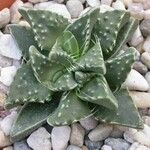
Faucaria tuberculosa
Description
Source: leafsnapIt's a prehistoric-looking succulent. As it produces its new fang shaped leaves it looks fierce but in fact, it is quite soft to touch.
Care Guide
💧 Water Every 3-4 weeks
Properly watering warty tiger jaws involves considering factors like weather conditions, the plant's state, and the moisture level of the soil. During the plant's dormancy period, usually in the cooler months, water it less frequently—about every 1-2 weeks. In the summer, water in the evening to minimize heat stress on the plant. To determine when watering is needed, check the soil's moisture by feeling its weight and look for indicators from the plant, such as wrinkling leaves, which suggest it needs more water.
☀️ Light Partial sun
Warty tiger jaws comes from habitats with dappled light, for example forest understories or rocky sites that offer natural shade. It favors partial sun but can also endure full sun.
🌡️ Temperature 20–37.8°C
Warty tiger jaws can endure some heat but mostly does best and grows during the cooler months, becoming dormant in summer. In very hot summer conditions, give it shade to prevent scorching from intense sun. Reduce or stop watering during the hottest part of the year to avoid root rot. It grows vigorously in winter and spring. If temperatures do not fall too far, it will continue to grow steadily.
💨 Humidity
🪴 Soil 6-7
🌱 Fertilizer
For Warty tiger jaws, apply light fertilizer once or twice a year during the growing season. Do not fertilize in winter or summer while it is dormant. Decrease feeding for plants that have been repotted and wait a couple of months after repotting before you fertilize. Fertilizing helps maintain healthy growth and promotes flowering.
🪴 Pot & Repot Every 2 years
When repotting Warty tiger jaws, choose a pot a little larger than the current one with good drainage. Use a well-draining, gritty cactus or succulent mix. Gently remove the plant from its old pot, brush away excess soil, and plant it at the same depth. Wait a few days before watering to allow any root damage to heal. Repot in spring or fall and place it in a brightly lit spot.
✂️ Pruning
Warty tiger jaws, known for their toothed leaves and warty texture, require minimal pruning. The best time for pruning is early spring. To promote growth and prevent pests, remove any dead or damaged leaves. However, be careful not to over-prune, as this can stress the plant. With proper timing and technique, you can improve the health and appearance of warty tiger jaws.
🌿 Propagating
🐛 Diseases & pets
☠️ Toxicity
Characteristics
- Plant Type
- Succulent
- Life Cycle
- Perennial
- Genus
- Faucaria
- Family
- Aizoaceae
- Hardiness Zone
- 9-11
- Mature Height
- 10 cm
- Mature Spread
- 8 cm
- Leaf Color
- Light Green, Gray
- Leaf Type
- Evergreen
- Flower Color
- Yellow
- Flower Size
- 3.05 cm to 4.06 cm
- Bloom Time
- Late summer, Early fall, Mid fall
- Planting Time
- Spring, Summer, Autumn
- Harvest Time
- Mid fall, Late fall, Early winter
- Native Area
- South Africa