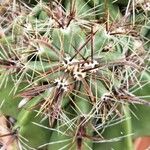
Ferocactus emoryi
Covill's Barrel Cactus · Emory's barrel cactus · Coville's barrel cactus · Traveler's friend · Emory’s barrel cactus
Description
Source: leafsnapFerocactus emoryi, commonly known as Emory's barrel cactus, is native to the southwestern United States and northwestern Mexico. This slow-growing cactus can reach up to 10 feet in height and 3 feet in diameter. It has a cylindrical shape with prominent ribs covered in sharp spines that are yellow or brown and can grow up to 4 inches long. Ferocactus emoryi blooms from late spring through early summer, producing large yellow or red flowers. These are followed by edible fruit that starts green and turns red when ripe. This cactus thrives in well-drained soil and full sun exposure, making it an ideal choice for xeriscaping gardens or desert landscapes. It is drought-tolerant but requires occasional watering during the growing season. Historically, indigenous people have used Ferocactus emoryi for medicinal purposes, such as treating wounds, fever, headaches, and stomach ailments. However, consuming any part of the plant in large quantities can be toxic. Overall, Ferocactus emoryi is an attractive ornamental plant with unique features. Its low maintenance and drought-tolerant nature make it popular among gardeners, especially in arid regions where water conservation is essential.
Care Guide
💧 Water Every 7 days
Emory's barrel cactus is well-suited to desert conditions and is highly drought-tolerant. It only needs water every 2 to 3 weeks. This cactus thrives in full sunlight and benefits from consistent but infrequent watering during its peak growing season. Such a routine promotes flowering while helping to prevent root rot.
How should I water my Emory's barrel cactus to keep it healthy?
When watering your Emory's barrel cactus, you have a lot of options. You can use a watering can, hose, or even a cup to moisten the soil. It's important to water directly into the soil and make sure all areas get evenly moistened for the root system. Using filtered water is best, as tap water may have harmful particles. It's also good to use water that is at or slightly above room temperature to avoid shocking the cactus. But overall, the Emory's barrel cactus is not very picky and will respond well to any kind of water.
What should I do if I give too much or too little water to my Emory's barrel cactus?
Watering outdoor plants, especially new ones or seedlings, is important to prevent them from drying out. Make sure to water them regularly for the first few months until their roots are established. Emory's barrel cactus is an exception as it can rely on rain once the roots are established. When growing Emory's barrel cactus in pots, be careful not to overwater them. If you accidentally overwater, take immediate action to fix the situation. Stop watering the plant right away to minimize the impact. Check the roots by removing the cactus from its pot. If no root rot is found, you can put the plant back in its container. However, if there are signs of root rot, trim affected roots and apply fungicide if needed. Finally, repot the cactus using well-draining soil. For an underwatered Emory's barrel cactus, simply increase the frequency of watering. When underwatered, the leaves will droop and dry out, but they will bounce back after sufficient watering. Correct the watering frequency once you notice signs of underwatering.
How often do I need to water my Emory's barrel cactus?
Most outdoor plants can grow naturally with rainfall, but if your area doesn't get much rain, you'll need to water them every 2 weeks in the spring and fall, and more often in the summer. In the winter, when plants need less water, you can water them less frequently or not at all. If you have a young or newly planted Emory's barrel cactus, you should water it more often to help it establish and become more drought tolerant. For potted plants like the Emory's barrel cactus, there are two ways to determine how often to water them. The first is to set a specific schedule, like once a week or every other week. However, this may not always work since it doesn't consider the specific conditions of your cactus's environment. Another option is to water based on the moisture level of the soil. It's usually best to wait until the top two to four inches of soil, about ⅓ to ½ of the pot's depth, have dried out completely before watering again. Keep in mind that during summer, when the cactus needs more water, a predetermined schedule may not be enough.
How much water does my barrel cactus at Emory's need?
When watering your Emory's barrel cactus, you don't always need to give it a lot of water. If only a few inches of soil have dried since your last watering, giving it about five to ten ounces of water each time will help it grow healthy. You can also adjust the water volume based on the moisture of the soil. If more than half of the soil is dry, give it more water until you see excess water draining from the pot's holes. If your cactus is planted outdoors and gets plenty of rain, it may not need extra watering. When it's young or establishing, water it with 1-2 inches of rain per week. As it grows, it can rely on rainwater, but if there is no rainfall for 2-3 weeks during hot weather, give it a full watering to prevent stress.
How do I know if I'm giving enough water to my Emory's barrel cactus?
When it comes to the Emory's barrel cactus, overwatering is a more common issue. There are clear signs to watch out for in case this happens. Generally, an overwatered cactus will have yellow leaves and may even drop some. Overwatering can also cause the plant to shrink and lead to root rot. On the other hand, an underwatered cactus will also start to wilt. Its leaves may turn brown or become brittle. Regardless of whether you see signs of overwatering or underwatering, it's important to take action to restore the cactus's health.
☀️ Light Full sun
Native to dry regions, Emory's barrel cactus does best in full sun; its natural habitat is marked by intense sunlight and scant shade. It will also tolerate partial sun, providing some flexibility in where it can grow.
What are the sunlight requirements for Emory's barrel cactus?
Emory's barrel cactus thrives when it receives full sun, which is defined as more than 6 hours of sunlight daily, but it can also tolerate partial sun, receiving about 3-6 hours of sunlight. It's important to observe how sunlight moves through your garden to find spots that offer the perfect balance for your plants, ensuring they grow healthy and happy.
Where does Emory's barrel cactus naturally grow?
Emory's barrel cactus is native to open environments, such as sunny meadows and forest edges. These areas provide it with ample light, allowing it to thrive in both full and partial sun conditions. This adaptability to various sunlight conditions makes it a versatile plant for different garden spots.
How can artificial lighting be used for indoor plants like Emory's barrel cactus?
Artificial lighting is crucial for the growth of indoor plants, especially in conditions where natural sunlight is insufficient, like during winter or in less sunny spaces. LED lights are recommended because they can be customized to provide the wavelengths needed by the plants. Full sun plants need 30-50W/sq ft, partial sun plants require 20-30W/sq ft, and full shade plants need 10-20W/sq ft of light. The light source should be placed 12-36 inches above the plant, mimicking the natural sunlight distance, and it's important to mimic the natural daylight hours, typically 8-12 hours of light per day.
What are the common symptoms of light deficiency in Emory's barrel cactus?
When Emory's barrel cactus is not receiving enough light, it may exhibit symptoms such as smaller new leaves, leggy or sparse growth, accelerated leaf drop, delayed or stopped growth, and paler new leaves. These signs indicate that the plant is struggling with suboptimal lighting conditions.
What are the negative effects of too much sunlight on Emory's barrel cactus?
Excessive sunlight can cause various problems for Emory's barrel cactus, including chlorosis, sunscald, leaf curling, wilting, and leaf scorching. These symptoms result from the plant's overexposure to intense sunlight, which damages the plant tissue and affects its ability to maintain adequate hydration and photosynthesis.
🌡️ Temperature 20–37.8°C
Emory's barrel cactus does best in warm conditions and needs higher temperatures during the growing season to encourage growth and metabolic processes. It prefers plenty of sunlight, proper moisture levels, and good air circulation. However, it can be damaged by very low temperatures and by overwatering. It is important to maintain a balance and avoid both excessively high temperatures and overly dry conditions.
What is Emory's barrel cactus?
Emory's barrel cactus, scientifically known as Ferocactus emoryi, is a species of cactus.
💨 Humidity
🪴 Soil 6-7
🌱 Fertilizer
For Emory's barrel cactus, apply light doses of fertilizer once or twice a year during the growing season. Do not fertilize in winter or summer when the plant is dormant. Use less fertilizer for plants that have been repotted, and wait a couple of months after repotting before feeding. Fertilizing helps maintain healthy growth and promotes blooms.
🪴 Pot & Repot Every 3 years
✂️ Pruning
The Emory's barrel cactus requires minimal pruning, which is best done from early to late winter to remove dead or damaged parts. Light pruning helps improve air circulation and reduces the risk of disease. Always use sterilized tools to prevent infections, ensuring vibrant and robust growth for optimal plant health.
🌿 Propagating
🐛 Diseases & pets
☠️ Toxicity
Characteristics
- Plant Type
- Shrub
- Life Cycle
- Perennial
- Genus
- Ferocactus
- Family
- Cactaceae
- Hardiness Zone
- 9-11
- Mature Height
- 0.91 m to 1.83 m
- Mature Spread
- 76 cm
- Leaf Color
- Green
- Leaf Type
- Evergreen
- Flower Color
- Yellow, Orange
- Flower Size
- 5.08 cm to 6.35 cm
- Bloom Time
- Summer
- Planting Time
- Spring, Summer, Autumn
- Harvest Time
- Late summer, Early fall, Mid fall
- Native Area
- Texas, New Mexico, and Chihuahua, Mexico