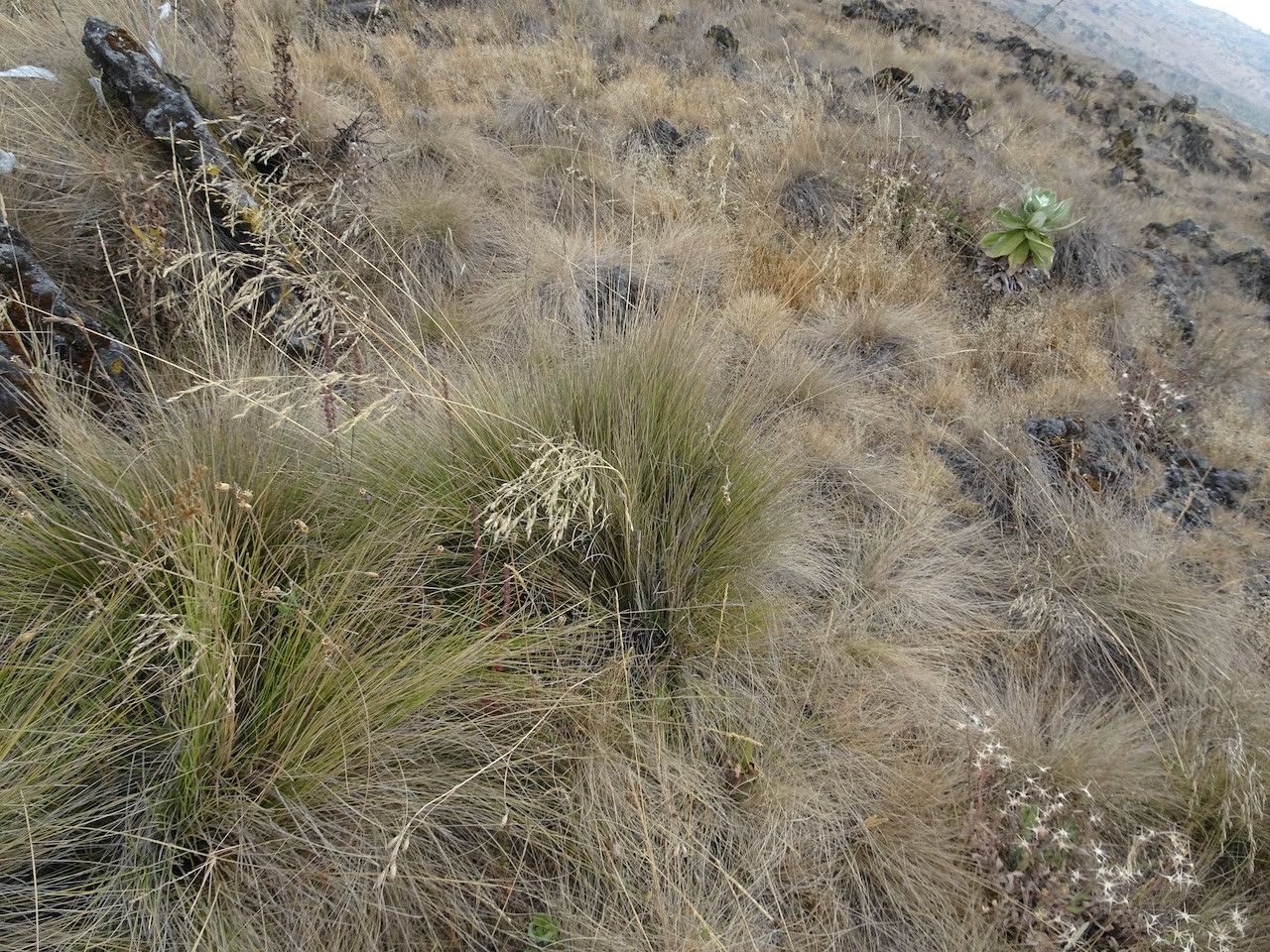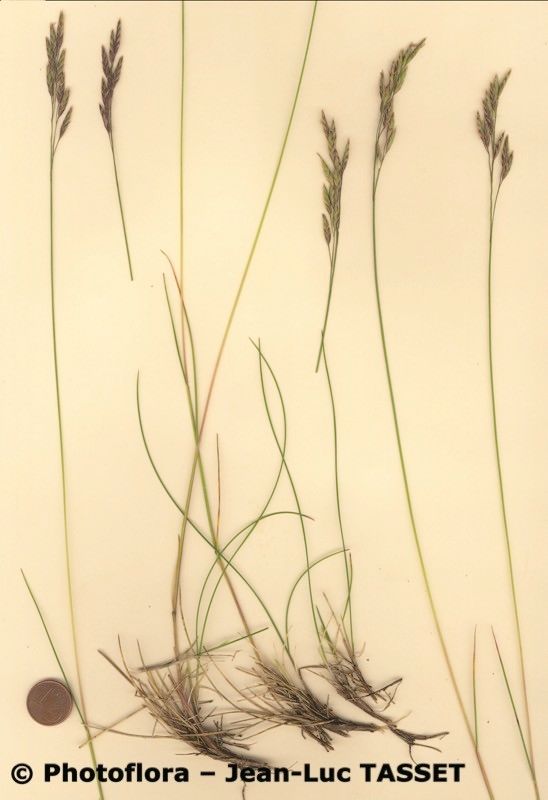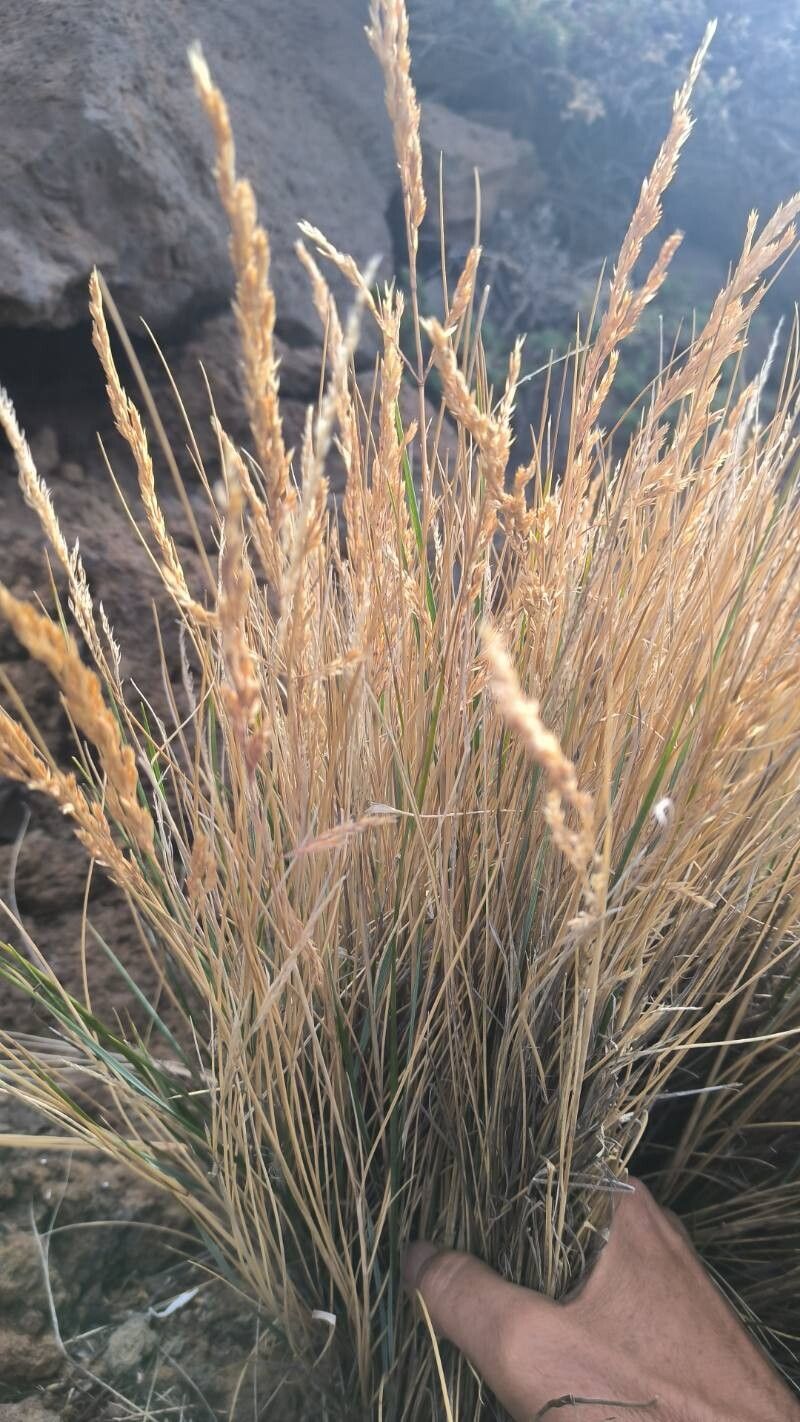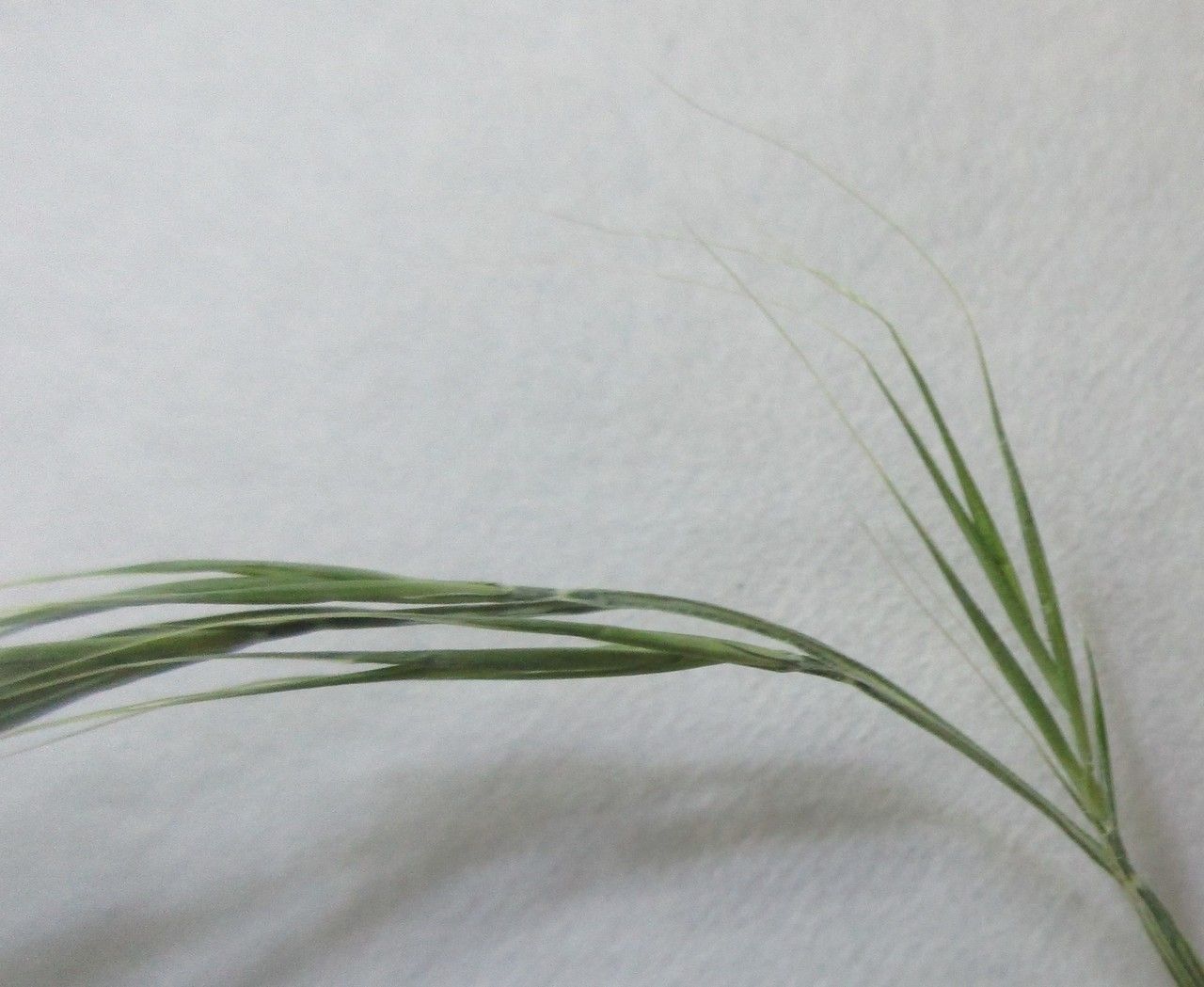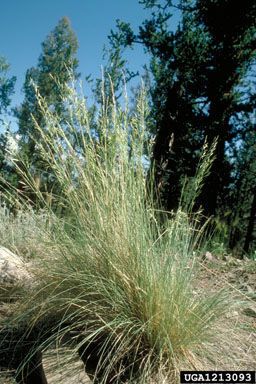
Festuca arizonica, commonly called Arizona fescue, is a grass found in western North America, in the southwest United States and northern Mexico. This species also has the common names mountain bunchgrass and pinegrass. This grass lacks rhizomes, but it has a large, fibrous root system and it can be used for erosion control. The stems grow up to one meter tall. They are rough-textured and blue-green in color. The rough, blue-green leaf blades are "shaped like a string" and measure up to 10 inches long. The inflorescence is a branching array up to 20 centimeters long which may be narrow or somewhat open in shape.This grass grows on loams, including clay loams, and gravelly and sandy soil types. It usually grows in ecosystems dominated by the ponderosa pine. It may grow alongside blue grama and mountain muhly grasses. It is tolerant of shade and drought.This species is somewhat palatable to domestic ungulates, and it provides forage for wild animals such as deer and bighorn sheep. It can be planted in revegetation efforts on reclaimed land such as mine spoils, as long as the area receives adequate precipitation. It can also be used as an ornamental in gardens, but it does not tolerate trampling. The cultivar 'Redondo' is available.
Arizona fescue is fairly disease-resistant and usually does not suffer from illnesses. As for care, this plant is relatively low-maintenance. When grown outdoors it needs little watering, and larger plants typically do not require pruning. Smaller plants, however, should be trimmed after they have finished blooming. Arizona fescue is appropriate for anyone with an outdoor area, such as a garden or a deck, and does not demand extensive care experience.
How to keep Festuca Arizonica.
Light
Arizona fescue is a sun-loving, perennial herbaceous plant that comes from open habitats and is often found in meadows and grasslands. It prefers full sun but can also tolerate partial sun.
Temperature
Arizona fescue is native to regions where temperatures commonly range from 32 to 77°F (0 to 25℃). It performs best within that range. Alter its exposure during severe seasonal changes for optimal growth.
Fertilizer
Arizona fescue needs extra nutrients to encourage healthy new growth. In spring, adding compost around the plant’s base can effectively supply the nutrition it requires. Fertilizing supports vigorous growth and helps the plant withstand diseases and pests.
Pruning
Arizona fescue is a resilient grass characterized by its fine blue-green blades. To promote healthy growth and improve its appearance, prune the grass in early spring to a height of 5-8 cm (2-3 inches). Regular pruning enhances air circulation and lowers the risk of diseases. Be sure to avoid pruning later in the season to prevent cold stress, and always use clean, sharp tools for the best results.
Botanical profile.
- Plant Type
- Grass
- Life Cycle
- Perennial
- Genus
- Festuca
- Family
- Poaceae
- Hardiness Zone
- 3
- Mature Height
- 61 cm
- Mature Spread
- 30 cm to 61 cm
- Leaf Color
- Green, Light Green
- Leaf Type
- Semi-evergreen
- Flower Color
- Yellow, Green, Purple, Brown
- Flower Size
- 0.51 cm to 1.02 cm
- Bloom Time
- Late spring, Early summer
- Planting Time
- Spring, Summer
- Harvest Time
- Mid summer, Late summer
- Native Area
- Mexico, Venezuela
Other names.
Reader questions.
What are the sunlight requirements for Arizona fescue?
Arizona fescue thrives in full sunlight, requiring more than 6 hours of direct sunlight daily. However, it can also tolerate partial sun conditions, which means about 3-6 hours of sunlight each day. It's essential to observe how sunlight moves through your garden to choose the best spots for planting, ensuring a good balance of light and shade for optimal plant health.
What is the ideal temperature range for Arizona fescue to thrive?
Arizona fescue, botanically known as Festuca arizonica, is native to environments where temperatures typically range between 32 to 77°F (0 to 25°C). It thrives best within this temperature range. To ensure optimal growth, it's important to adjust its exposure during severe seasonal changes.
What essentials should I know about growing Arizona fescue?
Arizona fescue is a perennial herbaceous plant that prefers open habitats like meadows and grasslands. It loves the sun but can tolerate partial sun conditions too. When growing Arizona fescue indoors or in areas with insufficient natural light, artificial lighting can be a vital solution. LED lights are recommended, offering customization to provide specific wavelengths needed by your plants. Full sun plants require 30-50W/sq ft, partial sun plants need 20-30W/sq ft, and the light source should be placed 12-36 inches above the plant, mimicking natural daylight for 8-12 hours per day.
Does Arizona fescue require frost protection measures during winter?
Arizona fescue is highly cold-tolerant and does not require additional frost protection measures during the winter. However, before the first freeze in autumn, it is recommended to water the plant generously. This is to ensure the soil remains moist and enters a frozen state, which helps prevent drought and water scarcity for the plant during winter and early spring.
What are important symptoms of light deficiency in Arizona fescue?
When Arizona fescue is not receiving enough light, it may display symptoms such as small and pale new leaves, leggy or sparse growth, faster leaf drop, halted growth, and conditions like chlorosis, sunscald, leaf curling, wilting, and leaf scorching. These symptoms indicate that the plant is struggling with light deficiency, affecting its overall health and ability to carry out photosynthesis effectively.
What should I do if the winter temperature drops below -35°C for Arizona fescue?
Although Arizona fescue is extremely cold-tolerant, winter temperatures should be maintained above -35°C. If temperatures drop below this threshold, there may not be any noticeable changes during winter; however, there could be a decrease in sprouting or even no sprouting during springtime. In spring, it is advised to remove any parts of the plant that have failed to sprout.
What solutions can help Arizona fescue with light deficiency?
For indoor Arizona fescue plants struggling with light, gradually moving them to sunnier locations each week until achieving at least 6 hours of sunlight per day is crucial. Utilize south-facing windows and consider artificial lighting for additional support. Outdoors, adapt plants to brighter spots gradually to prevent sunburn. Reducing obstructions like pruning trees can improve sunlight exposure. If necessary, transplant smaller plants during dormant periods to sunnier locations with good drainage, ensuring healthier new growth after increasing light exposure.
How should I care for Arizona fescue when temperatures exceed 25°C?
Arizona fescue is not tolerant to high temperatures. When the temperature exceeds 25°C, its growth will stop, and it becomes more susceptible to rot. To care for Arizona fescue in high temperatures, trim away the sunburned and dried-up parts. Move the plant to a location that provides shade from the midday and afternoon sun, or use a shade cloth to protect it. Additionally, water the plant in the morning and evening to keep the soil moist.