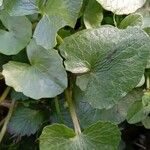
Ficaria verna
انجیرک · Lesser Celandine · Fig Buttercup · Pilewort · Fig-root Buttercup
Description
Source: leafsnapFicaria verna, commonly known as lesser celandine, is a perennial flowering plant in the buttercup family. Native to Europe and western Asia, it has been introduced globally. The plant grows up to 30 cm in height, featuring glossy, heart-shaped green leaves with wavy margins. Its bright yellow flowers, which have eight petals, bloom from March to May. Lesser celandine thrives in moist soils and shaded areas such as woodlands, hedgerows, and riverbanks. It spreads rapidly through underground tubers called bulbils, forming dense mats of vegetation. Traditionally used in medicine for its diuretic properties, the plant can be toxic if ingested in large quantities due to its high concentration of protoanemonin. In some regions, lesser celandine is considered an invasive species because it can outcompete native plants for resources. Thus, it is crucial not to introduce it into new habitats or gardens where it may become problematic. Overall, Ficaria verna is an attractive early spring bloomer that adds color and interest when planted appropriately. However, it must be managed carefully due to its invasive potential.
🌳 Lesser celandine has been recognized in phytoremediation work as an indicator of heavy metals in soil. Because it can tolerate metal-rich environments, it serves as a natural sign of environmental quality. In addition, lesser celandine may be useful in soil decontamination strategies: it takes up and accumulates metals, so it acts not only as an indicator but also as an active participant in cleansing the soil.
🎭 Upcoming joys.
Care Guide
💧 Water Every 3 days
Lesser celandine thrives in moist environments, mirroring the rainfall of its woodland habitat. While it can tolerate brief dry periods, it needs weekly watering to stay healthy. As an herbaceous perennial, it flourishes outdoors, benefitting from seasonal rains that support its growth and springtime flowering.
How should I water my Lesser celandine plant in the best way?
To properly water the Lesser celandine, it is best to use filtered water at room temperature. This type of water is preferable over tap water because tap water may contain harmful particles for the plant. It is important to use water that is at room temperature or slightly warmer because the plant is accustomed to a warm environment and cold water can be a shock to its system. Furthermore, it is recommended to avoid overhead watering as it can cause problems with the foliage. Instead, it is advised to directly apply the filtered room temperature water to the soil until it is completely soaked. This method of watering is beneficial as it helps moisten the roots and allows them to continue spreading through the soil to collect the necessary nutrients.
What should I do if I give my Lesser celandine too much or too little water?
Both overwatering and underwatering can harm your Lesser celandine, but overwatering is a more common issue. Too much water can cause wilting and yellowing of the stems and leaves, and prolonged overwatering can lead to diseases like root rot, mold, and mildew, which can be fatal to your plant. While underwatering is less common for the Lesser celandine, it can still happen. In such cases, the leaves may become brittle and brown. It is important to recognize the signs of overwatering early on. If you notice them, reduce your watering schedule immediately and check the soil's quality. If the soil drains poorly, replace it with a well-draining potting mix. Conversely, if your Lesser celandine lacks water, increase your watering frequency until the signs improve.
How frequently should I water my Lesser celandine?
If your Lesser celandine plant is in a pot, the most precise way to determine if it needs water is to check the moisture level of the soil by sticking your finger into it. If the top two to three inches of soil feel dry, it's time to water it. If you have the plant growing outdoors in the ground, you can use a similar method to test the soil. Once again, if the top few inches of soil have dried out, it's time to give it some water. Generally, during spring and early fall, you'll need to water the plant about once a week using this method. However, during extremely hot weather, you may have to increase the frequency to twice or more per week. It's important to note that mature, well-established Lesser celandine plants have a remarkable ability to withstand drought.
How much water does my Lesser celandine require?
To ensure your Lesser celandine gets the right amount of water, don't hold back. Water deeply when the top two to three inches of soil are dry. Make sure the water permeates the entire soil by adding enough to allow excess water to flow out of the drainage holes of the pot. If you don't see this, it means you haven't watered enough. However, be cautious not to let water accumulate in the soil, as it can harm the plant. Additionally, if water doesn't drain well through the pot, it might indicate poor soil drainage, which is bad for the plant's health. If the plant is outside, roughly 1 inch of rain per week should be adequate.
How should I water my Lesser celandine when it is growing at different stages?
The water needs of the Lesser celandine can vary depending on its growth stages. In the first few years of its life or when it is newly transplanted, it requires more water. During these stages, the plant focuses on developing new roots for future growth, and these roots need slightly more moisture. As the plant matures, its water requirements decrease. Another stage that may require more water is during the bloom period, as flower development utilizes a significant amount of moisture.
☀️ Light Partial sun
The less celandine can survive under average sunlight exposure, but it can also withstand durations of low or high solar illumination. It comes from habitats where diffused sunlight frequently occurs, giving it optimum health and growth in these settings. Excessive or insufficient light may possibly hamper its prosperity.
What are the sunlight requirements for Lesser Celandine?
Lesser Celandine requires 'Partial sun' meaning about 3-6 hours of sunlight daily, and it can also tolerate 'Full shade, Full sun' conditions, which is less than 3 hours of sunlight daily. It's important to observe how sunlight moves through your garden to find spots that provide the perfect balance for your plants, ensuring their happiness.
What are the essentials for growing Lesser Celandine?
Lesser Celandine thrives under moderate solar exposure and can endure periods of less or more sunlight, reflecting its origin in environments with scattered sunlight. For indoor plants requiring adequate lighting, when natural sunlight is lacking, artificial lights such as LED, which can be customized to provide specific wavelengths, offer a solution. The plant needs specific wattage based on its sun requirements: full sun plants need 30-50W/sq ft, partial sun plants 20-30W/sq ft, and full shade plants 10-20W/sq ft of artificial light. The light source should be placed 12-36 inches above the plant, mimicking the natural daylight hours, typically 8-12 hours per day.
What are the symptoms of improper lighting for Lesser Celandine?
Improper lighting can cause various symptoms in Lesser Celandine. Insufficient light can lead to smaller leaves, leggy or sparse growth, faster leaf drop, slower or no new growth, and lighter-colored or yellow leaves due to chlorosis. Excessive sunlight, on the other hand, can cause sunscald, leaf curling, wilting, and leaf scorching. These conditions reflect the plant's struggle with unbalanced light exposure.
What solutions are available for light-related issues in Lesser Celandine?
To solve light-related issues in Lesser Celandine, indoor plants can be gradually moved to sunnier spots or supplemented with artificial light, like using a desk or ceiling lamp for at least 8 hours daily or investing in professional plant grow lights. Outdoor plants should also be moved gradually to avoid sunburn. Reducing obstructions like pruning tree branches can help outdoor plants receive more sunlight. If necessary, transplanting smaller plants during their dormant period (late winter or early spring) to a location with ample sunlight and good drainage can be beneficial. Note that parts of the plant affected by insufficient sunlight may not recover, but new growth should be healthy following adjustments.
🌡️ Temperature 5–32.2°C
The lesser celandine originates from temperate zones and thrives in temperatures ranging from 41 to 89.6 ℉ (5 to 32 ℃). During the spring and summer seasons, it copes well with varying temperatures, but during winter, it requires protection from long-term exposure to below freezing temperatures.
What are the native regions and preferred temperatures for Lesser Celandine?
Lesser celandine is native to temperate regions and thrives in temperatures ranging from 41 to 89.6 °F (5 to 32 °C). This plant adapts well to the fluctuating temperatures of spring and summer. However, during winter, it is crucial to protect Lesser celandine from prolonged exposure to freezing temperatures to ensure its survival and health.
What measures should be taken to protect Lesser Celandine in winter?
Despite the strong cold resistance of Lesser celandine, it is important to protect it from winter temperatures that drop below its growth limit. This protection can be provided by covering the plant with soil or straw. Additionally, watering the plant abundantly before the first freeze of autumn is recommended to keep the soil moist, which helps in preventing drought and water scarcity for the plant during winter and early spring.
How does Low Temperature affect Lesser Celandine and what are the solutions?
Lesser celandine is cold-tolerant and flourishes best when the temperature is above its suitable growth minimum. However, during winter, it should be kept above its tolerable growing temperature minimum. If the temperature falls below the plant's growth limit, there might not be noticeable changes during winter, but it could result in decreased sprouting or no sprouting at all during spring. The solution for such an issue involves removing any parts of the plant that have failed to sprout in spring.
How does High Temperature affect Lesser Celandine and what are the solutions?
In summer, it is crucial to keep Lesser celandine below its suitable growth temperature maximum. Exceeding the tolerable growing temperature maximum can lead to leaves becoming lighter in color, curling, and becoming susceptible to sunburn, and in severe cases, the entire plant may wilt and dry. To combat these issues, trim away the sunburned and dried-up parts of the plant, move the plant to a shaded location or use a shade cloth to protect it from the midday and afternoon sun, and ensure the soil remains moist by watering the plant in the morning and evening.
💨 Humidity
🪴 Soil 6-7
🌱 Fertilizer
Lesser celandine typically requires only one fertilizer application in spring, however, several applications can optimize its growth. Provide nourishment every one to one and a half month. The process of fertilizing not only improves the appearance and functionality of the leaves by encouraging steady color and maintaining its healthy texture, but it also spurs the development of roots and improves the absorption of nutrients, which in turn boosts the overall health of the plant in the long run.
🪴 Pot & Repot 2-3 years
When transplanting Lesser celandine, select a container that is 1-2 inches (2.5-5 cm) bigger and has sufficient drainage. Utilize a potting mixture that drains well. Perform the repotting in either spring or autumn, making sure the root ball sits a bit beneath the edge of the plant pot. Thoroughly water the plant post-transplantation and situate it in a warm location that receives indirect sunlight.
✂️ Pruning
🌿 Propagating
🐛 Diseases & pets
☠️ Toxicity
Characteristics
- Plant Type
- Herb
- Life Cycle
- Perennial
- Genus
- Ficaria
- Family
- Ranunculaceae
- Hardiness Zone
- 4-8
- Mature Height
- 10 cm to 20 cm
- Mature Spread
- 20 cm
- Leaf Color
- Green
- Leaf Type
- Deciduous
- Flower Color
- Yellow, Gold
- Flower Size
- 1.52 cm to 6.35 cm
- Bloom Time
- Early spring, Mid spring
- Planting Time
- Spring
- Harvest Time
- Mid spring, Late spring
- Native Area
- United Kingdom, Italy