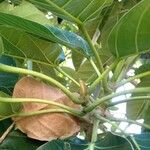
Ficus callosa
Ilat-ilatan (Indonesia) · Jack fruit
Description
Source: leafsnapFicus callosa, commonly known as the bark-cloth fig, is a species of fig tree native to Southeast Asia. This small to medium-sized tree can reach a height of up to 20 meters. Its bark is smooth and grayish-brown, and it features large, oval-shaped leaves with pointed tips. The Ficus callosa produces small, greenish-yellow flowers that are pollinated by wasps. The fruit resembles a small fig and contains numerous tiny seeds. For centuries, indigenous communities in Southeast Asia have used the bark-cloth fig for its medicinal properties. It has served as an anti-inflammatory agent and a treatment for skin diseases. Beyond its medicinal uses, Ficus callosa plays a significant ecological role in its native habitat. The tree provides food and shelter for various species, including birds, bats, monkeys, and insects. In summary, Ficus callosa is a species of great cultural and ecological importance in Southeast Asia.
Care Guide
💧 Water Every 7 days
The calloused fig is well-suited to arid conditions due to its impressive drought tolerance. It thrives with balanced humidity and needs watering only every 2-3 weeks. As an evergreen plant, it retains its leaves throughout the year, which helps it conserve water even in dry climates.
How can I best water my Calloused fig?
Your Calloused fig is not picky when it comes to watering methods. You can use common tools like watering cans, hoses, or cups to water it. When watering, it's best to apply water directly to the soil. Make sure to moisten all areas of the soil evenly to provide water to all parts of the root system. Using filtered water can be helpful as tap water may contain harmful particles for plants. It's also beneficial to use water at or slightly above room temperature to avoid shocking the Calloused fig. However, this plant usually responds well to any kind of water you give it.
What do I do if I give my Calloused fig plant too much or too little water?
Outdoor plants, especially newly planted ones or seedlings, are prone to lack of watering. When the tree is small or newly planted, it is important to water it regularly for a few months. Once the roots are established, the plant can rely on rain most of the time. Overwatering is more likely to happen when Calloused figs are planted in pots. If you accidentally overwater your Calloused fig, take immediate action to remedy the situation. Stop watering the plant to minimize the effects of overwatering. Then, inspect the roots by removing the plant from its pot. If no root rot is found, you can return the plant to its container. However, if there are signs of root rot, trim away the affected roots and consider applying a fungicide to prevent further damage. Repot the Calloused fig in well-draining soil. On the other hand, underwatering a Calloused fig is an easy fix. Signs of underwatering include drooping, drying, and falling leaves. Simply water the plant more frequently and correct your watering frequency as soon as you notice signs of underwatering.
How often do I need to water my Calloused fig tree?
Most outdoor plants can survive with natural rainfall. However, if you live in an area with limited rainfall, you should water your plants every 2 weeks in the spring and fall. In the summer, you will need to water more frequently, while in the winter, you can reduce the amount of watering as plants grow slower and require less water. For young or newly planted Calloused fig plants, more frequent watering is necessary to help them establish and mature. This will result in more adaptable and drought-tolerant plants. When it comes to potted plants, there are two main ways to determine watering frequency for Calloused figs. You can either follow a predetermined schedule, such as once a week or once every other week, although this may not always consider the specific growing conditions. Alternatively, you can check the soil moisture to determine when to water. Wait until the top two to four inches of soil, about one-third to half the depth of the pot, have completely dried out before giving more water.
How much water does my fig with rough, hardened skin need?
When watering your Calloused fig, keep in mind that it doesn't always need a lot of water. If only a few inches of soil have dried since the last watering, give it about five to ten ounces of water. You can also determine the water volume by checking the soil moisture. If more than half of the soil is dry, give more water until you see excess water draining from the pot's drainage holes. If the Calloused fig is outdoors and receives plenty of rain, it may not need additional watering. However, when it's young or establishing, make sure it gets 1-2 inches of rain per week. Once it's more established, it can rely solely on rainwater. Only if there's a hot spell without rain for 2-3 weeks should you consider giving it a full watering to prevent stress.
How do I know if I'm watering my fig tree enough?
The Calloused fig is more commonly affected by overwatering, which has several noticeable signs. An overwatered plant will have yellowing leaves and may shed some leaves. Additionally, overwatering can lead to shriveling of the plant's structure and root rot. Conversely, an underwatered Calloused fig will start to droop and may develop brown or brittle leaves. Whether you observe signs of overwatering or underwatering, it is important to take action promptly to restore the health of your plant.
☀️ Light Partial sun
Calloused fig is native to habitats like forest understories or rocky areas, where it grows in natural shade. It prefers partial sun but can adapt to full sun or full shade, showing its versatile and hardy nature.
🌡️ Temperature 20–37.8°C
Calloused fig comes from tropical areas, where the climate is usually warm and humid. As a result, it is adapted to high temperatures and humidity. It does not tolerate sudden temperature changes and prefers a steady temperature, so it's important to avoid fluctuations indoors. It typically cannot endure cold and needs higher temperatures to grow. If the surrounding temperature falls too low, the plant may stop growing or even die.
What is the botanical name of the Calloused fig?
The botanical name of the Calloused fig is Ficus callosa. This species, known for its distinct characteristics among the Ficus family, does not have detailed essentials, symptoms, or additional information provided in the given data.
💨 Humidity
🪴 Soil 6-7
🌱 Fertilizer
The best time to fertilize a Calloused fig is in early spring, as it comes out of dormancy. This encourages overall growth and the development of flowers. Fertilizing improves the foliage, stems, and branches, while supporting large, vibrant, and long-lasting flowers. It helps move nutrients from the roots to the flowers and enhances the plant's health and resistance to disease.
🪴 Pot & Repot
✂️ Pruning
To promote optimal health in fig trees, it's best to prune calloused branches from early to late winter. This helps remove dead or overcrowded branches, ensuring the tree maintains a good shape and allows for better air circulation. Avoid heavy pruning outside this period to prevent stress on the tree. Regular pruning encourages growth and helps maintain a vibrant appearance.
🌿 Propagating
🐛 Diseases & pets
☠️ Toxicity
Characteristics
- Plant Type
- Tree
- Life Cycle
- Perennial
- Genus
- Ficus
- Family
- Moraceae
- Hardiness Zone
- 10-12
- Mature Height
- 24.99 m to 35.05 m
- Mature Spread
- 14.94 m to 20.12 m
- Leaf Color
- Green
- Leaf Type
- Evergreen
- Flower Size
- 3.05 cm
- Bloom Time
- All year round
- Planting Time
- Spring, Summer, Autumn
- Harvest Time
- All year round
- Native Area
- Sri Lanka, India, Malaysia, Indonesia, Cambodia, Vietnam, Myanmar, Philippines, Laos, Thailand, China