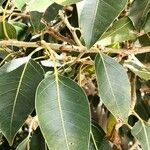
Ficus cordata
Namaqua Rock Fig
Description
Source: leafsnapFicus cordata, the Namaqua rock fig, or Namaqua fig is a species of fig that occurs in two disjunct populations in Africa, one in the arid southwest of the continent, and a second in the northern subtropics. In the south it is often the largest and most prominent tree, and is virtually restricted to cliff faces and rock outcrops, where it has a rock-splitting habit.
🌳 Although today it exists mainly as a decorative species in our homes, the rubber plant has a notable past tied to early industry. Its sap, rich in a rubber-like substance, was once central to rubber production, which explains its name rubber plant, meaning 'elastic'. A plant with a legacy, its flexible nature echoes its historical influence.
🎭 Significant recollections, amicability, plenty, joy, prosperity
Care Guide
💧 Water
☀️ Light Partial sun
A rubber plant requires a balanced amount of sunshine, flourishing in conditions where it gets equal amounts of sunlight and shade. This plant, which is native to locations with varying light levels, also excels in continuous shade or constant sunlight, although extensive sun exposure may lead to leaf scorching and inadequate sunlight may hamper photosynthesis, resulting in inhibited growth. Regardless of the stage of growth, the plant's sun requirement remains steady.
🌡️ Temperature 20–37.8°C
The rubber plant originates from tropical regions, where the temperature typically varies between 68 to 100.4 ℉ (20 to 38 ℃). Although it can withstand temperatures as low as 50 ℉ (10 ℃) and as high as 85 ℉ (29 ℃), it generally prefers the range between 60 and 75 ℉ (15.5 to 23.8 ℃). To prevent damage from cold during the winter months, it's advisable to maintain a temperature of over 55 ℉ (12.8 ℃).
💨 Humidity
🪴 Soil 5-7
🌱 Fertilizer
It is indispensable to fertilize Rubber plants for their proper upkeep. Consistently nourishing them throughout the growth phase assists in maintaining vitality for lustrous leaves and promotes overall development. Overlooking the need for fertilization could lead to sickly leaves, reduced decorative attractiveness, and impaired or feeble growth susceptible to damages.
🪴 Pot & Repot 2-3 years
During the transplantation of the Rubber plant, select a container that is 1-2 inches bigger and has sufficient drainage. Employ a potting mix that drains easily. Carry out the repotting during spring or autumn, and make sure that the plant's root ball is marginally below the rim of the planting pot. After completing the repotting process, irrigate extensively and position the plant in a warm location where it will receive diffused sunlight.
✂️ Pruning
🌿 Propagating
🐛 Diseases & pets
☠️ Toxicity
Characteristics
- Plant Type
- Tree
- Life Cycle
- Perennial
- Genus
- Ficus
- Family
- Moraceae
- Hardiness Zone
- 9-11
- Mature Height
- 20.12 m to 39.93 m
- Mature Spread
- 10.06 m
- Leaf Color
- Green, Variegated
- Leaf Type
- Evergreen
- Flower Color
- Green
- Flower Size
- 2.54 cm
- Bloom Time
- Mid summer
- Planting Time
- Spring, Summer, Autumn, Winter
- Harvest Time
- Mid summer, Late summer
- Native Area
- India, Malaysia, Indonesia, Cambodia, Vietnam, Myanmar, Bhutan, Bangladesh, Laos, China