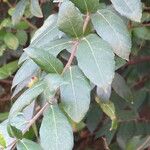
Ficus coronata
Creek fig · Creek sandpaper fig · Sandpaper fig · Creek sandpaper
Description
Source: leafsnapFicus coronata, commonly known as the sandpaper fig or creek sandpaper fig, is a species of fig tree, native to Australia. It is found along the east coast from Mackay in Central Queensland, through New South Wales and just into Victoria near Mallacoota. It grows along river banks and gullies in rainforest and open forest. Its common name is derived from its rough sandpapery leaves, which it shares with the other sandpaper figs.
Care Guide
💧 Water
The sandpaper fig has strong roots and requires little water during droughts. When caring for a potted sandpaper fig, water it when the soil feels dry: about once a week in warmer months and every two weeks in winter. If the weather is particularly hot, you may need to water it more frequently. Additionally, if the air is dry, increase humidity to promote healthy growth.
☀️ Light Partial sun
Ficus crocata occurs naturally in places like forest understories or rocky sites, where it grows in natural shade. It prefers partial sun but can acclimate to full sun or full shade, showing its versatile and hardy nature.
🌡️ Temperature 20–37.8°C
Ficus crocata comes from tropical areas, where the climate is generally warm and humid. Therefore, it is adapted to high temperatures and humidity. It dislikes abrupt temperature changes and prefers a steady thermal environment, so avoiding temperature fluctuations indoors is important. It typically cannot tolerate cold and requires warmer conditions to grow. If the ambient temperature becomes too low, the plant may stop growing or even perish.
What is Sandpaper fig?
Sandpaper fig, known scientifically as Ficus coronata, is a species belonging to the genus Ficus. Unfortunately, further details about its characteristics, including essential facts, symptoms of its presence, or any additional information, were not provided.
💨 Humidity
🪴 Soil 6-7
🌱 Fertilizer
The best time to fertilize a Ficus crocata is in early spring, as it comes out of dormancy. This encourages overall growth and flower development. Fertilizing improves the foliage, stems, and branches while encouraging flowers that are larger, more vibrant, and longer-lasting. It also helps transfer nutrients from the roots to the flowers and boosts the plant’s health and resistance to disease.
🪴 Pot & Repot
✂️ Pruning
The sandpaper fig is a resilient shrub characterized by its rough-textured leaves. To encourage growth, enhance fruit production, and improve air circulation, it is best to prune the plant in early spring. During pruning, remove any dead branches and thin out crowded areas. Make sure to use clean, sharp tools to maintain the plant effectively and prevent the spread of disease.
🌿 Propagating
🐛 Diseases & pets
☠️ Toxicity
Characteristics
- Plant Type
- Tree
- Life Cycle
- Perennial
- Genus
- Ficus
- Family
- Moraceae
- Hardiness Zone
- 10-12
- Mature Height
- 20.12 m to 29.87 m
- Mature Spread
- 14.94 m to 24.99 m
- Leaf Color
- Dark Green, Forest Green
- Leaf Type
- Evergreen
- Bloom Time
- All year round
- Planting Time
- Spring, Summer
- Harvest Time
- All year round
- Native Area
- Colombia, Belize, Cuba, Honduras, Mexico, Guatemala, Bolivia, Venezuela, Peru, Brazil, Nicaragua, Ecuador, Costa Rica, Panama