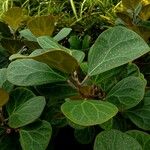
Ficus deltoidea
Mistletoe fig · Delta Fig · Fig Shrub · Mistletoe Rubber Plant
Description
Source: leafsnapFicus deltoidea, commonly known as the Mistletoe Fig or the Malaysian Banyan, is a species of fig tree native to Southeast Asia. This small to medium-sized evergreen tree can reach up to 20 meters in height in its natural habitat. The leaves of Ficus deltoidea are glossy and leathery, with a distinctive triangular shape that tapers toward the tip. The plant produces small, greenish-yellow flowers that are followed by edible fruit. For centuries, Ficus deltoidea has been utilized in traditional medicine due to its numerous health benefits. It is believed to have anti-inflammatory and antioxidant properties and has been used as a natural remedy for various ailments, including diabetes, high blood pressure, and skin conditions. Beyond its medicinal uses, Ficus deltoidea is also popular as an ornamental plant, prized for its attractive foliage and ease of care. It can be grown both indoors and outdoors in well-draining soil with moderate watering. Overall, Ficus deltoidea is a fascinating plant with both medicinal and ornamental value, making it a favorite among gardeners worldwide.
Care Guide
💧 Water Every 7 days
The mistletoe fig is native to tropical rainforests and thrives in environments with consistent moisture while also having a moderate tolerance for drought. It needs to be watered weekly and benefits from regular misting to maintain humidity. This care promotes vibrant growth, especially during its active growing season.
☀️ Light Full sun
The mistletoe fig's growth is greatly enhanced in places that receive abundant sunlight all day, though it can also tolerate areas where sunlight is intermittent. Its native habitat underlies this reliance on light, and its characteristics help support that. Too little or too much sunlight can negatively affect its health.
What are the sunlight requirements for plants?
Plants generally have different sunlight requirements to thrive. Full sun plants need above 6 hours of sunlight per day, while partial sun plants require about 3-6 hours of sunlight daily. It's important to observe how sunlight moves through your garden throughout the day to find spots that offer the ideal balance of light and shade, ensuring your plants' well-being.
How does sunlight affect the growth of mistletoe fig (Ficus deltoidea)?
The mistletoe fig’s growth significantly benefits from being in locations that receive abundant sunlight throughout the day, though it can also withstand areas with less constant sunlight. Originating from environments that support its reliance on sunlight, the mistletoe fig exhibits traits that help it adapt to varying light conditions. However, both inadequate and excessive sunlight can negatively impact its health.
What can be done if natural sunlight is insufficient for indoor plants?
When natural sunlight is inadequate, especially during winter or in less sunny areas, artificial lighting can be crucial for indoor plants. Using the right type of artificial light, such as LED lights, can be beneficial since they can be calibrated to provide specific wavelengths needed by the plants. Proper wattage, based on the plant's sunlight needs (30-50W/sq ft for full sun plants, 20-30W/sq ft for partial sun plants, and 10-20W/sq ft for full shade plants), correct placement of the light source (12-36 inches above the plant), and mimicking natural daylight hours (8-12 hours per day) are essential practices for optimal growth.
What are the signs of light deficiency in indoor Mistletoe fig plants?
Indoor mistletoe fig plants show several symptoms when they suffer from inadequate lighting. These include developing smaller new leaves, experiencing leggy or sparse growth, dropping leaves faster to conserve resources, halting or significantly slowing down new growth, displaying lighter-colored new leaves or irregular color patterns due to a lack of chlorophyll, and showing signs of chlorosis or sunscald, which affect the plant's photosynthesis process. Other symptoms like leaf curling, wilting, and scorching indicate stress due to excessive sunlight or light deficiency.
What solutions are recommended for Mistletoe fig plants facing light deficiency?
To combat light deficiency, gradually increase the exposure of your Mistletoe fig plants to sunlight, targeting at least 6 hours of direct sunlight daily if possible. For indoor plants, use south-facing windows or consider artificial lighting, keeping lights on for about 8 hours a day. Outdoors, gently acclimatize your plants to brighter conditions to avoid sunburn. If physical obstructions block natural light, consider pruning or relocating smaller plants to sunnier locations ensuring they receive the required sunlight. Remember, although affected parts of the plant may not recover, new growth should be healthy with improved light conditions.
🌡️ Temperature 20–37.8°C
Mistletoe fig comes from environments where temperatures commonly range from 68 to 100 °F (20 to 38 ℃). It flourishes in those warmer conditions, so it's important to maintain similar temperatures year-round.
What is the native temperature range for Mistletoe fig?
Mistletoe fig is native to environments where the temperature typically ranges from 68 to 100 °F (20 to 38 °C). It thrives in these warmer conditions and prefers to be kept in a similar temperature range throughout the year. To ensure its health, it's crucial to maintain temperatures above 20°C, especially during winter. When autumn arrives, it's recommended to bring outdoor-grown Mistletoe figs indoors, placing them near a bright window but at a distance from heaters to avoid harm from cold temperatures.
How does low temperature affect Mistletoe fig and what are the solutions?
Mistletoe fig is not tolerant of low temperatures and performs best when the temperature remains above 20°C. Exposure to temperatures below 5°C is detrimental, and a drop below 1°C can cause the leaves to lighten in color. Following frost damage, leaves may turn brown or black and the plant might exhibit wilting or drooping. To mitigate these issues, trim off the frost-damaged parts and move the plant to a warm indoor environment. Placing it near a south-facing window ensures it receives ample sunlight, but take care to avoid proximity to heaters or air conditioning vents to prevent air dryness.
What should be done if a Mistletoe fig is exposed to high temperature?
During summer, it's important to ensure that the Mistletoe fig's environment doesn't exceed 38°C to avoid heat stress. Temperatures above 43°C can cause the leaves to lighten and increase the risk of sunburn. If sunburn occurs, trim away the damaged foliage and move the plant to a spot where it can be shielded from the harsh midday and afternoon sun. Additionally, watering the plant in the morning and evening will help keep the soil adequately moist and further protect the plant from heat damage.
💨 Humidity normal (40-60%)
This plant will thrive in moderate humidity, which is probably the level in your home. However, misting it a few times a week can be very beneficial. Make sure the room has good ventilation.
🪴 Soil 6-6
🌱 Fertilizer
The best time to fertilize a Mistletoe fig is in early spring, when it comes out of dormancy. This encourages overall growth and flower production. Fertilizing improves the foliage, stems, and branches, and promotes large, vibrant, long-lasting blooms. It helps move nutrients from the roots to the flowers and enhances the plant's health and resistance to disease.
🪴 Pot & Repot 2-3 years
When repotting a Mistletoe fig, select a pot 1–2 inches (2.5–5 cm) larger with good drainage. Use a well-draining potting mix. Repot in spring or fall, making sure the root ball sits slightly lower than the rim of the flower pot. Water thoroughly after repotting and place it in a warm spot with indirect sunlight.
✂️ Pruning
The mistletoe fig is an evergreen plant with triangular leaves that thrives when pruned periodically from early to late winter. When pruning, aim to remove dead branches and thin out crowded areas to improve airflow. This proper pruning encourages healthy growth, enhances the plant’s appearance, and helps prevent pest infestations, ensuring the mistletoe fig remains healthy and long-lived.
🌿 Propagating
🐛 Diseases & pets
☠️ Toxicity
Characteristics
- Plant Type
- Tree, Shrub
- Life Cycle
- Perennial
- Genus
- Ficus
- Family
- Moraceae
- Hardiness Zone
- 10-11
- Mature Height
- 61 cm to 91 cm
- Mature Spread
- 30 cm to 61 cm
- Leaf Color
- Green, Yellow, Gold
- Leaf Type
- Evergreen
- Flower Color
- Green, White, Yellow
- Flower Size
- 2.03 cm
- Bloom Time
- All year round
- Planting Time
- Spring, Summer, Autumn
- Harvest Time
- All year round
- Native Area
- Southeast Asia