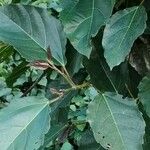
Ficus fistulosa
Figs · Common yellow stem fig
Description
Source: leafsnapFicus fistulosa, commonly known as the Indian rock fig or hollow fig, is a species of tree in the family Moraceae. Native to India and Southeast Asia, this tree can grow up to 30 meters tall. It is notable for its hollow trunk, which can serve as shelter for both animals and humans. The leaves of Ficus fistulosa are large, glossy, and leathery, featuring prominent veins. The fruit starts off small and green, but turns yellow or red when it matures. In Ayurvedic medicine, Ficus fistulosa has several traditional uses, including treatments for diarrhea, dysentery, skin diseases, and respiratory problems. This tree is also vital for wildlife conservation, as it provides food for a variety of animals, including birds and monkeys. Additionally, it serves as a host plant for several species of butterflies. Overall, Ficus fistulosa is an important tree with significant ecological and medicinal value due to its unique characteristics and multifaceted usefulness.
Care Guide
💧 Water Every 7 days
The common yellow-stem fig thrives in humid tropical climates and prefers consistent humidity, although it can tolerate moderate drought conditions. To keep the plant healthy, it's best to water it every 2 to 3 weeks, making sure the soil remains moist but not waterlogged. When grown indoors, the fig should be planted in well-draining containers to maintain balanced moisture levels.
☀️ Light Partial sun
The common yellow-stem fig grows best with moderate sunlight, which supports its overall health and development. In its native habitat, light levels vary, so it can adapt to different amounts of sun. However, too much sunlight or a complete lack of it can cause its health and vigor to decline.
What are the sunlight requirements for Common yellow-stem fig?
The Common yellow-stem fig requires about 3-6 hours of sunlight each day to thrive. It's essential to observe how sunlight moves through your garden to ensure you choose spots that provide the perfect balance of light and shade. This plant is adaptable to varying light conditions due to its original habitat, which experiences diverse sun conditions. However, both excessive sunlight and a lack of it can harm its health and vitality.
How can artificial lighting benefit indoor Common yellow-stem figs?
Indoor Common yellow-stem figs benefit significantly from artificial lighting, especially when natural sunlight is insufficient. This is particularly useful during winter or in less sunny spaces. Artificial lights, like LED, can be customized to provide the specific wavelengths needed by plants. The general guideline for artificial lighting is 30-50W/sq ft for full sun plants, 20-30W/sq ft for partial sun, and 10-20W/sq ft for full shade plants. The light source should be placed 12-36 inches above the plant, mimicking natural sunlight for about 8-12 hours per day.
What are the symptoms of improper lighting for Common yellow-stem fig?
Improper lighting can lead to various symptoms in Common yellow-stem figs, including smaller new leaves, leggy or sparse growth, earlier leaf drop, halted growth, paler new leaves, chlorosis, sunscald, leaf curling, wilting, and leaf scorching. These symptoms indicate either insufficient sunlight or overexposure. For indoor conditions, insufficient light can cause sparse growth and small leaves, while excessive sunlight might lead to chlorosis and sunscald.
What solutions can be applied to manage improper lighting for Common yellow-stem fig?
To address improper lighting for Common yellow-stem fig, indoor plants can be gradually moved to sunnier spots until they receive 3-6 hours of direct sunlight daily. Artificial lighting, such as desk lamps or professional plant grow lights, can supplement natural light for at least 8 hours daily. Outdoor plants should also be moved gradually to prevent sunburn. Reducing obstructions and transplanting to sunnier locations can improve sunlight access. It's vital to enable plants to adapt to new light conditions gradually.
🌡️ Temperature 20–37.8°C
The common yellow-stem fig comes from tropical areas, where the climate is generally warm and humid. As such, it is suited to high temperatures and moisture. It does not tolerate sudden shifts in temperature and prefers a steady thermal environment, so preventing temperature swings indoors is important. It typically cannot endure cold conditions and needs warmer temperatures to grow; if the surrounding temperature falls too low, the plant may stop growing or even die.
💨 Humidity
🪴 Soil 6-6
🌱 Fertilizer
Fertilization is essential for caring for the Common yellow-stem fig. Regular feeding during the growing season helps maintain energy for its attractive foliage and promotes overall growth. Failing to fertilize can lead to unhealthy leaves, reduced ornamental value, and stunted or weak growth that is prone to breaking.
🪴 Pot & Repot
✂️ Pruning
The common yellow-stem fig is characterized by its yellow stems and broad leaves. To keep the plant healthy and well-shaped, prune it between early and late winter. During pruning, remove dead branches and thin out dense areas to improve air circulation. Trim any overgrown shoots to maintain the desired shape of the fig. It is important to sterilize your pruning tools to prevent the spread of diseases. Regular pruning not only enhances the vitality of the plant but also improves its appearance.
🌿 Propagating
🐛 Diseases & pets
☠️ Toxicity
Characteristics
- Plant Type
- Tree
- Life Cycle
- Perennial
- Genus
- Ficus
- Family
- Moraceae
- Hardiness Zone
- 10-12
- Mature Height
- 20.12 m
- Mature Spread
- 3.05 m to 6.1 m
- Leaf Color
- Green, Dark Green
- Leaf Type
- Evergreen
- Flower Color
- White
- Flower Size
- 1.52 cm to 2.54 cm
- Bloom Time
- All year round
- Planting Time
- Spring, Summer, Autumn
- Harvest Time
- All year round
- Native Area
- India, Malaysia, Indonesia, Cambodia, Vietnam, Myanmar, Philippines, Singapore, Bangladesh, Laos, Thailand, China