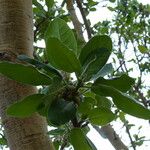
Ficus glumosa
Hairy Rock Fig · Mountain Fig · Mountain rock fig
Description
Source: leafsnapFicus glumosa, commonly known as the African fig or the red-leaved fig, is a tree species in the Moraceae family. Native to Africa, it grows in various regions including Sudan, Ethiopia, Kenya, and Tanzania. The tree can reach up to 20 meters in height and features a dense crown of leaves that are dark green on top and reddish-brown underneath. The leaves are oval-shaped with pointed tips and have a smooth texture. Ficus glumosa produces small greenish-yellow flowers that develop into edible fruits, which are commonly consumed by birds and other wildlife. Local communities have utilized the tree for various purposes, including as a source of food, medicine, and timber for construction, as well as for providing shade. The plant is known for its hardiness, with the ability to withstand drought conditions, though it prefers well-drained soils rich in nutrients. It can thrive in both full sun and partial shade, making it suitable for landscaping purposes. In traditional African medicine, Ficus glumosa has been used to treat various ailments, such as stomach problems, including diarrhea and constipation, among others. Overall, Ficus glumosa is an important plant species due to its ecological significance, providing food sources for wildlife and serving human needs through its medicinal properties and various other uses. Its wide range of applications makes it a vital part of African culture.
Care Guide
💧 Water Every 7 days
☀️ Light Full sun
Mountain rock fig comes from open habitats, such as sunny meadows and the edges of forests, which provide abundant light. It performs best in Full Sun but can also tolerate Partial Sun, showing good adaptability to different sunlight conditions.
🌡️ Temperature 20–37.8°C
Mountain rock fig comes from tropical areas, where the weather is generally warm and humid. Consequently, it is well suited to high temperatures and humidity. It does not tolerate sudden temperature shifts and prefers a steady thermal environment, so avoiding indoor temperature fluctuations is important. It typically cannot withstand cold and needs warmer conditions to grow. If the ambient temperature falls too low, the plant may stop growing or even die.
💨 Humidity
🪴 Soil 6-8
🌱 Fertilizer
Fertilization is essential for the care of the Mountain rock fig. Regular feeding during the growing season maintains the energy for its showy leaves and supports overall growth. Neglecting fertilization can lead to unhealthy leaves, reduced ornamental appeal, and stunted or weak growth that is prone to breaking.
🪴 Pot & Repot
✂️ Pruning
🌿 Propagating
🐛 Diseases & pets
☠️ Toxicity
Characteristics
- Plant Type
- Tree
- Life Cycle
- Perennial
- Genus
- Ficus
- Family
- Moraceae
- Hardiness Zone
- 10-12
- Mature Height
- 10.06 m to 14.94 m
- Mature Spread
- 7.92 m to 11.89 m
- Leaf Color
- Dark Green, Olive Drab
- Leaf Type
- Deciduous
- Bloom Time
- Late spring, Summer, Early fall, Mid fall
- Planting Time
- Spring, Summer, Autumn
- Harvest Time
- Mid summer, Late summer, Fall, Early winter
- Native Area
- Burkina Faso, Somalia, Angola, Namibia, Eritrea, Nigeria, Yemen, Kenya, Niger, Tanzania, Zimbabwe, Guinea-Bissau, Mali, Benin, Sierra Leone, Equatorial Guinea, Cameroon, Liberia, Mozambique, Ghana, Ethiopia, Congo, Central African Republic, Saudi Arabia, Malawi, South Africa, Zambia, Sudan, Guinea, Chad, Togo, Senegal, Eswatini, Côte d'Ivoire, Gambia, Congo (DRC), Gabon