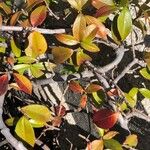
Ficus ingens
Red-leaved rock fig
Description
Source: leafsnapFicus ingens, commonly known as the Red-Leaved Fig or African Fig, is a species of flowering plant in the family Moraceae. Native to Africa, this plant is found in countries such as Kenya, Tanzania, and Uganda. It can grow up to 30 meters tall, with a trunk diameter reaching up to 2 meters. The leaves are large and glossy, exhibiting a reddish tint when young that turns green as they mature. Ficus ingens is often used for ornamental purposes due to its attractive foliage and its capacity to grow into large trees. Additionally, it carries cultural significance in some African communities, where it is utilized for medicinal purposes or regarded as sacred. The plant thrives in well-drained soils and full sun exposure but can also tolerate partial shade. It requires regular watering during dry periods, though it should not be overwatered to avoid root rot. Overall, Ficus ingens is an impressive tree that enhances the beauty of its surroundings and holds cultural importance in various African communities.
Care Guide
💧 Water Every 7 days
The red-leaved fig, native to semi-arid regions, thrives with minimal watering due to its strong drought tolerance. To replicate its natural environment, water the plant every 2-3 weeks. Typically grown outdoors, the red-leaved fig enters dormancy during the cooler months, which highlights its adaptability and reduced need for water.
How should I water my Red-leaved fig tree?
Watering your Red-leaved fig is not a complicated task. Any common watering tool, such as a watering can, hose, or even a cup, can be used to moisten the plant's soil. It's important to apply the water directly to the soil, ensuring that all areas receive equal moisture to support the entire root system. Using filtered water is recommended because tap water may contain harmful particles. Water at room temperature or slightly above, as extreme temperatures can shock the plant. However, the Red-leaved fig generally responds well to any water provided.
What should I do if I give my Red-leaved fig plant too much water or not enough water?
If you have outdoor plants, especially newly planted ones or seedlings, they can be at risk of not getting enough water. It's important to keep watering them consistently for a few months until the tree is established. Once the roots are established, the Red-leaved fig will rely on rain most of the time. However, if you have Red-leaved figs planted in pots, overwatering is more likely to occur. If you accidentally overwater your Red-leaved fig, there are steps you can take to remedy the situation. First, stop watering the plant immediately to minimize the impact of overwatering. Then, remove the plant from its pot to inspect the roots. If no root rot is found, you can return the plant to its container. If root rot is present, trim the affected roots and consider applying a fungicide to prevent further damage. Lastly, repot the Red-leaved fig in well-draining soil. If the Red-leaved fig is underwatered, simply water it more frequently. Underwatering is easily fixed, as the plant's leaves will droop, dry out, and fall off, but they will return to fullness after sufficient watering. Make sure to adjust your watering frequency as soon as you notice underwatering.
How frequently should I water my Red-leaved fig?
Most outdoor plants can grow naturally with rainfall. If your area doesn't get much rain, you should water your plants every 2 weeks in the spring and fall. In the summer, you'll need to water more often, and in the winter, less frequently. Sometimes, you may not need to water at all in the winter. If you have a young or newly planted Red-leaved fig, you should water it more often to help it establish and grow. For potted plants, there are two main ways to determine how often to water your Red-leaved fig. One way is to have a set watering schedule, maybe once a week or once every other week. But this approach might not work well because it doesn't consider the specific conditions of your Red-leaved fig. The other way is to check the soil moisture. Usually, it's best to wait until the top few inches of soil have dried out before watering again. This is about a third to half the depth of the pots. The watering frequency can also change depending on the season, especially during the summer when the plant needs more water.
How much water should I give my Red-leaved fig?
To water your Red-leaved fig effectively, you don't always need to give it a lot of water. If only a few inches of soil have dried since the last watering, you can give it about five to ten ounces of water. You can also base your watering amount on the moisture of the soil. Keep track of how many inches of soil have dried out between waterings. To ensure your Red-leaved fig gets enough moisture, water it enough to moisten all the dry soil layers since the last watering. If more than half of the soil is dry, consider giving it more water and continue until you see excess water draining from the pot. If your Red-leaved fig is outdoors and gets plenty of rain, it may not need extra watering. For young and newly established plants, make sure they get 1-2 inches of rain per week. As they grow, they can solely rely on rainwater unless there's hot weather with no rainfall for 2-3 weeks, in which case, give them a full watering to prevent stress.
How do I know if I'm giving enough water to my Red-leaved fig?
The Red-leaved fig is more likely to be overwatered, and there are clear signs to watch out for. If overwatered, the leaves will turn yellow and possibly fall off. Additionally, the plant may shrink and develop root rot. Similarly, an underwatered Red-leaved fig will start to droop and may show brown or brittle leaves. Regardless of whether you see signs of overwatering or underwatering, it is important to take action and restore the plant's health.
☀️ Light Full sun
The red-leaved fig prefers strong sunlight and does best with abundant light. Native to habitats with extensive sun exposure, solar heat is essential to its healthy growth. A lack or shortfall of sunlight can negatively affect the plant's development. At all stages of growth, an adequate amount of sunlight is important for optimal development.
What are the sunlight requirements for a Red-leaved fig?
The Red-leaved fig requires above 6 hours of direct sunlight to thrive, indicating its need for full sun conditions. It's essential to observe the movement of sunlight in your garden to ensure that your plants receive an optimal balance of light and shade. This careful placement ensures the plants' growth and health by providing them with the right amount of sunlight.
What essentials should be considered for the growth of Red-leaved fig?
The Red-leaved fig thrives under high-intensity solar exposure, a necessity for its flourishing due to its origin in sun-exposed environments. Inadequate sunlight can negatively impact its growth and development. For indoor plants lacking natural sunlight, artificial lighting such as LED lights can offer a solution, promoting healthier growth. Indoor artificial lighting recommendations include 30-50W/sq ft for full sun plants, 20-30W/sq ft for partial sun plants, and 10-20W/sq ft for full shade plants. Placement and duration of this artificial light should mimic natural sunlight conditions to ensure the plant's optimal growth.
What are some symptoms of insufficient or excessive light exposure in Red-leaved fig?
Red-leaved figs exhibit various symptoms when faced with less than optimal lighting. Insufficient light may lead to smaller new leaves, leggy growth, faster leaf drop, delayed or ceased growth, lighter-colored new leaves, and symptoms of overexposure such as chlorosis, sunscald, leaf curling, wilting, and leaf scorching. These symptoms inform the caregiver of the need to adjust the plant’s exposure to light to maintain its health.
How can I address the light-related issues of my Red-leaved fig?
To optimize the growth of a Red-leaved fig struggling with light exposure, gradually increase its daily sunlight allowance to at least 6 hours. This involves moving the plant to sunnier spots weekly, especially if it's situated indoors or using artificial lighting when natural sunlight is insufficient. Outdoor plants should also be moved gradually to avoid shock from sudden exposure changes. If obstructions block sunlight, consider pruning or relocating the plant. While adjusting the light exposure, note that parts of the plant damaged due to prior insufficient light may not recover, but new growth should be healthy with proper light.
🌡️ Temperature 15–37.8°C
The red-leaved fig comes from a native environment where temperatures range from 59 to 100.4 °F (15 to 38 °C). The plant prefers moderate temperatures within those bounds. Seasonal adjustments may be necessary to keep temperatures inside that range.
What temperature is best for Red-leaved fig?
Plants can be affected by colder temperatures because they tend to match the surrounding air temperature. While exposure to sunlight can warm them up, this doesn't happen during winter. The ideal temperature range for Red-leaved fig plants is usually between 70~85℉(21~30℃). They might be able to tolerate temperatures as low as 20~30℉(-6~0℃) or even 15℉(-10℃) for a short time, but prolonged exposure can lead to frost damage. It is important to maintain temperatures within the desired range and also provide occasional water spray and shade to prevent wilting.
Do I need to change the temperature for Red-leaved fig at different stages of growth?
When growing Red-leaved fig, it's important to research and ensure the temperature is suitable. Some growers may lower the plants' thermostats during the growing season to save on HVAC costs. However, it's crucial to understand that temperature can impact flowering, pest control, and plant quality. In winter, some species of Red-leaved fig may enter a dormant state, causing growth to halt. Warmer temperatures during season changes promote faster growth, especially in species native to warm habitats. Cool temperatures can negatively affect seed uniformity and cause delays. It may be necessary to lower the temperature during flowering but not at other stages. Cooler night temperatures require less water, so adjust irrigation accordingly.
How can I make sure the Red-leaved fig doesn't get too cold in winter?
To help the plant withstand colder temperatures, stop fertilizing it so that new growth doesn't occur. This will allow the existing growth to become stronger. To provide additional warmth, consider building structures like cages or trellises around the Red-leaved fig. Another option is to use heat mats, which can gently warm the soil and maintain the optimal temperature range for the Red-leaved fig consistently.
How can I protect the Red-leaved fig from being damaged by temperature?
To protect the Red-leaved fig from frost in winter, cover it using cloths, tarps, burlaps, sheets, or plastic buckets. Keep them securely fastened to act as insulation and prevent the wind from blowing them away. Be careful not to let the plastic sheets or burlap covers come into contact with the fruit or foliage, as this could cause burns due to the cold temperatures transferring. Once the daytime temperatures start to rise, remove the covers.
Do I need to change the temperature for a Red-leaved fig tree during different seasons?
In spring, when growing the Red-leaved fig, it is recommended to increase humidity due to the cooler air temperature. Insufficient humidity can be stressful for different species. As summer approaches, the greenhouse's large cover and higher temperatures will naturally lead to increased humidity in the air. To monitor this, check for condensation on the greenhouse walls, as excessive water falling on the leaves can impact pollination and cause infections. Adjustments should be made based on temperature, and additional spraying may be required on hotter days.
💨 Humidity
🪴 Soil 6-7
🌱 Fertilizer
Timing is important for fertilizing a Red-leaved fig. Start feeding in early spring and continue monthly until early summer. Fertilizer encourages attractive blooms and supplies energy during both dormant periods and active growth.
🪴 Pot & Repot
✂️ Pruning
To maintain the shape and health of a red-leaved fig, regular pruning is essential. Focus on removing dead or diseased branches and shaping the canopy. It's best to prune during the plant's dormant period, from early to late winter, to encourage growth and prevent pests. For guidance on cutting techniques and suitable tools, refer to horticultural guides.
🌿 Propagating
🐛 Diseases & pets
☠️ Toxicity
Characteristics
- Plant Type
- Tree
- Life Cycle
- Perennial
- Genus
- Ficus
- Family
- Moraceae
- Hardiness Zone
- 8-11
- Mature Height
- 10.06 m
- Mature Spread
- 29.87 m
- Leaf Color
- Green, Blue
- Leaf Type
- Evergreen
- Bloom Time
- All year round
- Planting Time
- Spring, Summer
- Harvest Time
- All year round
- Native Area
- Burkina Faso, Djibouti, Somalia, Namibia, Eritrea, Nigeria, Yemen, Kenya, Niger, Uganda, Tanzania, Zimbabwe, Mali, Benin, Cameroon, Mozambique, Oman, Ghana, Ethiopia, Botswana, Central African Republic, Saudi Arabia, Malawi, South Africa, Zambia, Sudan, Guinea, Chad, Togo, Senegal, Eswatini, Côte d'Ivoire, Algeria, Gambia, Congo (DRC)