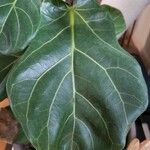
Ficus lyrata
فیکوس لیراتا · فیکوس برگ ویلونی · Fiddle-leaf fig · Lyre-leaf figtree · Banjo fig
Description
Source: leafsnapFicus lyrata, commonly known as the fiddle-leaf fig, is a popular houseplant native to West Africa. Belonging to the family Moraceae, this plant can reach up to 50 feet in height in its natural habitat. It features large, glossy leaves shaped like a violin or fiddle, which can grow up to 18 inches long and 12 inches wide. As an evergreen, Ficus lyrata thrives in bright, indirect light. It prefers well-draining soil and moderate watering, with the soil being allowed to dry out slightly between waterings. The plant also benefits from occasional misting or wiping of its leaves with a damp cloth to maintain its health and appearance. The fiddle-leaf fig has gained popularity in recent years as an indoor decorative plant, thanks to its striking appearance and ability to purify indoor air by removing toxins such as formaldehyde. While Ficus lyrata can be challenging for some gardeners due to its specific care requirements, it remains a highly sought-after houseplant for those willing to put in the effort needed for successful growth.
🌳 Originating in the tropical forests of West Africa, the fiddle-leaf fig is a staple in interior design, appearing in leading design magazines. Its large, glossy leaves are prized in upscale settings such as boutique hotels, high-end shops, and private homes. The plant’s distinctive leaf patterns have also won over the art world, prompting their use in creative works to add flair to everyday items. Beyond mere style, the fiddle-leaf fig supports community gardening projects, helping to beautify and ecologically enhance urban areas.
🎭 Significant memories, amiability, compassion
Care Guide
💧 Water Every 7 days
The fiddle-leaf fig is native to tropical rainforests and is moderately drought-tolerant. It needs to be watered every 1-2 weeks, allowing the soil to dry slightly between waterings. Although it is typically grown indoors, it thrives in higher humidity, which can be enhanced by misting or using humidifiers during its active growing season.
When should I water my Fiddle-leaf Fig?
To determine the right time to water your Fiddle-leaf Fig, check the soil's dryness by inserting a finger about 1-2 inches deep. If the soil at this depth feels dry, it is time to water the plant. Additionally, signs like drooping or wilting leaves, a loss of leaf luster resulting in a dull color, and browning or curling at the leaf edges indicate the plant needs water. Be cautious as both overwatering and underwatering can lead to serious health issues for the plant. Observing these indicators closely will help ensure you provide water at optimal times for the health and growth of your Fiddle-leaf Fig.
How should I water my Fiddle-leaf Fig?
Watering your Fiddle-leaf Fig correctly involves a balance to prevent both overwatering and underwatering. An effective method is bottom-watering, which allows the plant to absorb water from the bottom up, preventing root rot. Use a watering can with a narrow spout to target the base of the plant and avoid wetting the foliage, which could lead to fungal diseases. You can use a moisture meter to accurately check the soil moisture level and ensure the soil's top inch is dry before watering. Maintain good drainage in the pot to avoid water accumulation and adjust watering practices based on the plant's response, using room temperature filtered water or tap water that has been left to sit to reduce chlorine and other chemicals. Seasonal changes affect watering frequency, and maintaining hygiene by cleaning trays or saucers is essential.
How much water does a Fiddle-leaf Fig really need?
The ideal watering amount for a Fiddle-leaf Fig depends on factors like pot size and the plant's size. Typically, the roots need a thorough soaking until water begins to drain from the bottom of the pot to ensure they are well-watered. A properly watered Fiddle-leaf Fig will have vibrant green leaves without drooping. If leaves begin to droop without discoloration, it might be under-watered. Conversely, overwatering is indicated by yellowing leaves and, in severe cases, root rot. Balancing the water needs of your Fiddle-leaf Fig is crucial to prevent both waterlogging and dehydration.
What kind of water is best for Fiddle-leaf Fig?
Fiddle-leaf Fig prefers distilled or rainwater due to its sensitivity to chemicals in tap water. If using tap water, let it sit out for 24 hours to evaporate chlorine, minimizing the risk of harm to the plant. Fiddle-leaf Fig is also sensitive to fluoride and high salt and mineral content, which can lead to poor growth and leaf spot disease. To counter this, use filtered tap water or a water softener for areas with hard water, ensuring the water is at room temperature to avoid shocking the plant's roots.
How do Fiddle-leaf Fig's watering needs change with the seasons?
The watering needs of a Fiddle-leaf Fig change with the seasons. In spring, as the plant enters a growth phase, it requires more frequent watering, ensuring the top layer of soil is dry before each watering. Summer demands the most frequent watering due to higher temperatures and evaporation. During autumn, reduce the frequency as growth slows, and in winter, water sparingly as the plant enters dormancy. Seasonal temperature and humidity changes impact the plant's hydration needs, so adjust your watering schedule accordingly.
☀️ Light Partial sun
The fiddle-leaf fig thrives when exposed to moderate sunlight. It can adjust to either ample or minimal sunlight, but tends to favor a moderate quantity. Hailing from an environment with varied light intensity, its growth is optimal with the right amount of light. Excessive light can burn its leaves, whereas insufficient light might cause the leaves to drop off.
What are the sunlight requirements for a fiddle-leaf fig?
A fiddle-leaf fig plant thrives under moderate sun exposure, preferring a balanced amount of light. It benefits from partial sun, about 3-6 hours of sunlight, but can also handle full sun or full shade, which is more than 6 hours of sunlight a day. It's essential to watch how sunlight moves through your garden or home space, choosing spots that offer a perfect balance between light and shade. This ensures the plant's health and happiness by preventing issues like leaf scorching from too much sun or leaf loss from too little light.
How to provide adequate lighting for fiddle-leaf fig indoors?
When natural sunlight is insufficient, especially during winter or in less sunny interior spaces, artificial lighting becomes crucial for a fiddle-leaf fig's growth. To adopt artificial lighting effectively, choose LED lights as they can offer the specific wavelengths needed by your plants. The intensity required varies; full sun plants need 30-50W per square foot, partial sun plants need 20-30W per square foot, and full shade plants need 10-20W per square foot. Ensure the light source is positioned 12-36 inches above the plant and mimics natural daylight hours, usually 8-12 hours per day, to encourage healthier, faster growth.
What are common symptoms of inadequate light in fiddle-leaf figs?
When a fiddle-leaf fig doesn't receive enough light, it may exhibit several symptoms indicating stress or poor health. These include faster leaf drop, where the plant sheds older leaves to conserve resources; leggy or sparse growth, characterized by extended spaces between leaves or stems; slower or no new growth as the plant enters survival mode; chlorosis, where leaves lose their green color; sunscald, with damage from intense light exposure; leaf curling, as a defense mechanism to reduce water loss; wilting due to significant water loss; and leaf scorching, where leaf edges become brown and crispy from too much sunlight.
What solutions can help a fiddle-leaf fig with inadequate light exposure?
To optimize a fiddle-leaf fig's growth in conditions of inadequate light, gradually transition the plant to sunnier spots each week to adapt to changing light conditions, aiming for about 3-6 hours of direct sunlight daily. If the plant is large or difficult to move, consider artificial light sources, such as desk or ceiling lamps, for at least 8 hours daily, or invest in professional plant grow lights. Outdoors, move the plants gradually to sunnier locations to prevent sunburn, noting that parts of the plant damaged by previous insufficient light may not recover, although new growth should be healthy. Additionally, reducing obstructions like overhanging branches can help, as can transplanting smaller plants to brighter locations with ample sunlight and good drainage.
🌡️ Temperature 20–37.8°C
The fiddle-leaf fig originates from tropical West Africa and needs steady temperatures ranging from 68 to 100 ℉ (20 to 38 ℃) for optimal growth. It flourishes in hot and humid climates, thus it's ideal to position it in a room where temperatures are between 65 and 85 ℉. In the cooler seasons, the plant should be guarded against drafts and positioned away from chilly windows to keep it healthy.
What are the ideal conditions for growing a Fiddle-leaf fig?
The Fiddle-leaf fig, botanically known as Ficus lyrata, thrives in the warm and humid conditions native to tropical West Africa. It prefers consistent temperatures ranging between 65 and 85 °F (18 to 29 °C), making it necessary to maintain an environment within these temperature limits for the plant's optimal growth. During the colder months, it's crucial to protect the Fiddle-leaf fig from drafts and avoid placing it near cold windows to prevent harm. As a heat-loving plant, exposure to cold temperatures can be detrimental. Therefore, it is advised to bring outdoor-grown Fiddle-leaf figs indoors, placing them near a bright window, yet away from direct heat sources during autumn to ensure the temperature stays above the minimum required for the plant's growth.
How should you care for a Fiddle-leaf fig in low temperatures?
Fiddle-leaf fig trees are sensitive to low temperatures and thrive best when the temperature is consistently above their tolerance minimum. To protect the plant in winter, ensure the temperature remains above the threshold that could cause growth issues or damage. If a Fiddle-leaf fig is exposed to temperatures below its growth limit, the foliage may lighten, and frost damage could cause the leaves to turn brown or black. Symptoms like wilting and drooping are also common. Should frost damage occur, trim off the damaged parts and move the plant to a warmer indoor spot, ideally near a south-facing window, to provide sufficient sunlight without placing it too close to heaters or vents that could dry out the air.
What should be done if a Fiddle-leaf fig is exposed to high temperatures?
During the hot summer months, it's important to regulate the temperature around your Fiddle-leaf fig to prevent it from exceeding its comfort range. High temperatures can lead to lighter leaf color and increase the risk of sunburn for the plant. To mitigate these risks, remove sunburned or dried parts of the plant to promote healthy growth. Relocating the plant to an area with partial shade, especially during the intense midday and afternoon sun, can help prevent further damage. Ensuring the soil remains moist by watering the plant in the cooler morning and evening hours is also essential during periods of high heat.
💨 Humidity high (>60%)
This plant needs special care because it loves high humidity levels of 60-80% or more. The best way to achieve this is by placing a humidifier near the plant. Daily misting is also essential! Make sure the room has good ventilation.
🪴 Soil 6-7
🌱 Fertilizer
The well-being of the Fiddle-leaf fig significantly depends on fertilization. Consistent nourishment throughout its growth period maintains the vibrancy of its leaves and assists in overall development. Ignoring the fertilization process may lead to the deterioration of leaf health, reduced aesthetic value, and limited or fragile growth which is susceptible to damage.
Why is it necessary for me to fertilize my Fiddle-leaf fig?
Fiddle-leaf figs require regular fertilization because their showy leaves require a lot of energy to grow and stay healthy. Not only do they need energy for their leaves, but they also need it for their stems, branches, roots, and other important structures. If you don't fertilize them, two things are likely to happen. Firstly, their leaves will lose their color and texture, making them look unhealthy and less attractive. Secondly, their overall growth will slow down or become weak, making them prone to breakage.
When should I fertilize my Fiddle-leaf fig plant?
To provide the best care for your fiddle-leaf fig, occasional feedings are recommended. This means you don't have to stick to a strict feeding schedule when you first plant one of these plants. A simple way to fertilize your fiddle-leaf fig is to apply the fertilizer when watering it from time to time. During the growing season, it's important to water your fiddle-leaf fig regularly. You can feed it once every two to three weeks, which should be maintained while the plant is producing new growth.
When is it not a good idea to fertilize my Fiddle-leaf fig?
You can maintain a regular fertilization schedule for your Fiddle-leaf fig throughout most of the year, specifically during the active growing season of spring, summer, and early fall. However, during the winter, it is important to refrain from fertilizing the plant. During this time, the Fiddle-leaf fig enters a dormant growth phase where little to no new growth occurs. Since the plant is using less energy overall during this period, there is no need for fertilization.
Which fertilizer should I use for my Fiddle-leaf fig?
When fertilizing a Fiddle-leaf fig, it is important to use a specific blend of nutrients that are present in low amounts. The ideal fertilizer should have an N-P-K ratio of 3-1-2, but a general-purpose fertilizer with an even blend can also work. However, even with a balanced fertilizer, it is important to ensure that the ratio number for each nutrient is 3 or lower. There are two types of fertilizer you can use: granular or liquid. If you opt for a liquid-based fertilizer, it is recommended to dilute it by half. Granular fertilizer is generally fine to use, but using liquid fertilizer, especially when watering your Fiddle-leaf fig, is often the most sensible choice.
How should I give nutrients to my Fiddle-leaf fig plant?
One easy way to fertilize a Fiddle-leaf fig is to feed it when watering. To do this, gather your fertilizer and a water container, such as a watering can. Mix the fertilizer with water to weaken its strength, and then pour it onto the soil, allowing it to soak down to the roots. Another option is to use a granular fertilizer. Simply sprinkle it on the soil where your Fiddle-leaf fig is planted. Granular fertilizers are slow-release, so you won't have to fertilize as frequently compared to liquid fertilizers. Regardless of the method you choose, it's helpful to water the plant while you feed it.
🪴 Pot & Repot 2-3 years
When it's time to transplant your Fiddle-leaf fig, pick a flowerpot that is around 1-2 inches bigger and provides enough drainage. Employ a well-draining soil mix for potting. Preferably do the transplantation in spring or autumn, making sure that root cluster is a bit below the brim of the pot. Fully hydrate the plant following transplantation and position it in a cozy location that receives indirect sunlight.
✂️ Pruning
The fiddle-leaf fig benefits from regular pruning, particularly during its dormant period from early to late winter. By removing dead or damaged leaves, you can maintain the plant's health and shape, encourage new growth, and prevent it from becoming leggy. As a result, the plant will have a bushier appearance. This practice also improves light penetration, making it especially useful for home gardeners.
🌿 Propagating
🐛 Diseases & pets
☠️ Toxicity
Characteristics
- Plant Type
- Tree
- Life Cycle
- Perennial
- Genus
- Ficus
- Family
- Moraceae
- Hardiness Zone
- 10-12
- Mature Height
- 2.13 m to 14.94 m
- Mature Spread
- 49 cm
- Leaf Color
- Green
- Leaf Type
- Evergreen
- Flower Color
- Green
- Bloom Time
- Mid summer
- Planting Time
- Spring, Summer, Autumn, Winter
- Harvest Time
- Mid summer, Late summer
- Native Area
- Benin, Sierra Leone, Cameroon, Liberia, Togo, Côte d'Ivoire, Nigeria, Guinea, Guinea-Bissau, Gabon