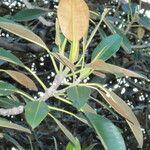
Ficus macrophylla
Moreton Bay Fig · Australian banyan · Black fig · Australian ban yan
Description
Source: leafsnapFicus macrophylla, commonly known as the Moreton Bay fig, is a large, evergreen tree native to eastern Australia. It belongs to the fig family and can grow up to 60 meters tall, with a trunk diameter reaching up to 2 meters. The leaves are large, glossy, and have a leathery texture, measuring up to 30 centimeters in length. The tree produces small, greenish-yellow fruit. The Moreton Bay fig is widely planted as an ornamental tree due to its impressive size and attractive foliage. It also holds cultural significance for Indigenous Australians, who used its bark for making rope. For optimal growth, this species requires full sun or partial shade and well-drained soil. While it can tolerate drought conditions, it prefers regular watering during dry periods. The dense foliage of the Moreton Bay fig provides important habitat for wildlife, including birds, bats, possums, and insects. However, in some areas outside its native range, it can become invasive. Overall, Ficus macrophylla is a remarkable tree that offers both aesthetic value and ecological benefits when grown under suitable conditions within its natural range or carefully managed outside of it.
💡 This tree is fascinating for several reasons. It can grow to an immense size and has distinctive, spread-out buttressed roots, making it suitable for large public parks and the most spacious gardens. Like other fig trees, the Moreton Bay fig relies on a single species of small fig wasp, Pleistodontes froggatti, to pollinate its flowers. In turn, the wasp depends on the fig's flowers for reproduction.
🌳 The moreton bay fig serves not only as an ornamental giant but also as an essential habitat for a range of wildlife. Its massive buttress roots and sprawling branches provide shelter and nesting spots for birds, bats, and other species. Moreover, its aerial roots and broad canopy form a micro-ecosystem that sustains epiphytic plants and invertebrates. Its durability and stately presence also make it a desirable species for large-scale landscaping and for gardening enthusiasts seeking to craft striking natural designs.
Care Guide
💧 Water Every 7 days
The Moreton Bay fig, native to coastal rainforests, thrives in humid environments but also shows a moderate tolerance for drought. Water it every 2-3 weeks, allowing the soil to dry out slightly between waterings. This plant does best outdoors, particularly in climates where the rainfall matches its watering requirements.
How should I water my Moreton bay fig tree properly?
Watering your Moreton bay fig is a simple task that doesn't require any special tools. You can use a watering can, hose, or even a cup to moisten the soil. It's important to water directly on the soil, making sure to evenly wet all areas so the entire root system gets the necessary moisture. Using filtered water is recommended since tap water might have harmful particles. Also, it's best to use water at room temperature or slightly warmer, avoiding extreme cold or hot temperatures which can shock the plant. However, the Moreton bay fig is generally tolerant of different water types.
What should I do if I give my Moreton bay fig tree too much or too little water?
For outdoor plants, especially newly planted ones or seedlings, lack of watering can be a problem. It's important to water them consistently for a few months, especially when the tree is small or recently planted. After the roots have established, the Moreton bay fig can rely on rain most of the time. When your Moreton bay fig is in a pot, there is a higher possibility of overwatering. If you accidentally overwater your plant, you should act immediately to fix the situation. First, stop watering the plant to minimize the effects of overwatering. Then, remove the Moreton bay fig from its pot and check the roots. If there is no sign of root rot, you can put the plant back in its container. However, if you find any roots affected by root rot, trim them away and consider applying a fungicide to prevent further damage. Lastly, repot the Moreton bay fig in well-draining soil. In the case of underwatering, simply water the Moreton bay fig more frequently. This is an easy fix. If you notice drooping, drying, and falling leaves, watering the plant adequately will quickly restore its fullness. Adjust your watering frequency as soon as you realize your plant is being underwatered.
How frequently do I need to water my Moreton bay fig?
Most outdoor plants can grow naturally with rainfall, but if your area lacks rainfall, you should water your plants every 2 weeks in the spring and fall, and more frequently in the summer. In the winter, when growth slows down and plants need less water, you can water them less often or not at all. However, if you have a young or newly planted Moreton bay fig, you should water it more frequently to help it establish and grow. For potted plants like the Moreton bay fig, there are two ways to determine how often to water them. The first way is to set a predetermined watering schedule, but this may not always be effective as it doesn't consider the specific conditions of your plant's environment. The other option is to monitor the soil moisture and water when the top two to four inches of soil have dried out completely. This is especially important during the summer when the plant's water needs are higher.
How much water does my Moreton bay fig tree require?
To water your Moreton bay fig effectively, you don't always need to give it a large amount of water. Just check if a few inches of soil have dried since your last watering. If so, provide about five to ten ounces of water each time. You can also determine the water volume by considering the soil moisture. Pay attention to how many inches of soil have dried between waterings. To make sure your Moreton bay fig gets enough moisture, water all the layers of dry soil since the last watering. If more than half of the soil is dry, give it extra water until you see drainage from the pot's holes. If your Moreton bay fig is planted in a rainy outdoor area, it might not need extra watering. However, when it's young or establishing, ensure it receives 1-2 inches of rain per week. As it grows and establishes itself, it can rely on rainwater. Only in cases where there is no rainfall for 2-3 weeks during hot weather, give it a thorough watering to prevent stress.
How can I know if I'm giving enough water to my Moreton bay fig?
The Moreton bay fig is often overwatered, which can lead to various signs. When overwatered, the leaves of the tree turn yellow and it may even shed some of its leaves. Additionally, overwatering can cause the overall structure of the plant to shrink and it can also encourage root rot. Conversely, an underwatered Moreton bay fig will also start to wilt and may exhibit brown or brittle leaves. Regardless of whether you see signs of overwatering or underwatering, it is important to take action and restore the tree's health.
☀️ Light Partial sun
The moreton bay fig does best beneath an unobstructed sky, taking in sunlight to maintain optimal health and growth. Coming from habitats with abundant light, this plant endures little shade. Excessive sun can bleach its leaves, while too little can cause stunted growth or wilting.
What are the sunlight requirements for Moreton Bay Fig?
The Moreton Bay Fig requires full sun, which means it needs above 6 hours of sunlight daily to thrive optimally. It's crucial to observe the movement of sunlight through your garden to select spots that offer a perfect balance of light and shade, ensuring the plants' well-being. The tree originates in environments with abundant light and has a low tolerance for shadowy conditions. Overexposure can bleach the leaves, while inadequate sunlight can cause growth stunting or wilting.
How do you use artificial lighting for Moreton Bay Fig plants indoors?
For indoor Moreton Bay Fig plants, artificial lighting becomes essential when natural sunlight is insufficient, especially during winter or in less sunny spaces. LED lights are recommended due to their ability to provide specific wavelengths required by the plants. The necessary amount of artificial light varies depending on the plant's sunlight needs: full sun plants require 30-50W/sq ft, partial sun plants 20-30W/sq ft, and full shade plants 10-20W/sq ft. The light source should be placed 12-36 inches above the plant to mimic natural sunlight, and most plants will need 8-12 hours of light per day.
What are the symptoms of insufficient light in Moreton Bay Fig?
Symptoms of light deficiency in Moreton Bay Fig include smaller new leaves, leggy or sparse growth, fast leaf drop, slower or no new growth, lighter-colored new leaves, chlorosis, sunscald, leaf curling, wilting, and leaf scorching. These symptoms can indicate either too much or not enough light, with each affecting the plant's health in different ways, from affecting the photosynthesis process to the physical appearance and strength of the plant.
What solutions can improve light conditions for Moreton Bay Fig?
To improve light conditions for Moreton Bay Fig, consider the following approaches: indoors, gradually move the plant to sunnier locations until it receives at least 6 hours of sunlight daily, utilizing south-facing windows and keeping curtains open. If the plant is too large to move, use artificial lights for at least 8 hours per day. Outdoors, adjust the plant's position gradually to prevent sunburn. Reduce obstructions to sunlight by pruning or transplanting to better locations. Note that while affected parts may not recover, new growth will be healthy following increased light exposure.
🌡️ Temperature 20–37.8°C
Moreton bay fig is adapted to warm conditions, being native to a subtropical climate and preferring temperatures of 68 to 100 °F (20 to 38 ℃). In colder seasons, it is advisable to move the plant to a warmer location to satisfy its temperature requirements.
What is the ideal temperature range for Moreton bay fig?
The Moreton bay fig thrives in a warm, subtropical climate, preferring temperatures between 68 to 100 °F (20 to 38 °C). It is extremely heat-loving, and exposure to cold temperatures can harm the plant. During colder seasons, it's suggested to move the plant to a warmer spot indoors, preferably near a brightly-lit window but away from direct heat sources. It's crucial to maintain temperatures above 20°C during winter since temperatures nearing 0°C can be detrimental to the plant.
What are the symptoms of low temperature exposure in Moreton bay fig, and how can it be managed?
Moreton bay fig is sensitive to cold, showing symptoms of distress when exposed to temperatures below its preferred range. If the temperature falls below -5°C, you might notice the leaves lightening in color, which after frost damage, could gradually turn brown or black accompanied by wilting or drooping. To manage this, trim off the frost-damaged parts and move the plant to a warmer indoor spot. Positioning the plant near a south-facing window ensures ample sunlight, but keep it away from heaters or air conditioning vents to avoid dry air.
How does high temperature affect Moreton bay fig, and what are the solutions?
In the summer, it is important to keep Moreton bay fig's exposure to temperatures below 38°C. Exceeding 43°C can cause the leaves to lighten and increase susceptibility to sunburn. To mitigate this, trim away the sunburned and dried sections of the plant. Relocate it to an area shaded from the midday and afternoon sun. Watering the plant in the morning and evening will help keep the soil moist, further preventing heat stress.
💨 Humidity
🪴 Soil 6-7
🌱 Fertilizer
Fertilizing is essential for the care of a Moreton Bay fig. Regular feeding during the growing season helps maintain the energy needed for its showy leaves and supports overall growth. Neglecting fertilization can result in unhealthy leaves, reduced ornamental appeal, and stunted or weak growth that is prone to breakage.
Why do I have to put fertilizer on my Moreton bay fig?
Regular fertilization is crucial for Moreton bay fig trees because their showy leaves require a significant amount of energy for production and maintenance. It's important for these trees to allocate enough energy not only to keep their leaves healthy but also to support the growth of stems, branches, roots, and other vital structures. Neglecting fertilization can lead to two likely outcomes. Firstly, the leaves may lose their natural color and texture, resulting in an overall unhealthy appearance that diminishes the tree's ornamental appeal. Secondly, the tree's growth may slow down or produce weak growth that is susceptible to breakage.
What is the ideal time to fertilize my Moreton bay fig tree?
The Moreton Bay fig can benefit from occasional feedings, so there's no need to set a regular feeding schedule when planting these plants. One simple way to fertilize your Moreton Bay fig is to apply the fertilizer when you water it from time to time. During the growing season, the Moreton Bay fig will also require a good amount of water. You can feed the plant once every two to three weeks to ensure it receives enough nutrients. It's important to maintain this feeding rate throughout the entire period when the plant is producing new growth.
When should I not add fertilizer to my Moreton bay fig plant?
For most of the year, you can fertilize your Moreton bay fig on a regular schedule. This includes spring, summer, and early fall when the plant is actively growing. However, during winter, it is important to avoid fertilizing the plant. During this time, the Moreton bay fig enters a dormant phase where little to no new growth occurs. Since the plant is using less energy during this period, there is no need for fertilizer.
What kind of fertilizer does my Moreton Bay fig tree require?
To properly fertilize a Moreton Bay fig tree, it is important to use a specific blend of nutrients in relatively low amounts. Ideally, the fertilizer should have an N-P-K ratio of 3-1-2. However, in some cases, a general-purpose fertilizer with an even blend of nutrients can also be effective. Regardless of the type of fertilizer used, it is important to ensure that the ratio number for each nutrient is 3 or lower. The fertilizer can be either granular or liquid-based. If using a liquid-based fertilizer, it is recommended to dilute the strength by half. While there aren't many downsides to using granular fertilizer, it is generally more sensible to use liquid fertilizer, especially if you are regularly watering your Moreton Bay fig tree.
How should I fertilize my Moreton bay fig tree?
One of the easiest ways to fertilize a Moreton bay fig is by feeding it every time you water it. To do this, you will need fertilizer and a water container, such as a watering can. Dilute the fertilizer by mixing it with water. Then, pour the diluted fertilizer onto the soil, making sure it reaches the roots. Another option is using a granular fertilizer. Simply sprinkle the granular fertilizer on the soil where your Moreton bay fig is planted. Granular fertilizers are usually slow-release, so you won't need to fertilize as frequently as you would with a liquid fertilizer. Regardless of the method you choose, it is important to water the plant while you feed it.
🪴 Pot & Repot Every 12 months
✂️ Pruning
The Moreton Bay fig is a large evergreen tree that benefits from winter pruning. This process involves removing dead or diseased branches and thinning the canopy to allow more light to penetrate. Proper pruning not only enhances air circulation but also reduces the risk of disease. Additionally, it helps maintain the tree's health and appearance while preventing the stress that can result from excessive pruning.
🌿 Propagating
🐛 Diseases & pets
☠️ Toxicity
Characteristics
- Plant Type
- Tree
- Life Cycle
- Perennial
- Genus
- Ficus
- Family
- Moraceae
- Hardiness Zone
- 9-11
- Mature Height
- 60.05 m
- Mature Spread
- 1.83 m to 2.44 m
- Leaf Color
- Green
- Leaf Type
- Evergreen
- Flower Size
- 1.52 cm to 2.29 cm
- Bloom Time
- All year round
- Planting Time
- Spring
- Harvest Time
- All year round