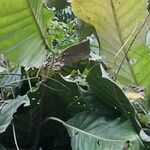
Ficus pandurata
Description
Source: leafsnapFicus pandurata is a fig species in the family Moraceae. No subspecies are recorded and the native range of this species is southern China and Indo-China. The species can be found in Vietnam: where it may be called sung tì bà.
🌳 Originating in the tropical forests of West Africa, the fiddle-leaf fig is a staple in interior design, appearing in leading design magazines. Its large, glossy leaves are prized in upscale settings such as boutique hotels, high-end shops, and private homes. The plant’s distinctive leaf patterns have also won over the art world, prompting their use in creative works to add flair to everyday items. Beyond mere style, the fiddle-leaf fig supports community gardening projects, helping to beautify and ecologically enhance urban areas.
🎭 Significant memories, amiability, compassion
Care Guide
💧 Water Every 1-2 weeks
☀️ Light Partial sun
The fiddle-leaf fig thrives when exposed to moderate sunlight. It can adjust to either ample or minimal sunlight, but tends to favor a moderate quantity. Hailing from an environment with varied light intensity, its growth is optimal with the right amount of light. Excessive light can burn its leaves, whereas insufficient light might cause the leaves to drop off.
What kind of sunlight does a Fiddle-leaf fig require?
A Fiddle-leaf fig thrives in environments that are well-lit with sunlight. It performs best when exposed to full sun, defined as more than 6 hours of direct sunlight per day, but it can also tolerate partial sun, which means about 3-6 hours of sunlight daily. However, to ensure your Fiddle-leaf fig's happiness, it's crucial to observe how sunlight moves through your garden or indoor space to find the perfect balance of light and shade.
Can Fiddle-leaf figs grow under artificial lighting?
Yes, Fiddle-leaf figs can grow under artificial lighting, which is especially useful in scenarios where natural sunlight is insufficient, such as during winter or in less sunny indoor locations. Artificial lights, including LED lights which offer customizable wavelengths, can provide the necessary energy for optimal growth. The requirements vary based on the type of plant, with full sun plants needing 30-50W/sq ft, partial sun plants 20-30W/sq ft, and full shade plants 10-20W/sq ft of artificial light. It's also important to properly distance the light source (12-36 inches above the plant) and mimic natural daylight hours, typically 8-12 hours per day, for the plant's specific needs.
What are the symptoms of light deficiency in Fiddle-leaf figs?
Symptoms of light deficiency in Fiddle-leaf figs can be easily identified and include smaller new leaves compared to mature ones, leggy or sparse growth as the spaces between leaves or stems lengthen, faster leaf drop to conserve resources, slower or halted growth indicating 'survival mode,' lighter colored or irregularly patterned new leaves due to lack of chlorophyll, and chlorosis where leaves lose their green color and turn yellow. These symptoms suggest that the plant is not receiving adequate light.
How does excessive sunlight affect Fiddle-leaf figs?
Excessive sunlight exposure can negatively impact Fiddle-leaf figs, leading to symptoms such as sunscald, which appears as pale or necrotic areas on leaves or stems, leaf curling as a defense mechanism to minimize water loss and damage, wilting due to increased transpiration and dehydration, and leaf scorching characterized by brown, dry, and crispy leaf edges. These conditions result from overexposure to sunlight and can significantly reduce the plant's overall health and its ability to perform photosynthesis effectively.
What are some solutions for light deficiency in Fiddle-leaf figs?
To combat light deficiency in Fiddle-leaf figs, consider gradually moving your plant to a location with at least 6 hours of direct sunlight daily, keeping it near a south-facing window with open curtains during the day. If moving the plant isn't feasible due to its size, using artificial lighting like desk or ceiling lamps for at least 8 hours a day, or professional grow lights, can provide ample light. For outdoor plants, ensure a gradual transition to sunnier spots to avoid sunburn. Note that affected parts may not recover, but new growth should be healthy once light conditions improve. Additionally, for ground plants, reducing obstructions like overhanging branches can increase sunlight exposure, and transplanting smaller plants during their dormant period to a sunnier location can also be beneficial.
🌡️ Temperature 20–37.8°C
The fiddle-leaf fig originates from tropical West Africa and needs steady temperatures ranging from 68 to 100 ℉ (20 to 38 ℃) for optimal growth. It flourishes in hot and humid climates, thus it's ideal to position it in a room where temperatures are between 65 and 85 ℉. In the cooler seasons, the plant should be guarded against drafts and positioned away from chilly windows to keep it healthy.
What climate does the Fiddle-leaf fig thrive in?
The Fiddle-leaf fig thrives in a warm tropical climate, akin to its native habitat, with preferred temperatures ranging between 68 to 100°F (20 to 38°C). To simulate its ideal growing conditions, especially during colder seasons, it's recommended to adjust your home's thermostat accordingly. Extreme heat is appreciated by this plant, whereas cold temperatures can be detrimental. During autumn, it's advised to bring any outdoor-grown Fiddle-leaf figs indoors, placing them near a bright window yet at a safe distance from heaters, ensuring the temperature stays above 20°C during winter, avoiding temperatures near or below 10°C.
How does low temperature affect the Fiddle-leaf fig, and what are the solutions?
Fiddle-leaf figs prefer warm temperatures and do not fare well in cold conditions, thriving best when the temperature is maintained above 20°C. During winter, it's crucial to keep the temperature above 10°C, as temperatures below 5°C can cause the leaves to lighten in color, which after frost damage, turn brown or black. This can be accompanied by wilting and drooping. To mitigate these effects, it's advisable to trim off the frost-damaged parts and move the plant to a warm indoor environment, ideally near a south-facing window for sufficient sunlight, while ensuring the plant is not placed near heaters or air conditioning vents to avoid excessive dryness.
What should be done when the Fiddle-leaf fig is exposed to high temperatures?
During summer, it's crucial to ensure the Fiddle-leaf fig's environment doesn't exceed 38°C. Exposure to temperatures above 43°C can cause the leaves to lighten in color and increase susceptibility to sunburn. To address this, one should trim the sunburned and dry parts away and relocate the plant to a shaded area that protects it from the intense midday and afternoon sun. Watering the plant in the morning and evening helps keep the soil adequately moist, providing a conducive environment for the plant's thriving.
💨 Humidity
🪴 Soil 6-7
🌱 Fertilizer
The well-being of the Fiddle-leaf fig significantly depends on fertilization. Consistent nourishment throughout its growth period maintains the vibrancy of its leaves and assists in overall development. Ignoring the fertilization process may lead to the deterioration of leaf health, reduced aesthetic value, and limited or fragile growth which is susceptible to damage.
🪴 Pot & Repot 2-3 years
When it's time to transplant your Fiddle-leaf fig, pick a flowerpot that is around 1-2 inches bigger and provides enough drainage. Employ a well-draining soil mix for potting. Preferably do the transplantation in spring or autumn, making sure that root cluster is a bit below the brim of the pot. Fully hydrate the plant following transplantation and position it in a cozy location that receives indirect sunlight.
✂️ Pruning
The fiddle-leaf fig is a popular houseplant, known for its large and attractive leaves. To keep it healthy, prune the plant between early and late winter. Use sterilized tools and cut just above the leaf nodes to prevent disease. Gradually trimming the plant encourages bushier growth, improves air circulation, and minimizes stress on the plant.
🌿 Propagating
🐛 Diseases & pets
☠️ Toxicity
Characteristics
- Plant Type
- Tree
- Life Cycle
- Perennial
- Genus
- Ficus
- Family
- Moraceae
- Hardiness Zone
- 10-12
- Mature Height
- 2.13 m to 14.94 m
- Mature Spread
- 49 cm
- Leaf Color
- Green
- Leaf Type
- Evergreen
- Flower Color
- Green
- Bloom Time
- Mid summer
- Planting Time
- Spring, Summer, Autumn, Winter
- Harvest Time
- Mid summer, Late summer
- Native Area
- Benin, Sierra Leone, Cameroon, Liberia, Togo, Côte d'Ivoire, Nigeria, Guinea, Guinea-Bissau, Gabon