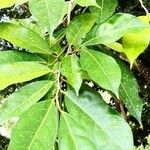
Ficus tinctoria
Fig · Dye fig · Humped fig
Description
Source: leafsnapFicus tinctoria, also known as dye fig, or humped fig is a hemiepiphytic tree of genus Ficus. It is also one of the species known as strangler fig.It is found in Asia, Malesia, northern Australia, and the South Pacific islands. It grows in moist valleys.Palms are favorable host species. Root systems of dye fig can come together to be self sustaining but the epiphyte usually falls if the host tree dies or rots away.In Australia it is recorded as a medium-sized tree with smooth, oval green leaves. It is found often growing in rocky areas or over boulders. The leaves are asymmetrical.The small rust brown fruit of the dye fig are the source of a red dye used in traditional fabric making in parts of Oceania and Indonesia. The fruit is also edible and constitute as a major food source in the low-lying atolls of Micronesia and Polynesia.
Care Guide
💧 Water
☀️ Light Partial sun
Dye fig is native to habitats like forest understories or rocky areas, where it grows in natural shade. It prefers partial sun but can adapt to either full sun or full shade, demonstrating its versatile and hardy nature.
🌡️ Temperature 20–37.8°C
Dye fig comes from tropical areas, where the climate is typically warm and humid. As a result, it is well suited to high temperatures and humidity. It does not tolerate sudden temperature changes and prefers a stable temperature environment, so avoiding temperature fluctuations indoors is important. It usually cannot withstand cold temperatures and needs higher temperatures to grow. If the surrounding temperature falls too low, the plant may stop growing or even die.
What is Dye fig?
Dye fig, known botanically as Ficus tinctoria, is a species of fig. Unfortunately, the provided information does not include details about its essentials or symptoms associated with it. For more specific information about Dye fig, including its uses or characteristics, further research may be required.
💨 Humidity
🪴 Soil 6-7
🌱 Fertilizer
Fertilization is essential to the care of the Dye fig. Consistent feeding during the growing season maintains the energy for its showy leaves and supports overall growth. Skipping fertilization can lead to unhealthy leaves, reduced ornamental value, and stunted or weak growth that is prone to breaking.
🪴 Pot & Repot
✂️ Pruning
The dye fig plant flourishes with its glossy leaves and robust growth. To maintain its health, it is important to prune the plant from early to late winter. Pruning during this dormant period helps remove dead branches, promotes healthy foliage, and shapes the plant. This practice reduces stress, improves airflow, and lowers the risk of disease, ensuring the plant remains resilient and visually appealing.
🌿 Propagating
🐛 Diseases & pets
☠️ Toxicity
Characteristics
- Plant Type
- Tree
- Life Cycle
- Perennial
- Genus
- Ficus
- Family
- Moraceae
- Hardiness Zone
- 10-11
- Mature Height
- 14.94 m
- Mature Spread
- 7.92 m to 11.89 m
- Leaf Color
- Green
- Leaf Type
- Evergreen
- Bloom Time
- All year round
- Planting Time
- Spring, Summer, Autumn
- Harvest Time
- All year round