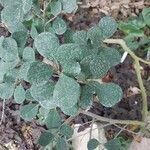
Ficus triangularis
Natal fig · Triangle fig
Description
Source: leafsnapFicus triangularis, or the Triangle Ficus, is a popular house plant native to South Africa. It grows as a small tree, reaching heights of up to 4 feet, with strong stems radiating upward. The branches are covered in glossy, medium to dark green leaves with a lovely triangular shape. The variegated variety bears lighter veins and edges that create a beautiful heart-like pattern toward the middle of each leaf. Some varieties will produce small, semi-round, pale red fruits. Unlike the typical Ficus, this plant is not overly fussy and won’t give you a hard time.
Care Guide
💧 Water Every 7-10 days
The triangle ficus, native to warmer climates, is drought-tolerant and flourishes with moderate watering every 2-3 weeks, allowing the soil to dry out slightly between waterings. Increased humidity enhances its ornamental appeal and supports leaf health, reflecting its tropical origins.
☀️ Light Full sun
Triangle ficus grows best in full, intense sunlight but can also tolerate moderate light. In its native habitat the species gets plenty of sun that supports healthy development. Too little light can stunt growth, while too much light can damage the leaves.
🌡️ Temperature 20–41.1°C
Triangle ficus is native to warmer areas where temperatures typically range from 68 to 105.8 °F (20 to 41 ℃). It grows best within a similar temperature band. If temperatures drop or climb markedly, consider modifying conditions to replicate its natural environment.
💨 Humidity high (>60%)
This plant needs special care because it loves high humidity levels of 60-80% or more. The best way to achieve this is by placing a humidifier near the plant. Daily misting is also essential! Make sure the room has good ventilation.
🪴 Soil 6-7
🌱 Fertilizer
The best time to fertilize a Triangle ficus is in early spring, as it breaks dormancy. This encourages overall growth and flower formation. Fertilizing improves the foliage, stems, and branches, while encouraging flowers that are large, colorful, and long-lasting. It helps transfer nutrients from the roots to the flowers and strengthens the plant's health and resistance to disease.
🪴 Pot & Repot 2-3 years
When repotting a Triangle ficus, select a pot 1-2 inches (2.5–5.1 cm) larger with good drainage. Use a well-draining potting mix. Repot in spring or fall, making sure the root ball sits slightly lower than the rim of the flower pot. Water thoroughly after repotting and place it in a warm location with indirect sunlight.
✂️ Pruning
The triangle ficus, easily identifiable by its triangular leaves, needs regular pruning to maintain its bushy shape and encourage growth. For best results, prune the plant during its dormant period, which is from early to late winter. During pruning, remove any dead branches and trim overgrown areas to improve air circulation, light penetration, and the overall health of the plant.
🌿 Propagating
🐛 Diseases & pets
☠️ Toxicity
The Triangle Ficus is considered toxic to both people and pets due to the latex in the sap and other allergens. Ingesting the milky-white poisonous sap irritation and inflammation of the mouth and gastrointestinal tract. This plant is not ideal for homes with children and pets.
Characteristics
- Plant Type
- Tree
- Life Cycle
- Perennial
- Genus
- Ficus
- Family
- Moraceae
- Hardiness Zone
- 12-13
- Mature Height
- 2.44 m
- Mature Spread
- 1.22 m
- Leaf Color
- Green
- Leaf Type
- Evergreen
- Flower Size
- 2.03 cm
- Bloom Time
- All year round
- Planting Time
- Spring, Autumn, Winter
- Harvest Time
- All year round
- Native Area
- Africa, Asia