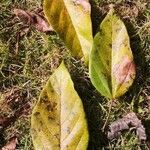
Ficus variegata
Variegated fig · Common red-stem fig · Green-fruit fig · Red-stem fig · Green fruited fig
Description
Source: leafsnapFicus variegata, commonly known as the variegated fig or striped fig, is a species of flowering plant in the Moraceae family. Native to Southeast Asia, it is found in countries such as India, Sri Lanka, and Indonesia. The plant can reach up to 30 meters in height and boasts a wide canopy with large leaves accented by green, white, or yellow stripes. Due to its striking foliage, Ficus variegata is often cultivated for ornamental purposes. Beyond its visual appeal, the plant possesses medicinal properties and has been utilized in traditional medicine to treat ailments such as diabetes, fever, and skin diseases. This species prefers well-drained soil with moderate moisture levels but is capable of withstanding drought conditions once established. It thrives in full sun or partial shade, though it may need protection from strong winds. Ficus variegata can be propagated through seeds or stem cuttings. Regular pruning is required to maintain its shape and size. In summary, Ficus variegata is a visually captivating ornamental plant with medicinal benefits, making it an excellent choice for gardens and landscape design projects.
Care Guide
💧 Water Every 7 days
The common red stem fig flourishes in regions with high humidity, where it has adapted to retain water efficiently. It requires watering every 2-3 weeks and should be kept in soil that is moist but not soggy. This evergreen plant is best suited for indoor cultivation in containers that ensure proper water drainage.
☀️ Light Partial sun
The common red stem fig is native to habitats like forest understories and rocky areas, where it occurs in natural shade. It prefers partial sun but can tolerate full sun or full shade, showing its versatility and hardiness.
🌡️ Temperature 20–37.8°C
The common red-stem fig comes from tropical areas where the weather is usually warm and humid. Consequently, it is accustomed to high heat and moisture. It is sensitive to sudden temperature shifts and prefers a consistent temperature, so indoor fluctuations should be avoided. It typically cannot tolerate cold and needs warmer conditions to grow. If temperatures fall too low, the plant may stop growing or even die.
What is the common name of Ficus variegata?
The common name of Ficus variegata is the Common red stem fig.
What is the botanical name of the Common red stem fig?
The botanical name of the Common red stem fig is Ficus variegata.
💨 Humidity
🪴 Soil 6-7
🌱 Fertilizer
Fertilization is essential for the care of the Common red stem fig. Regular feeding throughout the growing season helps maintain energy for its showy leaves and supports overall growth. Failing to fertilize can lead to unhealthy leaves, reduced ornamental value, and stunted or weak growth that is prone to breaking.
🪴 Pot & Repot
✂️ Pruning
The common red stem fig is notable for its striking variegated leaves and red stems. To promote healthy growth and maintain its aesthetic appeal, prune the plant from early to late winter to remove any dead branches. Regular pruning not only improves air circulation but also enhances the plant's vigor. Be sure to keep your tools clean to prevent the spread of diseases.
🌿 Propagating
🐛 Diseases & pets
☠️ Toxicity
Characteristics
- Plant Type
- Tree
- Life Cycle
- Perennial
- Genus
- Ficus
- Family
- Moraceae
- Hardiness Zone
- 10-11
- Mature Height
- 29.87 m
- Mature Spread
- 14.94 m to 24.99 m
- Leaf Color
- Green
- Leaf Type
- Evergreen
- Flower Color
- Yellow
- Flower Size
- 1.02 cm
- Bloom Time
- All year round
- Planting Time
- Spring, Summer
- Harvest Time
- All year round
- Native Area
- India, Malaysia, Indonesia, Vietnam, Myanmar, Japan, Philippines, Singapore, Bangladesh, Laos, Thailand, China