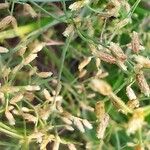
Fimbristylis bisumbellata
Care Guide
💧 Water
The double-umbel fimbry flourishes in consistently moist conditions, as it requires evenly moist soil for optimal growth. To mimic the natural humidity of its habitat, it is important to water it weekly. This is crucial for developing strong roots and maintaining overall plant health. In its natural wetland environment, the plant's growth cycle is highly dependent on the availability of water.
☀️ Light Full sun
The Double-umbel fimbry is a plant that flourishes in bright, open spaces where it can bask in full sunlight. Although it can withstand semi-shade, it favors unfiltered sunlight for the best growth. This plant, which is annual and biennial, is recognized for its proclivity towards sunny conditions.
What are the sunlight requirements for Double-umbel fimbry?
Double-umbel fimbry, known botanically as Fimbristylis bisumbellata, thrives in environments that offer bright, direct sunlight. It originates from bright, open environments and requires full sun, defined as over 6 hours of sunlight daily, for optimal growth. While it can tolerate partial sun, which is about 3-6 hours of sunlight, it prefers direct sunlight to flourish. This plant's growth and health are maximized when it receives the proper amount of sunlight, echoing its nature as a sun-loving annual and biennial plant.
What kind of artificial lighting is needed for indoor Double-umbel fimbry plants?
For Double-umbel fimbry plants grown indoors, when natural sunlight is insufficient, artificial lighting becomes crucial for their growth, especially during winter or in less sunny spaces. LED lights are recommended as they can be customized to provide specific wavelengths of light that plants need. The requirements vary based on the plant's sun needs: full sun plants need 30-50W/sq ft, partial sun plants need 20-30W/sq ft, and full shade plants need 10-20W/sq ft of artificial light. The artificial light source should be placed 12-36 inches above the plant to mimic natural sunlight, and the lighting should be kept on for 8-12 hours per day to match the plant's natural daylight needs.
What symptoms indicate a Double-umbel fimbry plant is getting inadequate light?
When Double-umbel fimbry plants receive inadequate light, several symptoms may manifest, indicating their struggle. These include smaller new leaves, thin and stretched-out appearance due to leggy or sparse growth, early leaf drop as a resource-conserving measure, delayed or halted growth, paler new leaves indicating a lack of chlorophyll, and conditions such as chlorosis where leaves turn yellow. Extreme sunlight can cause symptoms like sunscald, leaf curling, wilting, and leaf scorching, which are defenses or damages resulting from too much light exposure. These symptoms serve as alerts to the need for optimal lighting conditions.
How can I address the light needs of my Double-umbel fimbry, both indoor and outdoor?
To ensure Double-umbel fimbry meets its light needs, gradual adjustment to sunlight exposure is key. For indoor plants, gradually move them to sunnier locations to achieve at least 6 hours of direct sunlight daily, utilize south-facing windows, and consider supplementary artificial light if moving the plant isn't feasible. Outdoor plants should be similarly acclimated to sunnier spots to prevent sunburn. Additionally, reducing obstructions like pruning trees can help outdoor and ground-planted specimens receive more sunlight. For smaller plants, transplanting during dormant periods to sunnier locations with good drainage can significantly improve their light exposure.
🌡️ Temperature 15–37.8°C
The double-umbel fimbry is native to tropical areas, known for their high heat and moisture levels. This means the plant has naturally adapted to thrive in hot and humid conditions. It does not fare well with abrupt shifts in temperature and favors a consistent temperature setting, hence the need to ensure indoor temperatures don't fluctuate too much. The plant typically struggles with low temperatures and needs warmth for optimal growth. Its growth may stop or it may perish if the ambient temperature falls lower than it can tolerate.
💨 Humidity
🪴 Soil 6-7
🌱 Fertilizer
Providing the Double-umbel fimbry with low-strength fertilizer doses on a regular basis can enhance the growth of its leaves. It is advisable to apply fertilizer to Double-umbel fimbry about once per month throughout the summer season. Nitrogen plays a key role in leaf development, and thus using nitrogen-filled resources as a supplement can help the Double-umbel fimbry to flourish.
🪴 Pot & Repot
✂️ Pruning
The double-umbel fimbry boasts flowers in a distinctive double-umbel shape. To ensure thriving growth, it benefits from targeted pruning between early and late spring. To promote healthier growth and reduce the risk of disease, remove dead stems and thin out overly dense areas to improve air circulation. Always use clean, sharp tools to protect the delicate stems from damage.
🌿 Propagating
🐛 Diseases & pets
☠️ Toxicity
Characteristics
- Plant Type
- Herb
- Life Cycle
- Annual
- Genus
- Fimbristylis
- Family
- Cyperaceae
- Hardiness Zone
- 8-11
- Mature Height
- 20 cm to 49 cm
- Mature Spread
- 10 cm to 30 cm
- Leaf Color
- Green
- Leaf Type
- Semi-evergreen
- Flower Color
- Yellow, Green, Brown
- Flower Size
- 0.20 cm to 0.51 cm
- Bloom Time
- Summer, Early fall, Mid fall
- Planting Time
- Spring, Summer, Autumn
- Harvest Time
- Late summer, Fall, Early winter
- Native Area
- Sri Lanka, Burkina Faso, Somalia, Egypt, Turkey, India, Angola, Namibia, Madagascar, Eritrea, Pakistan, Nigeria, Croatia, Morocco, Kenya, Tanzania, Zimbabwe, Mali, Iraq, Sierra Leone, Indonesia, Cambodia, Mozambique, Ghana, Ethiopia, Botswana, Portugal, Nepal, Saudi Arabia, Malawi, Tunisia, South Africa, Zambia, Sudan, Mauritania, Laos, Armenia, Greece, Chad, Lebanon, China, Afghanistan, Syria, Spain, Vietnam, Myanmar, Japan, Senegal, Iran, Côte d'Ivoire, Azerbaijan, Algeria, Albania, Thailand