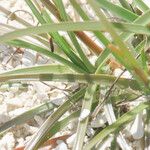
Fimbristylis cymosa
Tropical Fimbry · Tropical fimbristylis
Description
Source: leafsnapFimbristylis cymosa is a perennial herbaceous plant belonging to the family Cyperaceae. Commonly known as the clustered fimbry or clustered umbrella-sedge, it is native to tropical and subtropical regions of Asia, Africa, Australia, and the Pacific Islands. The plant exhibits a tufted growth habit with slender stems that can reach up to 60 cm in height. Its leaves are narrow, grass-like, and have a bluish-green coloration. The inflorescence of Fimbristylis cymosa consists of clusters of small flowers arranged in an umbrella-like shape at the top of each stem. Fimbristylis cymosa prefers wet habitats such as marshes, swamps, pond edges, or wetlands but can also thrive in drier areas like grasslands or open forests. Traditionally, various cultures have used this plant for medicinal purposes to treat ailments such as fever, diarrhea, and dysentery. The plant's ability to tolerate waterlogged soils makes it an important species for stabilizing soil along riverbanks or other water bodies where erosion control is needed. Overall, Fimbristylis cymosa plays an essential ecological role in soil stabilization along riverbanks and possesses medicinal properties that have been utilized by different cultures throughout history.
Care Guide
💧 Water Every 3 days
Tropical fimbry thrives in consistently moist conditions, which reflect its tropical origins. While it benefits from weekly watering, it can also tolerate occasional dryness. For optimal growth, plant tropical fimbry in well-draining soil. This makes it suitable for both indoor and outdoor container gardening.
☀️ Light Full sun
Tropical fimbry comes from bright tropical habitats and does best in direct sunlight. It prefers full sun but can tolerate partial sun, adjusting well to lightly shaded spots.
What are the sunlight requirements for Tropical Fimbry?
Tropical Fimbry, scientifically known as Fimbristylis cymosa, requires full sun, which means it thrives in conditions where it receives more than 6 hours of sunlight daily. However, it can also adapt to partial sun, managing well with about 3-6 hours of sunlight. It's essential to observe how sunlight moves through your garden to ensure your Tropical Fimbry is placed in spots that provide an ideal balance of light and shade, supporting its growth and health.
How does artificial lighting support Tropical Fimbry growth indoors?
For optimal growth of Tropical Fimbry indoors, especially in conditions where natural sunlight is inadequate, artificial lighting can be a vital resource. During winter or in less sunlit spaces, artificial lights, particularly LED lights, are recommended due to their ability to be customized to the plant's specific light wavelength needs. Full sun plants like Tropical Fimbry should have 30-50W/sq ft, while partial sun plants need 20-30W/sq ft of artificial light. The light source should be placed 12-36 inches above the plant to mimic natural sunlight conditions, ensuring the plant receives 8-12 hours of light daily.
What are some common symptoms of light deficiency in Tropical Fimbry?
When Tropical Fimbry doesn't receive adequate light, it may exhibit several symptoms including smaller new leaves, leggy or sparse growth, a tendency to drop older leaves more quickly, and a halt in new leaf production. Additionally, insufficient sunlight can cause new leaves to appear pale or develop irregular color patterns, a condition known as chlorosis. Other symptoms due to inadequate or excessive sunlight include sunscald, leaf curling to minimize water loss, wilting from water loss due to high transpiration rates, and leaf scorching characterized by brown, dry, and crispy leaf edges.
How can I ensure my Tropical Fimbry receives adequate sunlight?
Ensuring your Tropical Fimbry receives sufficient sunlight involves a few strategies depending on whether it's grown indoors or outdoors. Indoors, gradually move your plant to sunnier locations each week until it gets at least 6 hours of direct sunlight daily, ideally near a south-facing window. Additionally, consider using artificial lighting for plants that are large or not easily movable, keeping a lamp on for at least 8 hours daily. For outdoor plants, also move them gradually to sunnier spots to prevent shock and sunburn. To improve sunlight exposure for plants in the ground, reduce obstructions by pruning nearby trees and consider transplanting smaller plants during their dormant period to a location with better sunlight and drainage.
🌡️ Temperature 20–35°C
Tropical fimbry is native to areas where temperatures range from 68 to 95°F (20 to 35℃) and prefers warm conditions. It is recommended to make seasonal temperature adjustments to keep it within this range, ensuring a comfortable environment for growth.
What is the ideal temperature range for Tropical Fimbry?
Tropical Fimbry, or Fimbristylis cymosa, thrives in regions with a temperature range of 68 to 95°F (20 to 35°C), as it prefers warm conditions. To ensure a comfortable growth environment, seasonal temperature adjustments are recommended to maintain this range. The plant has some tolerance to cold and usually doesn't require extra protection if the temperature stays above 0°C. However, if temperatures are expected to drop below 0°C, temporary cold protection measures, such as wrapping the plant with plastic film, fabric, or other materials, should be taken. These protective measures should be removed once the temperature rises again.
How does low temperature affect Tropical Fimbry and what are the solutions?
Tropical Fimbry has a moderate tolerance to low temperatures and thrives best when the temperature is above 20°C. It should be kept above 0°C during winter. If the temperature falls below -5°C, the plant's leaves may start to droop. In mild cases, they can recover, but in severe cases, the leaves will wilt and eventually fall off. The solution for frost damage is to trim off the frost-damaged parts. Before facing low temperatures again, it is advisable to wrap the plant with materials such as non-woven fabric or cloth, and construct a wind barrier to protect it from cold winds.
What should be done if a Tropical Fimbry experiences high temperature?
During summer, it's important to ensure that Tropical Fimbry is kept below 35°C. Temperatures exceeding 38°C may cause the leaves to lighten in color, become dry and withered at the tips, curl, and increase the plant's susceptibility to sunburn. To address this, trim away the sunburned and dried-up parts. Move the plant to a shaded location away from the midday and afternoon sun, or use a shade cloth to provide protection. Additionally, watering the plant in the morning and evening will help keep the soil moist, further assisting in managing high temperature stress.
💨 Humidity
🪴 Soil 5-7
🌱 Fertilizer
Tropical fimbry needs extra nutrients to encourage healthy new growth. In spring, applying compost around the plant's base can effectively supply the nourishment it requires. Fertilizing supports vigorous growth and helps the plant resist diseases and pests.
🪴 Pot & Repot
✂️ Pruning
To help tropical fimbry thrive, it's important to prune it carefully in early spring. Remove dead stems and thin out dense areas to improve air circulation. Be sure to avoid cutting too close to the base, as this encourages regrowth. Regular pruning not only enhances the plant's health and promotes robust foliage, but it also keeps the plant looking neat and tidy.
🌿 Propagating
🐛 Diseases & pets
☠️ Toxicity
Characteristics
- Plant Type
- Grass
- Life Cycle
- Perennial
- Genus
- Fimbristylis
- Family
- Cyperaceae
- Hardiness Zone
- 9
- Mature Height
- 25 cm to 76 cm
- Mature Spread
- 10 cm to 20 cm
- Leaf Color
- Green
- Leaf Type
- Evergreen
- Flower Color
- Brown
- Flower Size
- 0.51 cm to 1.02 cm
- Bloom Time
- Summer, Early fall, Mid fall
- Planting Time
- Spring, Summer
- Harvest Time
- Late summer, Fall, Early winter
- Native Area
- Sri Lanka, Somalia, Belize, India, Malaysia, Mexico, Guatemala, Madagascar, Pakistan, Nigeria, Fiji, Tanzania, Jamaica, Benin, Cuba, Sierra Leone, Indonesia, Cambodia, Equatorial Guinea, Liberia, Mozambique, Venezuela, Cameroon, Brazil, Ghana, South Korea, Congo, Honduras, South Africa, Zambia, Philippines, Laos, Panama, China, Colombia, Bahamas, Vietnam, Myanmar, Japan, Guyana, Senegal, Singapore, Nicaragua, Iran, Ecuador, Côte d'Ivoire, Costa Rica, Congo (DRC), Thailand, Gabon