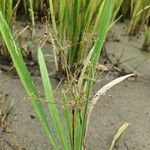
Fimbristylis littoralis
Grass-like fimbristylis · Lesser fimbristylis · Grass-Like Fimbry · Fimbry
Description
Source: leafsnapFimbristylis littoralis, commonly known as lesser fimbry or lesser fimbristylis, is a sedge of the family Cyperaceae that is native to many countries in Africa, Asia and Oceania including across much of northern Australia.
Care Guide
💧 Water
Fimbry, a plant native to moist environments, thrives with regular hydration and prefers wet conditions. It needs to be watered weekly and benefits from rainwater during its growing season, which promotes vigorous growth. Although it demonstrates moderate drought tolerance, consistent moisture is ideal for optimal growth.
☀️ Light Full sun
Fimbry comes from bright, open habitats and performs best in full sun. It can tolerate partial sun but favors direct sunlight for optimal growth. This plant, which may be annual or biennial, is recognized for its sun-loving character.
What are the sunlight requirements for Fimbry?
Fimbry requires full sun, meaning it thrives in areas that receive more than 6 hours of sunlight daily. It can also tolerate partial sun, which is about 3-6 hours of sunlight. It's important to monitor how sunlight moves through your garden to ensure that your Fimbry plants receive the optimal balance of light and shade, as this will contribute to their health and growth.
How does Fimbry react to artificial lighting?
Fimbry can benefit from artificial lighting, especially when natural sunlight is insufficient, such as during winter or in less sunny indoor spaces. Artificial lights, particularly LED types that can be customized to provide specific wavelengths, offer an excellent solution. For full sun plants like Fimbry, 30-50W per square foot of artificial light is recommended. The light source should be placed 12-36 inches above the plant, mimicking the length of natural daylight hours, which is generally 8-12 hours per day.
What are the common symptoms of light deficiency in Fimbry?
When Fimbry doesn't get enough light, it may exhibit signs like smaller leaves, leggy or sparse growth, faster leaf drop, slower or no new growth, lighter-colored new leaves, chlorosis (leaves turning yellow), sunscald, leaf curling, wilting, and leaf scorching. These symptoms indicate that the plant is not receiving the optimal level of sunlight it requires for healthy growth.
How can I treat Fimbry suffering from light deficiency?
For indoor Fimbry plants, gradually move them to a sunnier spot each week until they receive at least 6 hours of direct sunlight daily. Utilize a south-facing window and keep curtains open during the day. If moving the plant isn't feasible, consider using artificial light, like a desk or ceiling lamp for at least 8 hours a day or invest in professional plant grow lights. For outdoor plants, similarly, move them to progressively sunnier locations each week to avoid sunburn. If light obstruction is an issue, for example, from trees, pruning the branches may help increase sunlight exposure. When transplanting to a new location, do it during the plant's dormant period for the best results. Note that parts of the plant that were damaged by insufficient light may not recover, but new growth should be healthy with adequate light exposure.
🌡️ Temperature 15–37.8°C
Fimbry comes from tropical areas, where the climate is generally warm and humid. As a result, it is well adapted to high temperatures and humidity. It does not tolerate sudden temperature changes and prefers a stable temperature environment, so indoor temperature fluctuations should be avoided. It usually cannot withstand cold temperatures and requires higher temperatures for growth. If the surrounding temperature falls too low, the plant may stop growing or even die.
💨 Humidity
🪴 Soil 6-8
🌱 Fertilizer
🪴 Pot & Repot
✂️ Pruning
Fimbry is a type of tufted sedge featuring slender stems. To promote growth and manage its spread, prune it from early to late spring. Trim away old foliage to give it a bushier appearance and to improve air circulation, which helps reduce the risk of disease. Regular trimming not only improves the plant's appearance but also supports its resilience.
🌿 Propagating
🐛 Diseases & pets
☠️ Toxicity
Characteristics
- Plant Type
- Grass
- Life Cycle
- Annual
- Genus
- Fimbristylis
- Family
- Cyperaceae
- Hardiness Zone
- 8-11
- Mature Height
- 5 cm to 61 cm
- Mature Spread
- 20 cm to 40 cm
- Leaf Color
- Green
- Leaf Type
- Evergreen
- Flower Color
- Yellow, Green, Purple, Brown
- Flower Size
- 6.35 cm to 10.16 cm
- Bloom Time
- Summer, Early fall, Mid fall
- Planting Time
- Summer
- Harvest Time
- Mid summer, Late summer, Fall
- Native Area
- Nepal, Sri Lanka, India, Malaysia, Philippines, Pakistan, Laos, China, Afghanistan, Iraq, Indonesia, Liberia, Vietnam, Japan, Papua New Guinea, Koppen, Bhutan, Iran, South Korea