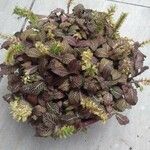
Fittonia albivenis
فتونیا یا گل موزایکی · فیتونیا · Nerveplant · Mosaic-plant · Angel Plant
Description
Source: leafsnapFittonia albivenis, commonly known as the nerve plant or mosaic plant, is a popular houseplant native to the tropical rainforests of South America. Part of the Acanthaceae family, this plant is distinguished by its stunning leaves, which feature intricate patterns of white or pink veins. Typically, the nerve plant grows to a height of 6-12 inches and spreads outward in a creeping manner. It thrives in moist soil and moderate light levels, making it ideal for indoor settings like homes and offices. Beyond its aesthetic appeal, Fittonia albivenis offers various health benefits. It has been shown to purify indoor air by removing toxins such as formaldehyde, benzene, and trichloroethylene. Additionally, the plant has a calming effect that can help reduce stress levels and promote relaxation. Overall, Fittonia albivenis is an excellent choice for those seeking a low-maintenance, visually appealing houseplant that provides numerous health benefits and enhances the beauty of any space it occupies.
💡 This new generation of small indoor foliage plants thrives in shady environments. It is a short, creeping plant with small leaves that feature delicate white or red veining on their surface. These plants have gained popularity worldwide. They are ideal for use as potted indoor ornamentals, perfect for display on desks, coffee tables, windowsills, and more. Additionally, they can be grown as attractive hanging plants.
🌳 Nerve plant is more than just an attractive addition to indoor spaces. Its glossy, colorful leaves bring a warm, welcoming atmosphere to homes and workplaces around the world. Besides its looks, it has changed indoor gardening by becoming a favorite for terrariums because it prefers moist conditions; it is also quite adaptable and can thrive even in low-light areas, a quality that makes it popular with people who enjoy growing plants indoors.
🎭 sagacity
Care Guide
💧 Water Every 7 days
Originating from tropical rainforests, the nerve plant thrives in environments with high humidity and consistent moisture, while avoiding waterlogged conditions. Although it has some tolerance for drought, it should be watered weekly. To mimic its natural habitat and keep its foliage vibrant and hydrated, regular misting is beneficial. This makes the nerve plant a striking ornamental choice for indoor settings.
When Should I Water My Nerve Plant?
Timely watering is essential for the health and growth of the nerve plant. You should water the plant when you notice the leaves wilting or drooping, indicating a need for moisture. Additionally, if the top 1-2 inches of soil are dry, it's time to water the plant. Despite its resilience to underwatering, allowing the soil to dry out completely for prolonged periods can harm the plant. Overwatering, however, is detrimental and leads to symptoms similar to underwatering, including yellowing leaves that might fall off. Keeping the soil consistently moist, yet not waterlogged, is key.
How Should I Water My Nerve Plant?
The nerve plant prefers a specific watering technique called bottom-watering, which allows for adequate moisture absorption at the roots without oversaturating the soil surface. This method minimizes the risk of fungal diseases caused by excess moisture on the foliage. It's recommended to use a watering can with a narrow spout to direct water to the base and avoid wetting the leaves. A moisture meter can be useful for accurately assessing when to water. The frequency of watering varies based on humidity, pot size, and environmental conditions, but generally, the top inch of soil should dry out before the next watering.
How Much Water Does Nerve Plant Really Need?
The nerve plant requires consistent moisture, reflecting its tropical rainforest origins. However, it's crucial to avoid waterlogging. A standard 6-inch pot typically needs about one cup of water, ensuring the soil is thoroughly moistened without being soggy. Signs of appropriate watering are vibrant, hydrated leaves and top soil that is slightly damp to the touch. Too little water leads to wilted or brown leaves, while overwatering causes mushy, yellow leaves and can result in root rot due to the plant's relatively shallow roots. The key is to maintain a balance that mirrors the plant's natural habitat conditions.
What Kind of Water is Best for Nerve Plant?
Nerve plants thrive best on distilled, rainwater, or filtered water, due to their sensitivity to minerals and chemicals in tap water, such as chlorine and fluoride. If you must use tap water, letting it sit out overnight allows harmful chemicals to evaporate and the water to reach room temperature, minimizing potential shock to the plant's system. Using the right kind of water helps to prevent brown, crispy leaves due to mineral buildup and ensures the plant remains healthy and vibrant.
How Do Nerve Plant's Watering Needs Change with the Seasons?
In spring, as the nerve plant enters its growth phase, it requires regular watering to account for increased evaporation, though care should be taken to avoid waterlogging. During the high-growth summer months, consistent moisture is crucial, with adjustments made to prevent overwatering. Autumn's cooler temperatures and reduced evaporation rates mean slightly less frequent watering, still ensuring the soil remains moist. In winter, while growth slows, the plant still needs consistent watering, adjusted for the drier air and lower indoor temperatures common in many homes, to prevent the soil from becoming too dry.
☀️ Light Partial sun
The nerve plant does best with moderate light, which is important for maintaining its colorful foliage. While it prefers some sun, it can also withstand shady surroundings. Too much light can scorch the leaves, and too little may cause the vivid leaf color to fade. Native to dim forest understories, the nerve plant evolved to tolerate a range of sunlight levels.
What are the sunlight requirements for plants?
Plants have varying sunlight needs ranging from partial sun, which is about 3-6 hours of sunlight, to full shade, indicating less than 3 hours of sunlight. Observing the sunlight movement through your garden is crucial to find the ideal balance of light and shade for plants, ensuring they thrive.
How does sunlight affect the nerve plant?
The nerve plant, or Fittonia albivenis, flourishes in medium-light exposure but can also adapt to shady conditions, due to its evolution under the dim forest floors. Although it prefers partial sun, too much light can lead to leaf burn, while insufficient light might cause a loss of vibrant leaf color. For effective growth in less sunny spaces or during winter, artificial lighting, such as LEDs, offering 10-50W/sq ft depending on the plant's sunlight needs, can be a supplement. The artificial light should be placed 12-36 inches above the plant for 8-12 hours a day, mimicking natural daylight.
What are the common symptoms of improper light exposure in nerve plants?
Nerve plants may exhibit several symptoms due to inappropriate light conditions, such as leggy growth or sparse foliage, faster leaf drop, smaller new leaves, loss of variegation, chlorosis, sunscald, leaf curling, wilting, and leaf scorching. These symptoms indicate either too much or too little light, affecting the plant's growth, color, and overall health.
What solutions are available for nerve plants suffering from light exposure issues?
Optimizing a nerve plant's growth due to light issues involves gradual adaptation to sunlight conditions by moving the plant to progressively sunnier spots until it gets 3-6 hours of direct sunlight daily. Artificial lighting is advisable for larger or immovable plants, requiring at least 8 hours of light daily. Outdoor plants should be moved cautiously to avoid sunburn. If light obstruction is an issue, consider pruning or transplanting the plant during its dormant period for better sunlight exposure. Note that damaged parts may not recover, but new growth should be healthy with adjusted lighting.
🌡️ Temperature 20–37.8°C
Nerve plant prefers temperatures between 68 and 100℉ (20 to 38℃), reflecting its native tropical habitat. In winter, keep temperatures above 60℉ (15℃) and avoid exposing it to cold drafts.
What is the ideal temperature range for a Nerve plant?
The ideal temperature range for a Nerve plant, or Fittonia albivenis, is from 68 to 100°F (20 to 38°C). This preference is due to the plant's native tropical habitat. It's important to maintain the temperature above 60°F (15°C) during winter and to protect it from cold drafts. As a heat-loving plant, it may be harmed by cold temperatures. During autumn, it's advisable to bring outdoor-grown Nerve plants indoors, placing them near a bright window but away from heaters, with an emphasis on keeping winter temperatures above 20°C. Temperatures nearing 5°C can adversely affect the plant.
How does low temperature affect the Nerve plant, and what are the solutions?
Nerve plants are sensitive to low temperatures and thrive best above 20°C. During winter, it's critical to keep them above 5°C to prevent damage. Exposure to temperatures below 1°C can cause the leaves to lighten in color. Following frost damage, leaves may gradually turn brown or black, and symptoms such as wilting and drooping may occur. The solutions for frost damage include trimming off the damaged parts and moving the plant to a warm environment indoors. Positioning the plant near a south-facing window can ensure it gets enough sunlight while being cautious not to place it near heaters or air conditioning vents, avoiding air that's too dry.
What should be done if a Nerve plant is exposed to high temperature?
During summer, it's crucial to keep the Nerve plant below 38°C to prevent heat stress and sunburn. Temperatures exceeding 43°C can lighten the leaves' color and increase susceptibility to sunburn. To remedy this, trim away the sunburned and dried parts of the plant. Then, relocate the plant to a shaded area away from the harsh midday and afternoon sun. Watering the plant in the morning and evening helps keep the soil moist, which is essential for its health under high temperature conditions.
💨 Humidity high (>60%)
This plant needs special care because it loves high humidity levels of 60-80% or more. The best way to achieve this is by placing a humidifier near the plant. Daily misting is also essential! Make sure the room has good ventilation.
🪴 Soil 5-6
🌱 Fertilizer
The nerve plant needs the most fertilizer during its active growth period, which takes place mainly in spring, summer, and early fall. Fertilizing supplies essential nutrients that the soil may lack, encouraging healthy root and stem development as well as the attractive foliage that is a key characteristic of this plant.
Why do I have to add plant food to my Nerve plant?
All plants, including the Nerve plant, need soil nutrients to grow. However, it's not always guaranteed that the soil will have all the necessary nutrients. That's why fertilization and soil amendments are important. These measures ensure that your garden plants not only have the basic nutrients they need, but also the specific nutrients that are essential for their growth. In the case of the Nerve plant, fertilization is necessary for healthy root and stem development throughout the growing season. It also helps the plant produce beautiful leaves, which are its main attractive feature.
When should I fertilize my Nerve plant?
During the active growth phase that spans spring, summer, and early fall, a Nerve plant requires the highest amount of fertilizer. After winter, feed your Nerve plant every two to four weeks until fall comes. During fall, gradually decrease the fertilization rate until you stop feeding the plant completely in preparation for the less active growth period in winter.
When is it not a good idea to fertilize my Nerve plant?
For most of the year, including spring, summer, and most of the fall, it is important to regularly feed your Nerve plant. The only exception is if you notice that your plant has already received too much fertilizer or if you have made a mistake in fertilizing it, resulting in fertilizer burn or some other issue. If this happens, you need to address the problem before resuming regular feedings. Remember not to fertilize your Nerve plant during the winter, especially if it is grown indoors in a cold area. During this time, the plant goes into a dormant phase and does not require or benefit from feeding. In fact, fertilizing the plant during its dormant phase is likely to cause fertilizer burn.
What kind of plant food does my Nerve plant need?
The fertilizer for a Nerve plant contains a specific blend of nutrients, each present in low amounts. An ideal fertilizer has an N-P-K ratio of 3-1-2, but a general-purpose fertilizer with a balanced blend can also be effective. However, even with a balanced fertilizer, the volume of each nutrient should ideally be at 10 or lower. You can choose between granular or liquid-based fertilizer. If you opt for liquid fertilizer, it is usually best to dilute its strength by half. Granular fertilizer has few downsides, but using liquid fertilizer is often more practical, especially when watering your Nerve plant.
How can I give my Nerve plant the nutrients it needs?
When purchasing fertilizer for your Nerve plant, it's important to follow the application instructions provided. In most cases, you should apply the fertilizer just before or while watering the soil. This ensures that the plant's roots are not harmed by the fertilizer. If you choose to use a slow-release granular fertilizer, simply sprinkle it onto the soil and then water immediately after. On the other hand, if you opt for a liquid-based fertilizer, dilute it with water before applying it to the soil. Afterward, provide a little more water. In the spring and fall, it's especially crucial to dilute your fertilizer by at least half. This is because the plant's growth is increasing in the spring and slowing down in the fall.
🪴 Pot & Repot 2-3 years
When repotting Nerve plant, select a pot 1-2 inches (2.5–5.1 cm) larger with good drainage. Use a well-draining potting mix. Repot in spring or fall, making sure the root ball sits slightly below the rim of the flower pot. Water thoroughly after repotting and place it in a warm spot with indirect sunlight.
✂️ Pruning
The nerve plant is known for its vibrant, veined foliage and benefits from regular pruning, especially from early to late spring. To promote bushier growth and maintain a compact shape, trim any leggy stems and remove discolored leaves. This also helps ensure good air circulation. Be sure to use clean, sharp scissors to minimize stress or the risk of infection.
🌿 Propagating
🐛 Diseases & pets
☠️ Toxicity
Fittonia is considered non-toxic and is completely safe for households with children and pets.
Characteristics
- Plant Type
- Herb
- Life Cycle
- Perennial
- Genus
- Fittonia
- Family
- Acanthaceae
- Hardiness Zone
- 10-12
- Mature Height
- 8 cm to 15 cm
- Mature Spread
- 15 cm to 30 cm
- Leaf Color
- Green
- Leaf Type
- Evergreen
- Flower Color
- White
- Flower Size
- 2.54 cm
- Bloom Time
- Early summer, Mid summer
- Planting Time
- Spring, Summer, Autumn, Winter
- Harvest Time
- All year round
- Native Area
- Colombia, Bolivia, Venezuela, Peru, Brazil, Ecuador