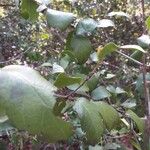
Flacourtia indica
Governor's plum · Governor’s plum · Ramontchi · Batoko plum · Madagascar plum
Description
Source: leafsnapFlacourtia indica (syn. Flacourtia ramontchi), known commonly as ramontchi, governor's plum, Madagascar plum and Indian plum, is a species of flowering plant native to much of Africa and tropical and temperate parts of Asia. F. indica and F. ramontchi are sometimes treated as separate species.
Care Guide
💧 Water
The governor's plum prefers high humidity and regular rainfall, thriving in tropical conditions. It has moderate drought tolerance and benefits from deep watering every 2-3 weeks. Best grown outdoors, the governor's plum flourishes during wet seasons, synchronizing its growth cycles with periods of abundant rainfall.
What's the best way to water my Governor's plum tree?
To ensure excellent root development, it's best to put a garden hose at the base of the plant. Avoid spraying the leaves directly, especially if they are outdoors and exposed to direct sunlight since they will need more water. You can use bubblers for each plant to keep the roots moist, or use soaker hoses to cover the entire garden or bed when adding or removing plants to encourage deep root growth. Make sure to drain any excess water and wait for the soil to dry before watering again. Watering at ground level is important to prevent diseases. On a sunny day, it may be beneficial to spray the entire bush with water. Whether your plant is in a pot or in the ground, remember that Governor's plum prefers deep watering rather than light sprinkling.
What should I do if I give too much or too little water to Governor's plum?
If you notice that the leaves of your overwatered Governor's plum are turning yellow, dropping off, and wilting, it means that the plant is not doing well. The stems may also become mushy and the overall appearance of the plant may look dull and unhealthy. In such cases, it's best to adjust your watering schedule. On the other hand, wilting can also be a sign of under watering. In this case, the leaves will become crispy and dry. To determine if the plant needs water, check the soil. If it is dry, simply watering it may not be sufficient, so give it a thorough watering. While enough water can help the plant recover, the leaves may still appear dry and yellow due to damage to the root system. Once the plant returns to normal, the yellowing of the leaves will stop. When caring for the Governor's plum indoors, always check the moisture levels in the pot to avoid overwatering. Look out for black spots, as they indicate a problem. In such cases, allow the soil in the pot to dry out for a few days without watering. Overwatering can lead to root rot, so if you notice discolored and slimy roots, consider transferring the plant to a different pot. Make sure to prevent root rot by avoiding soggy soil. When planting the Governor's plum outdoors, dig a little deeper and check the soil with your fingers. If it feels too dry, it could mean underwatering. In this case, provide adequate watering to help the plant recover.
How often do I need to water my Governor's plum tree?
The Governor's plum prefers deep, infrequent watering. For potted plants, soak them in a gallon of water each time to avoid drying out too quickly. In cold regions, water every 3 to 5 days. Check the top 2-3 inches of soil to determine if watering is needed. During hot days, check moisture daily as the soil can dry out fast. If you have a garden, water once a week in hot climates. Only water when the soil becomes too dry, taking into account rainwater. Use mulch to conserve water for outdoor plants. Sandy soil drains faster and requires more frequent watering, while clay soil needs less watering. Keep track of watering dates and watch for droopy leaves as a sign of needing water.
How much water should I give my Governor's plum plant?
The Governor's plum usually requires about a gallon of water per watering session. For potted plants, water them deeply until you see water dripping from the bottom of the pot. Then, allow the soil to dry before watering again. You can use a water calculator or moisture meter to track the amount of water you give your plant each week. During the flowering period, ensure that your plant receives plenty of water, but allow the moisture to evaporate afterwards to prevent root rot. If your Governor's plum is planted outdoors and receives sufficient rainfall, it may not need extra watering. However, when the plant is young or newly planted, make sure it receives 1-2 inches of rain per week. As the Governor's plum grows, it can rely solely on rainfall. Only when the weather is exceptionally hot or if there has been no rainfall for 2-3 weeks, consider giving the plant a thorough watering during cooler parts of the day to protect it from heat damage. Additional watering will be necessary during extended dry periods.
Do I need to change how often I water my Governor's plum based on the time of year or the weather?
To properly care for the Governor's plum, it's important to understand its watering needs. During the growing seasons of spring and fall, it should be kept moist but not soggy. Alternating between dry and moist soil conditions will promote healthy growth. In the summer, hot weather can cause water to evaporate quickly, so additional watering may be necessary if rainfall is lacking. However, during the winter when the plum becomes dormant and loses its leaves, it requires less water. It's beneficial to use well-draining soil mixtures, such as terracotta, to aid in quicker water evaporation. Once the plum begins to leaf out and go dormant, watering can be skipped, relying on fall and winter rains for survival. Good drainage is crucial, particularly in winter, as the plant is susceptible to ponding and drought during flowering. When potted, the plant has limited root growth, so consistent watering is necessary, especially in summer. Shallow sprinkles should be avoided, as they encourage fungi growth and don't reach deep down to the roots. Despite dormancy in fall and winter, the plum should not be allowed to dry out completely. It's important to prevent overwatering as sitting in water for too long can be detrimental, potentially leading to winter plant death. Applying mulch is recommended to reduce stress, conserve water, and promote healthy blooms.
☀️ Light Full sun
Governor's plum requires an optimal duration of sunlight to promote rapid growth and fruiting. Its native habitat has abundant, unobstructed light, which explains the plant's adaptation. Excessive or insufficient sunlight can impair its healthy development, causing either stunted growth or sunburn.
What are the sunlight requirements for Governor's plum?
Governor's plum requires full sun, which means it needs to be exposed to above 6 hours of sunlight daily to ensure optimal growth and fruiting. Its natural habitat provides it with ample unobstructed light, which is crucial for its growth. Both overbearing and insufficient sunlight can negatively impact the plant, possibly leading to stunted growth or sunburn. It's important to observe the movement of sunlight through your garden to find spots that offer a perfect balance of light and shade, ensuring your plants' happiness.
How can artificial lighting support indoor Governor's plum plants?
Indoor Governor's plum plants require adequate lighting for optimal growth, especially when natural sunlight is insufficient, such as during winter or in less sunny spaces. Artificial lights, particularly LED lights, are recommended as they can provide the specific wavelengths needed by plants. The intensity of the light should be adjusted based on the plant's needs, with full sun plants requiring 30-50W/sq ft, partial sun plants needing 20-30W/sq ft, and full shade plants 10-20W/sq ft. The light source should be placed 12-36 inches above the plant, mimicking natural sunlight's distance, and should be kept on for 8-12 hours a day to simulate natural daylight hours.
What symptoms indicate a Governor's plum is receiving insufficient light?
When a Governor's plum does not receive adequate sunlight, several symptoms can occur. These include smaller newly matured leaves, leggy or sparse growth due to longer spaces between leaves or stems, faster leaf drop as the plant conserves resources, slower or halted growth, lighter-colored new leaves indicating a lack of chlorophyll, chlorosis or the yellowing of leaves from excessive sunlight, sunscald which appears as pale or necrotic areas on plant tissue, leaf curling as a defense mechanism against extreme sunlight, wilting from increased water loss, and leaf scorching which shows as brown, dry edges on leaves due to excessive sunlight.
What solutions are available for Governor's plum struggling with inadequate sunlight?
For indoor Governor's plum plants struggling with insufficient light, gradually moving them to sunnier spots each week until they receive at least 6 hours of direct sunlight daily is recommended. Utilizing a south-facing window and keeping curtains open during the day maximizes sunlight exposure. If the plant is large or not easily movable, consider using artificial light, keeping a lamp on for at least 8 hours daily, or investing in professional grow lights. For outdoor plants, moving them gradually to avoid sudden changes in light intensity helps prevent sunburn. Removing obstructions that block sunlight, like pruning trees, or transplanting smaller plants during their dormant period to locations with more sunlight and good drainage, can significantly improve their health. Note that while parts of the plant affected by insufficient light may not recover, new growth should be healthy following increased light exposure.
🌡️ Temperature 20–37.8°C
Governor's plum is native to areas with moderate temperatures and does best in a range of 68 to 100.4 °F (20 to 38 °C). As temperatures shift with the seasons, alter its environment to imitate its native climate.
What is the optimal temperature range for growing Governor's plum?
Governor's plum thrives best in moderate temperatures, favoring a range between 68 to 100.4 °F (20 to 38 °C). To ensure its healthy growth, it's important to mimic its native climate by adjusting its environment as seasons change. During winter, maintaining temperatures above 20°C is key for the plant's well-being. Conversely, exposure to temperatures near or below 5°C can be harmful, indicating the necessity to keep the plant in conditions that closely resemble its preferred temperature range.
How should I care for Governor's plum in winter to avoid cold damage?
With Governor's plum not being cold-tolerant and preferring temperatures above 20°C, it's vital to take measures to protect it during colder months. If grown outdoors, the plant should be brought indoors in the autumn to shield it from cold temperatures. Place it near a bright window for sufficient light but keep it away from direct heat sources like heaters to avoid dryness. Trimming frost-damaged parts and relocating the plant to a warm, adequately lit spot indoors can prevent cold-related stress and assure its continued health through the winter.
What should I do if my Governor's plum experiences high temperature or sunburn?
During the hot summer months, it's crucial to keep the Governor's plum's temperature below 38°C to prevent heat stress. If temperatures soar above 43°C, the plant's leaves may lighten and become prone to sunburn. To mitigate these risks, remove any sunburned or dried parts of the plant promptly. Move the plant to a shaded location, particularly protecting it from the intense midday and afternoon sun. Additionally, watering the plant during cooler times, such as morning and evening, helps maintain soil moisture and supports plant health under high temperature conditions.
💨 Humidity
🪴 Soil 5-6
🌱 Fertilizer
Use organic fertilizers (e.g., fish emulsion or compost) instead of chemical fertilizers for Governor's plum. Give young plants higher nitrogen and phosphorus in spring. Incorporate compost or fertilizer into the soil before or after planting. For mature plants, apply a balanced fertilizer in spring or one targeted to specific deficiencies. Nutrient deficiency causes small leaves, short branches, yellow or bronze foliage, acidic fruits, premature fruit drop, and splitting.
🪴 Pot & Repot
✂️ Pruning
The Governor's plum is a resilient, fruit-bearing plant with thorny branches and small, edible plums. To encourage growth and shape, prune the plant in late winter. Concentrate on removing dead wood and thinning areas that are too crowded. Be sure to use sharp, clean tools to prevent infections and to boost the plant's vigor and fruit production.
🌿 Propagating
🐛 Diseases & pets
☠️ Toxicity
Characteristics
- Plant Type
- Tree, Shrub
- Life Cycle
- Perennial
- Genus
- Flacourtia
- Family
- Salicaceae
- Hardiness Zone
- 10-11
- Mature Height
- 7.62 m to 15.24 m
- Mature Spread
- 2.13 m to 4.88 m
- Leaf Color
- Dark Green, Forest Green
- Leaf Type
- Deciduous
- Flower Color
- White
- Flower Size
- 0.51 cm
- Bloom Time
- Mid spring, Late spring
- Planting Time
- Spring, Summer, Autumn
- Harvest Time
- Mid summer, Late summer, Early fall
- Native Area
- Sri Lanka, Burkina Faso, Somalia, India, Malaysia, Angola, Namibia, Madagascar, Timor-Leste, Rwanda, Pakistan, Nigeria, Eritrea, Kenya, Uganda, Tanzania, Zimbabwe, Guinea-Bissau, Mali, Benin, Sierra Leone, Indonesia, Cambodia, Equatorial Guinea, Cameroon, Mozambique, Ghana, Ethiopia, Botswana, Congo, Nepal, Malawi, Central African Republic, South Africa, Zambia, Sudan, Philippines, Laos, Guinea, Chad, China, Vietnam, Myanmar, Togo, Senegal, Côte d'Ivoire, Congo (DRC), Thailand, Gabon