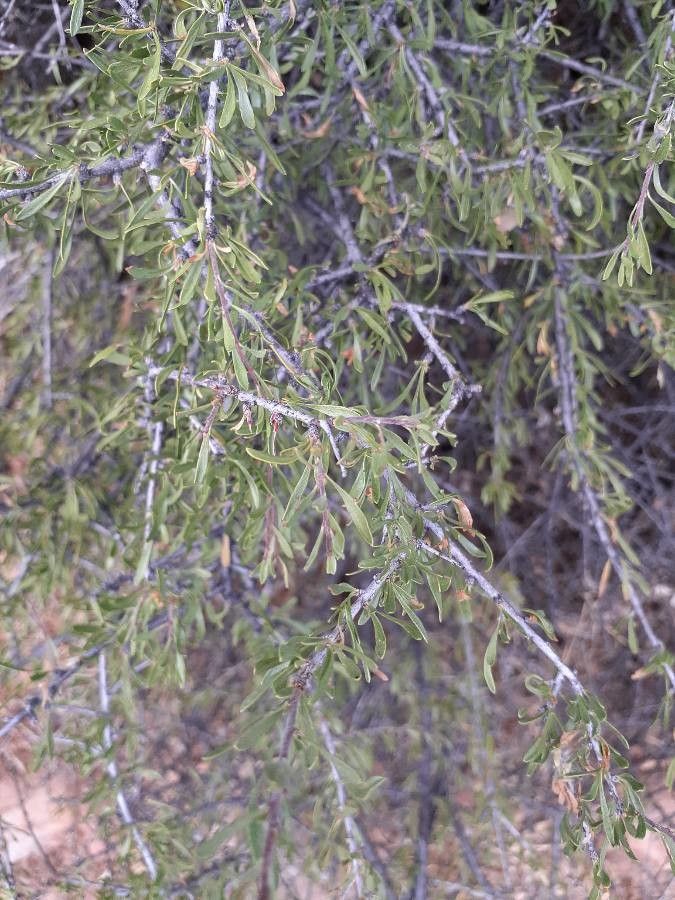
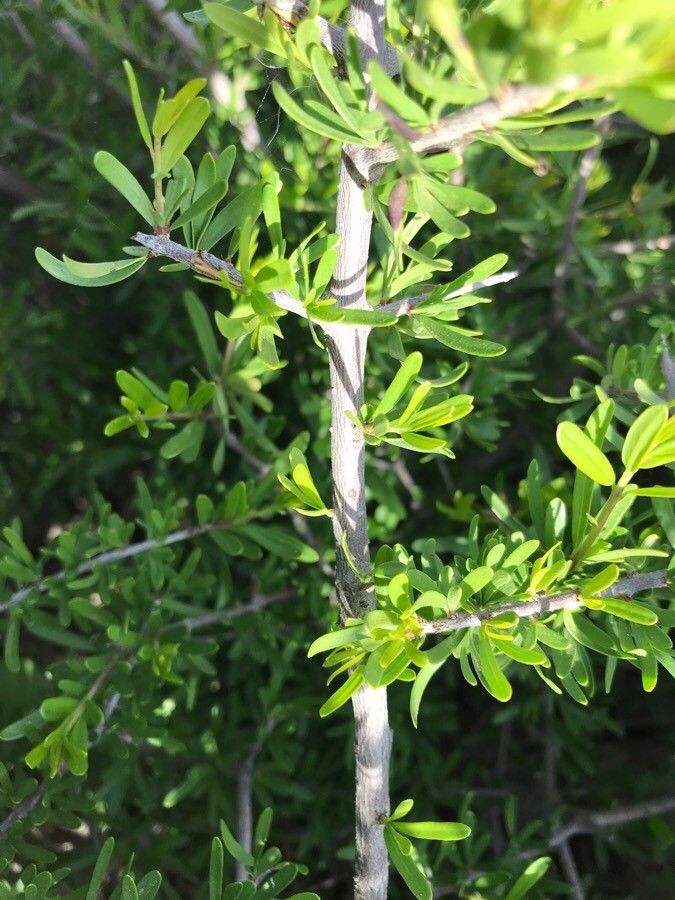
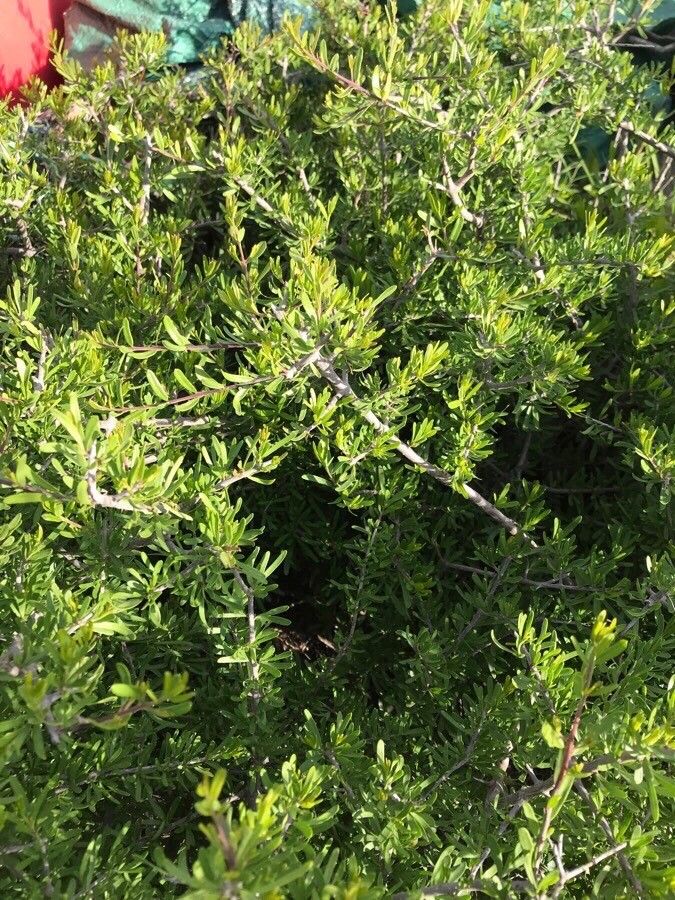
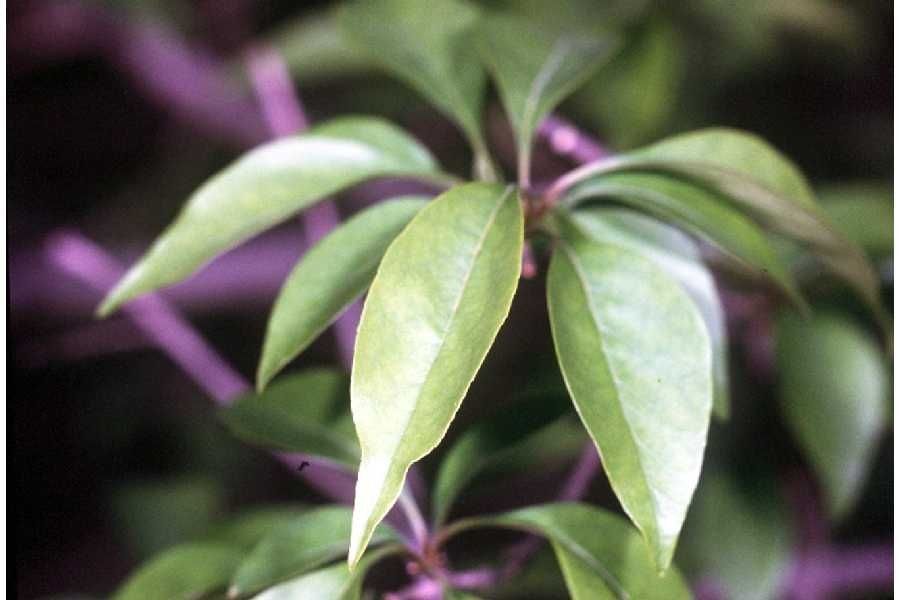
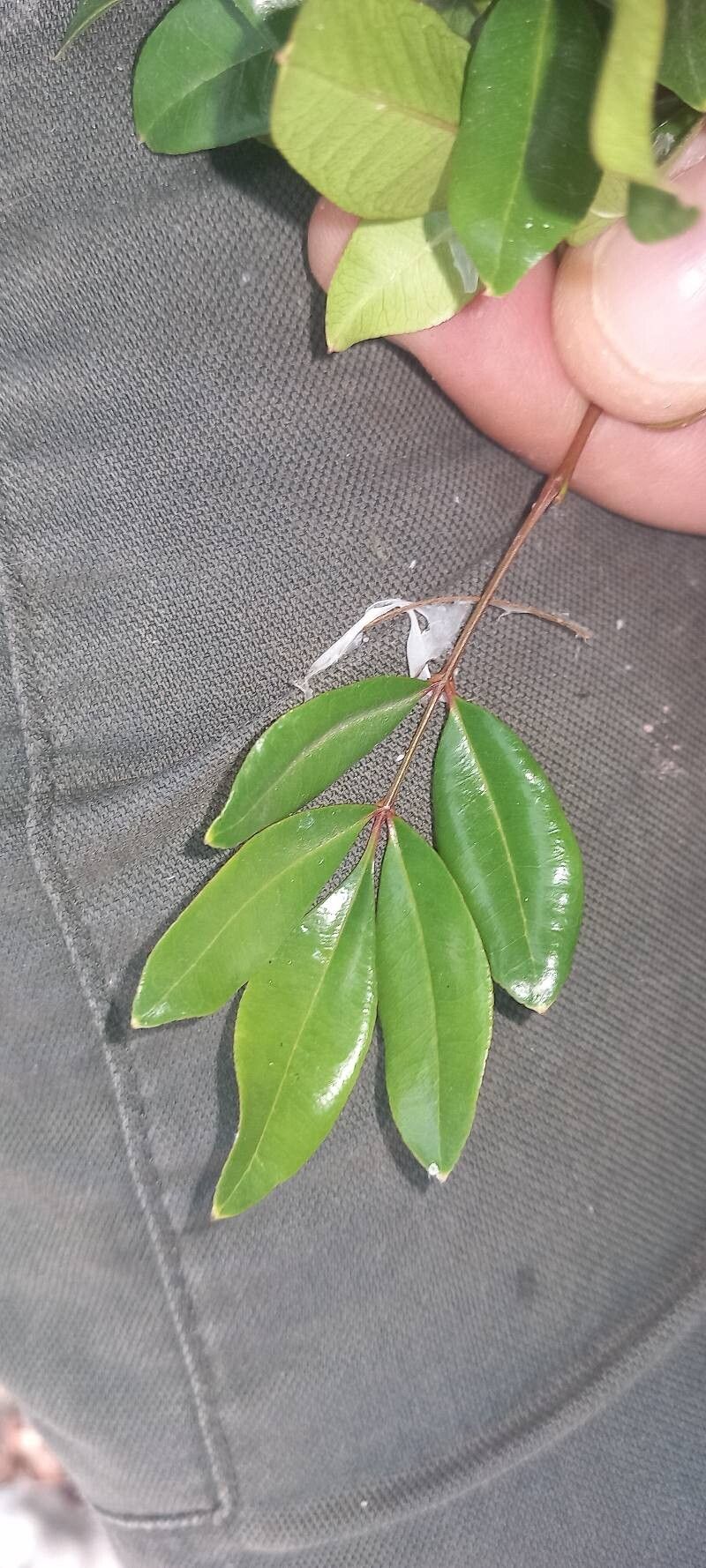
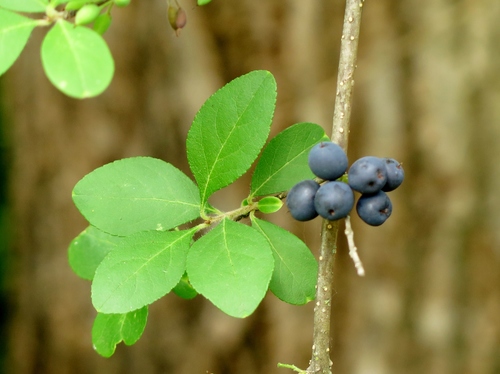
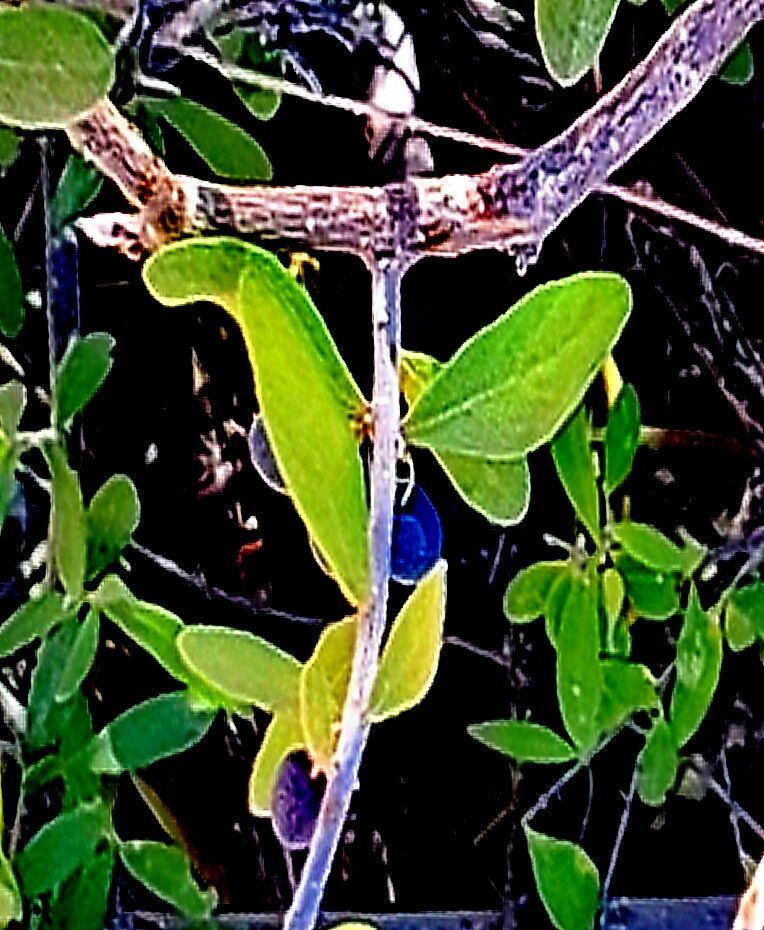
Forestiera angustifolia, commonly known as narrow-leaf forestiera or Texas olive, is a small to medium-sized deciduous shrub or small tree indigenous to the southern United States. It typically reaches heights of up to 20 feet and spreads about 15 feet wide, with a rounded crown and slender branches. The leaves are narrow, lance-shaped, and glossy green, with a smooth texture. In early spring, before the leaves emerge, the plant blooms with small yellow-green flowers, which are later followed by dark blue-black berries that attract birds.
Narrow-leaf forestiera is adaptable to various soil types but thrives best in well-drained soils under full sun or partial shade. While it can tolerate drought conditions once established, it benefits from occasional watering during prolonged dry spells.
This plant is versatile in its uses. It serves well as an ornamental shrub for landscaping due to its attractive foliage and early spring blooms. Additionally, it can be utilized for erosion control, thanks to its deep root system that helps stabilize soil on slopes.
Moreover, the berries of this plant are edible and were used by Native Americans as a food source. They can also be made into jams or jellies.
In summary, Forestiera angustifolia is an appealing native plant offering multiple benefits, including ornamental value, erosion control, and edible fruit production. It makes an excellent addition to any garden landscape design plan.
Texas swampprivet is resistant to disease and is usually not susceptible to illnesses. As for care, this plant is fairly low maintenance. When grown outdoors it needs only light watering, and larger plants typically do not require pruning; smaller plants, however, should be pruned after they finish blooming. Texas swampprivet is suitable for anyone with an outdoor area, like a garden or a deck, and does not call for extensive care experience.
How to keep Forestiera Angustifolia.
Light
Texas swampprivet is native to open habitats, like sunny meadows and forest margins, where plenty of light is present. It performs best in Full Sun but will also tolerate Partial Sun, adjusting well to a range of light conditions.
Temperature
Texas swampprivet demonstrates good temperature adaptability, tolerating higher heat and large temperature fluctuations. In hot conditions, it is important to manage watering and provide adequate shade to prevent sunburn. On the other hand, Texas swampprivet has relatively weak cold tolerance. While it can endure some cold, extremely low temperatures may cause frost damage.
Fertilizer
Fertilize your Texas swampprivet in early spring to encourage healthy growth. Regular fertilization improves overall health, producing vigorous growth, greater resilience to harsh conditions, and better resistance to pests and diseases. Keep a consistent fertilization schedule for your Texas swampprivet to maintain lush foliage with deep, vibrant color.
Pruning
Pruning Texas swamp privet in early spring promotes better growth and flowering. Start by removing any dead or diseased branches. Next, thin out overcrowded areas to improve air circulation and light penetration. Shaping the plant helps maintain its form. For more detailed instructions, consult horticultural guides.
Botanical profile.
- Plant Type
- Shrub
- Life Cycle
- Perennial
- Genus
- Forestiera
- Family
- Oleaceae
- Hardiness Zone
- 7-10
- Mature Height
- 0.91 m to 1.83 m
- Mature Spread
- 1.52 m to 3.05 m
- Leaf Color
- Dark Green
- Leaf Type
- Evergreen
- Flower Size
- 0.25 cm to 0.51 cm
- Bloom Time
- Late winter, Early spring
- Planting Time
- Spring, Summer
- Harvest Time
- Summer
- Native Area
- Mexico
Other names.