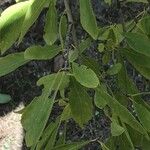
Forestiera pubescens
Stretchberry · Elbowbush
Description
Source: leafsnapForestiera pubescens, commonly known as the downy forestiera or desert olive, is a deciduous shrub or small tree native to the southeastern United States. It typically reaches a height of 10-20 feet and spreads 6-10 feet wide. The plant features an upright growth habit with multiple stems and branches that form an irregular crown. The leaves of Forestiera pubescens are simple, alternate, and ovate with serrated margins. They are dark green on the upper surface and lighter green underneath. Fine hairs cover the leaves, giving them a downy appearance. The flowers bloom in early spring before the leaves emerge. They are small, yellow-green, and appear on short stalks along the branches. These flowers give way to small black berries that ripen by late summer. Forestiera pubescens commonly grows along stream banks or other moist areas but can tolerate dry conditions once established. It is often used as an ornamental plant due to its attractive foliage and early spring blooms, and it can also be employed for erosion control because of its extensive root system. Overall, Forestiera pubescens is a hardy plant that offers year-round interest with its attractive foliage, early spring blooms, and late summer berries. Additionally, it serves important ecological functions such as erosion control in riparian areas.
🌳 At first sight the desert olive may seem unremarkable, but a closer look shows it has a range of uses. Although it is not widely noted for any single application, its wood is sturdy and good for making small wooden objects, and its berries can be turned into jelly because they contain pectin. The plant also supports a variety of insects, including the larvae of the olive fruit fly, which are an important food source for many bird species and thus help maintain local biodiversity.
Care Guide
💧 Water Every 7 days
The desert olive is well-suited for arid environments, thriving with very little moisture and demonstrating high drought tolerance. To care for it properly, water the plant every 2-3 weeks and make sure it is planted in well-draining soil. This helps to replicate its natural dry habitat, promoting healthy growth without the risk of waterlogging.
How should I water my Desert olive plant?
To promote excellent root development, consider using a garden hose placed at the base of the plant. It's best to avoid spraying the leaves directly. If the plant is outdoors and exposed to direct sunlight, the leaves may require more watering. You can use bubblers or soaker hoses to moisten the roots. When adding or removing plants, using soaker hoses can cover the entire garden or bed and help push the roots deep into the soil. Make sure to drain any excess water and wait for the soil to dry before watering again. To prevent diseases, water at ground level instead of overhead. On a sunny day, it may be beneficial to spray the entire bush with water. Whether the plant is potted or in the ground, it's important to remember that Desert olive prefers deep watering rather than light sprinkling.
What should I do if I give Desert olive plant too much or too little water?
A Desert olive that is overwatered may exhibit yellow leaves, leaf drop, and wilting. The plant may appear dull and unhealthy, with mushy stems. When these signs appear, it's best to adjust your watering schedule. Wilting can also indicate under watering, with crispy and dry leaves being a common symptom. To determine if watering is needed, check the soil moisture level and give a thorough watering if necessary. Although the plant will recover with sufficient water, it may still have dry, yellow leaves due to root damage. Once the plant returns to normal, the yellowing of leaves will cease. Indoors, be cautious of overwatering and look for black spots on the plant. If present, allow the soil to dry out by refraining from watering for a few days. Overwatering can lead to root rot, so transfer the plant to a different pot if discolored and slimy roots are observed. Prevent root rot by avoiding soggy soil. When planting Desert olives outdoors, check the soil moisture level by digging a little deeper with your fingers. Dry soil may indicate underwatering, so make sure to provide adequate water for plant recovery.
How much should I water my Desert olive plant?
The Desert olive prefers deep and infrequent watering. If they are planted in pots, they should be soaked in a gallon of water each time, as water storage in pots is limited and the soil dries out faster. In cold regions, watering is necessary every 3 to 5 days. Watering should be done early in the morning when the soil is dry, both outdoors and indoors. To determine if watering is needed, check the soil inside. When the top 2-3 inches of soil are dry, it's time to give the plant a full watering. On hot days, check the soil moisture daily as heat quickly dries out the soil in pots. If you have a garden, soil irrigation is also necessary. In hot climates, watering once a week is recommended. Only water when about 2 to 3 inches of soil become too dry, both outdoors and indoors. Take into account the amount of rainfall to prevent overwatering and root rot. If there is a lot of rainfall, additional watering may not be necessary. Desert olive plants generally grow during spring and fall. Outdoors, adding mulch about 3 to 4 inches deep can help conserve water. In sandy soil, more frequent watering is needed as it drains faster. In clay soil, watering can be less frequent, allowing the plant to dry out for 2-3 days without developing root rot. To keep track of watering, mark the date on the calendar and pay attention to drooping leaves as a sign that watering may be needed within a day.
How much water does my Desert olive plant need?
The Desert olive usually requires about a gallon of water on a regular schedule. For potted plants, it's best to water them deeply until you see water dripping from the bottom of the pot. Wait for the soil to dry before watering them again. You can use a water calculator or a moisture meter to determine the amount of water you've given your plant each week. During the flowering period, provide plenty of water but allow the moisture to evaporate afterwards to avoid root rot. If you plant the Desert olive outside where there is sufficient rainfall, additional watering may not be necessary. However, when the Desert olive is young or newly planted, make sure it receives 1-2 inches of rain per week. As the Desert olive grows, it can rely solely on rainfall. Only during extremely hot weather or a lack of rainfall for 2-3 weeks should you consider giving the Desert olive a thorough watering during cooler parts of the day to prevent damage from high heat. Additional watering will be needed during prolonged dry spells.
Do I need to change how often I water my Desert olive based on the time of year or the weather?
The Desert olive plant needs to be watered based on its weather conditions. During persistent dry weather, it will require watering. However, in the spring and fall seasons, the soil should be kept moist but not soggy. Alternating between dry and moist soil conditions will help the Desert olive plant grow well. In the hot summer weather, water can evaporate quickly, so extra watering may be necessary if there is a lack of rainfall. During winter, the Desert olive plant needs less water as it drops its leaves and goes dormant. A well-draining but moisture-retentive soil mixture, like terracotta, can help the water evaporate quicker. Once the plant begins to leaf out and go dormant, watering can be skipped, relying on fall and winter rains to survive. When the temperature becomes warmer in the spring, the Desert olive plant can be cultivated to encourage growth and blooming. Good drainage is important to prevent ponding or drought, especially in winter. If the plant is in a pot, it has limited root growth, so it should be kept well-watered, particularly in summer. It's best to water the plant thoroughly, ensuring the entire root system gets a deep soak once or twice a week, depending on the weather. Shallow sprinkles should be avoided as they can encourage fungi growth and don't reach the roots effectively. Even during fall or winter dormancy, the Desert olive plant should not be allowed to dry out completely. Overwatering should also be avoided to prevent the plant from sitting in water for too long, which can be detrimental during winter. Applying mulch whenever possible is beneficial for reducing stress, conserving water, and promoting healthy blooms.
☀️ Light Full sun
The desert olive needs plenty of light to grow. Native to desert habitats, it prospers with continual sunlight, which encourages healthy development. Too little light can stunt its growth, while too much light typically does not cause any noticeable harm.
What are the sunlight requirements for Desert olive?
Desert olive, or Forestiera pubescens, thrives in full sun conditions, requiring more than 6 hours of sunlight daily to maintain healthy growth. It's vital to observe the movement of sunlight through your garden to identify spots that offer an optimal balance of light and shade, ensuring the plant's well-being. In its native desert environment, the Desert olive is accustomed to abundant light, and lack of sufficient sunlight can stunt its growth, although it is notably resilient to excessive light exposure.
How can artificial lighting be used for indoor Desert olive plants?
Indoor Desert olive plants can benefit significantly from artificial lighting, especially when natural sunlight is insufficient. LED lights are recommended due to their ability to mimic specific light wavelengths necessary for plant growth. For optimal results, artificial lighting should range from 10-50W per square foot, depending on the plant's natural sun exposure needs, with the light source placed 12-36 inches above the plant. Ideally, the artificial lights should be on for 8-12 hours a day to mimic natural daylight hours, ensuring the plant's healthy development.
What are the signs of poor lighting conditions in Desert olive plants?
Desert olive plants may exhibit various symptoms if they are not receiving adequate light. These include small, immature leaves, leggy or sparse growth, faster leaf drop, and slowed or halted growth, indicating the plant is in survival mode. Additionally, new leaves might develop with lighter colors or irregular patterns, signaling insufficient chlorophyll. Excessive sunlight can also cause symptoms such as chlorosis, sunscald, leaf curling and wilting, and leaf scorching, affecting the plant's ability to photosynthesize and overall health.
How can you improve light conditions for Desert olive growing indoors or outdoors?
To optimize light conditions for Desert olive, gradually transition the plant to receive at least 6 hours of direct sunlight daily. For indoor plants, consider using artificial lighting if the plant is too large to move, aiming for at least 8 hours of light per day. Outdoors, gradual relocation to sunnier spots can help plants adapt without the risk of sunburn. Removing obstructions, such as pruning trees that block sunlight, or transplanting smaller plants to sunnier locations, can significantly improve light exposure. Note that while these actions promote new healthy growth, parts of the plant already damaged by poor lighting may not recover.
🌡️ Temperature 15–35°C
Desert olive originates from temperate regions and performs best in temperatures around 59–95 °F (15–35 °C). If temperatures decline, it’s advisable to provide warmer conditions—for example, growing it indoors—to replicate the plant’s life cycle in its native climate.
What is the ideal climate for the Desert Olive?
The Desert Olive (Forestiera pubescens) thrives in temperate climates, with optimal growth temperatures ranging from 59 to 95 °F (15 to 35 °C). It exhibits some cold tolerance and generally adapts well to temperatures just above -5°C without needing extra measures. However, to mimic its native lifecycle during colder times, creating warmer conditions by moving it indoors is recommended. If temperatures are expected to fall below -5°C, temporary cold protection measures should be implemented.
How does low temperature affect Desert Olive, and what are the solutions?
Desert Olive has moderate tolerance to low temperatures and performs best when kept above 15°C. During winter, it's crucial to maintain temperatures above -5°C to prevent damage. If temperatures drop below -10°C, the leaves might droop, wilt, and potentially fall off in severe cases. Recovery is possible in milder instances. To protect the plant, trim frost-damaged parts, wrap it in non-woven fabric or cloth, and set up a wind barrier for additional protection against cold winds.
What are the effects of high temperature on Desert Olive and how can these be mitigated?
In summer, it's important to ensure that Desert Olive doesn't get exposed to temperatures above 35°C. Exposure to temperatures over 38°C can cause the leaves to lose their color, dry out, curl, and make the plant more prone to sunburn. To mitigate high temperature stress, remove sunburned and dried parts, relocate the plant to a shaded area or use a shade cloth to protect against the intense midday and afternoon sun. It's also beneficial to water the plant in the morning and evening to maintain soil moisture.
💨 Humidity
🪴 Soil 6-7
🌱 Fertilizer
To encourage healthy growth, fertilize your Desert olive in early spring. Regular feeding boosts overall health, producing vigorous growth, greater resilience in harsh conditions, and improved resistance to diseases and pests. Follow a specific fertilization schedule for your Desert olive to maintain foliage that is vibrant, deeply colored, and lush in appearance.
🪴 Pot & Repot
✂️ Pruning
The desert olive flourishes in arid environments and is characterized by its small leaves. Pruning is best done in early spring, with an emphasis on removing damaged branches and thinning out for improved airflow. This practice encourages healthy growth and helps prevent disease. For optimal results, use clean, sharp tools to ensure better healing and robust development.
🌿 Propagating
🐛 Diseases & pets
☠️ Toxicity
Characteristics
- Plant Type
- Shrub
- Life Cycle
- Perennial
- Genus
- Forestiera
- Family
- Oleaceae
- Hardiness Zone
- 8-9
- Mature Height
- 1.83 m to 4.57 m
- Mature Spread
- 1.37 m
- Leaf Color
- Green
- Leaf Type
- Deciduous
- Flower Color
- Yellow
- Flower Size
- 0.25 cm to 0.51 cm
- Bloom Time
- Spring
- Planting Time
- Spring
- Harvest Time
- Early summer, Mid summer
- Native Area
- Mexico