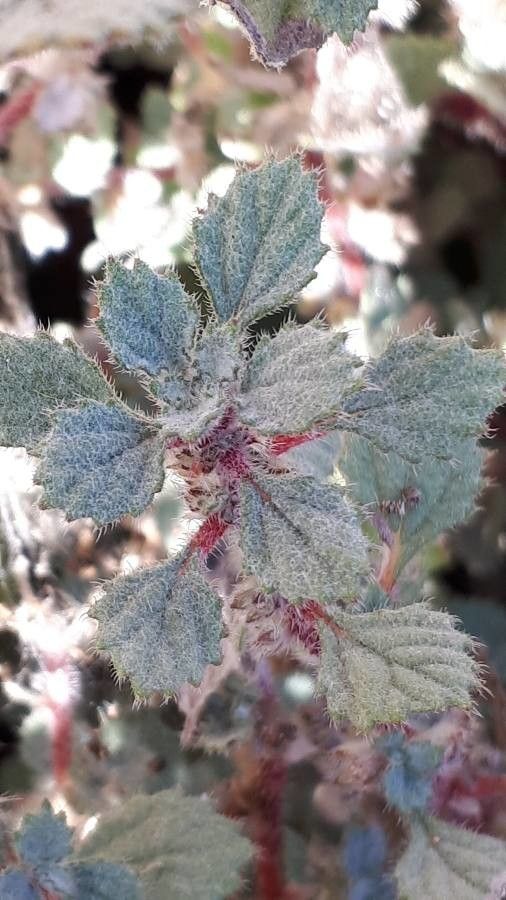
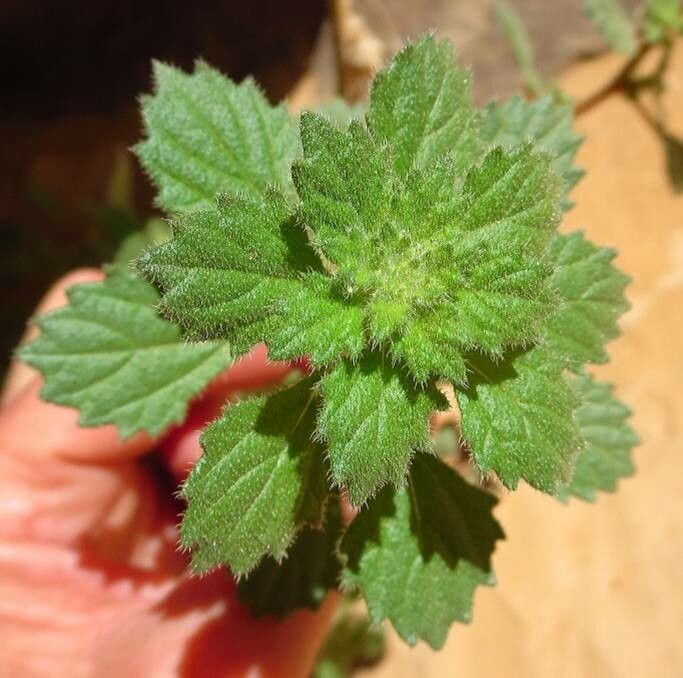
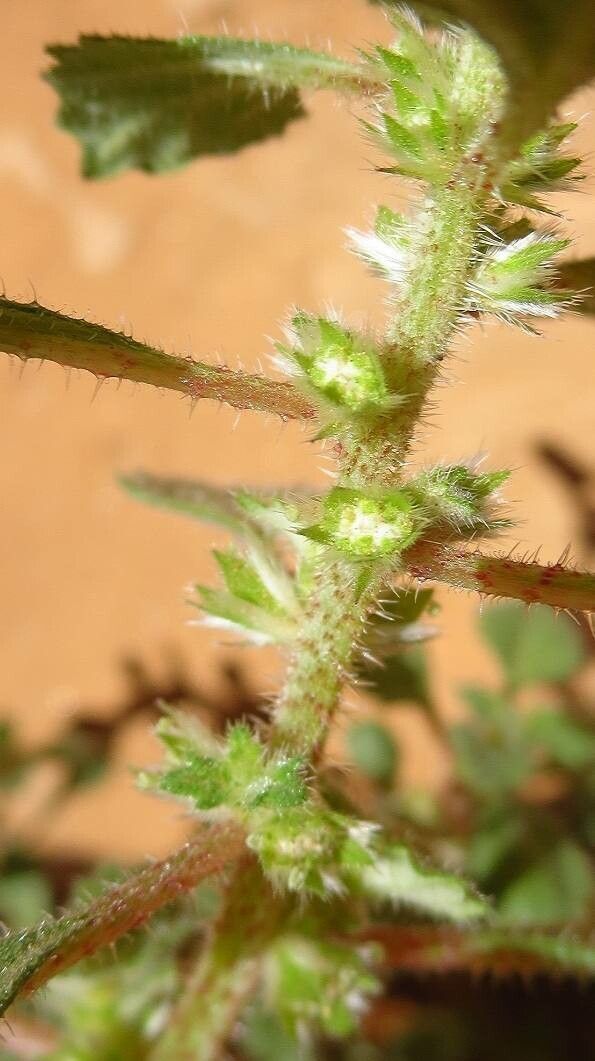
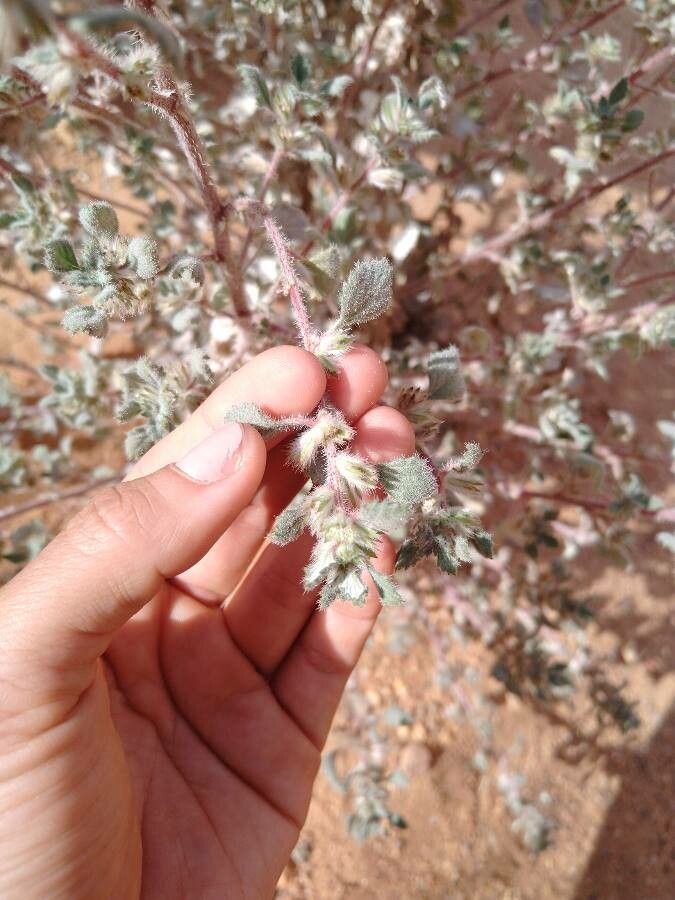
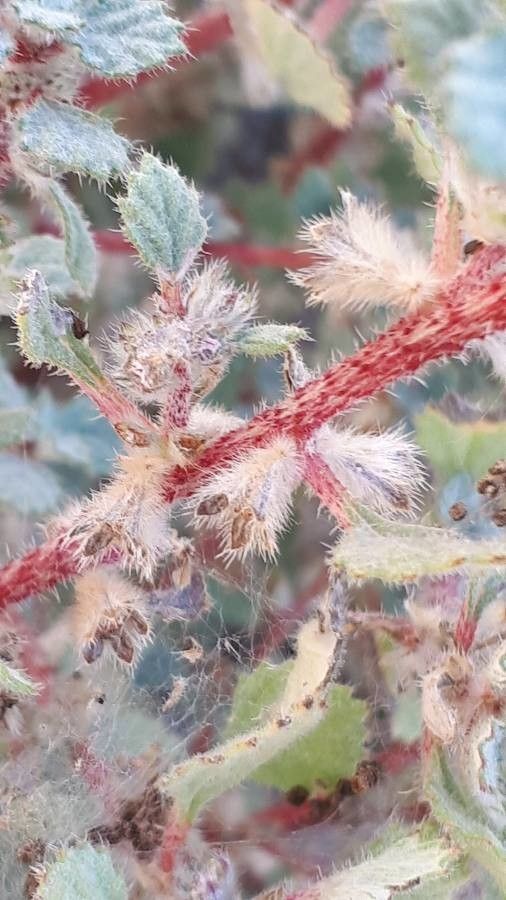
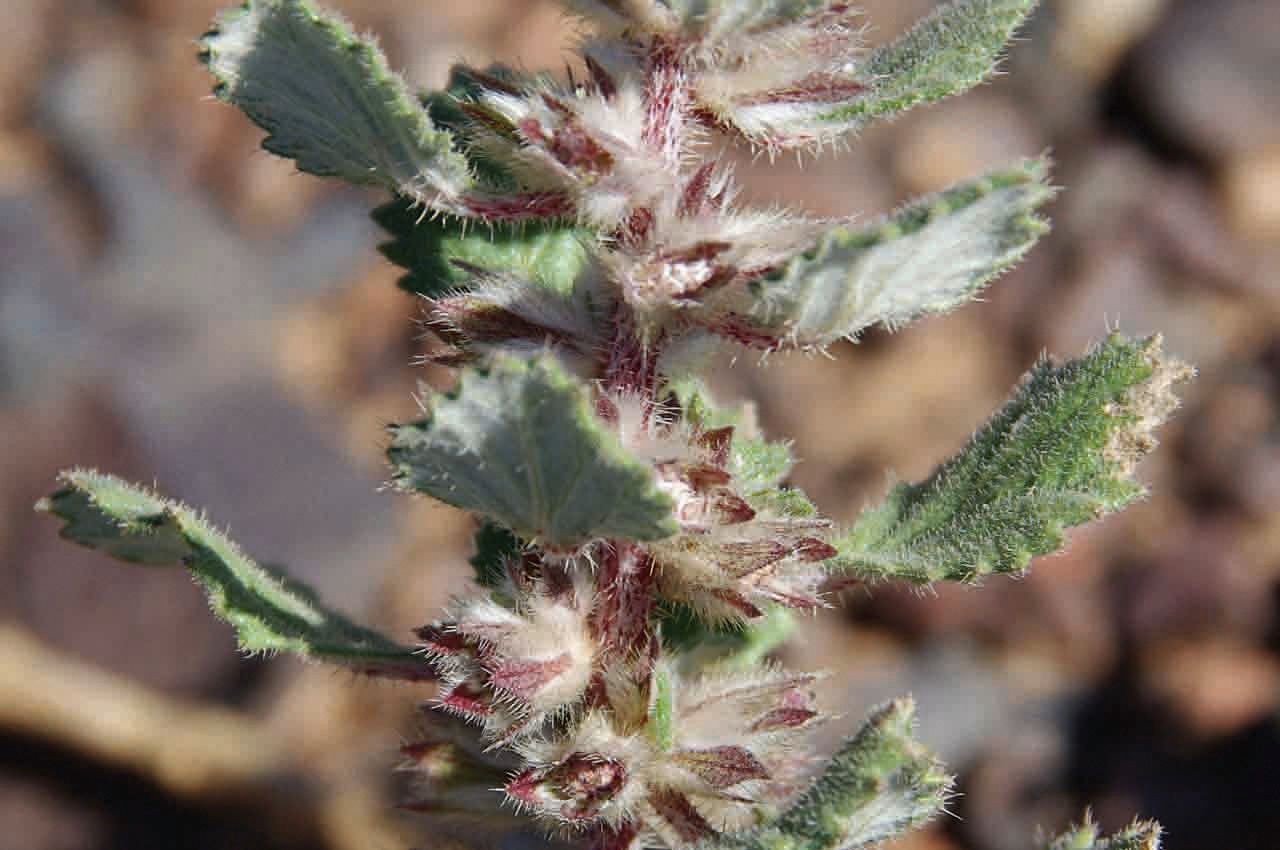
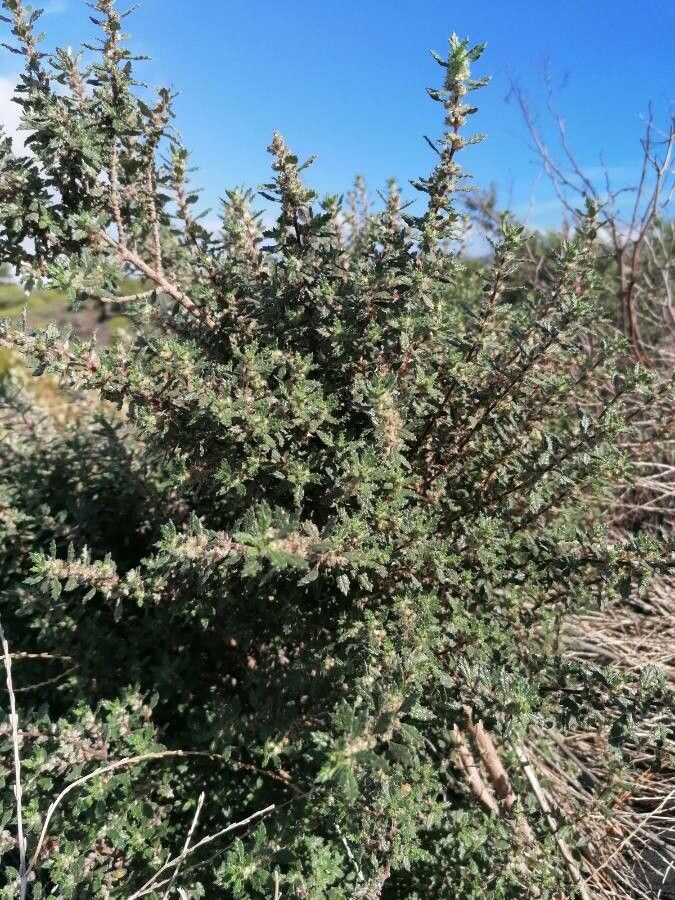
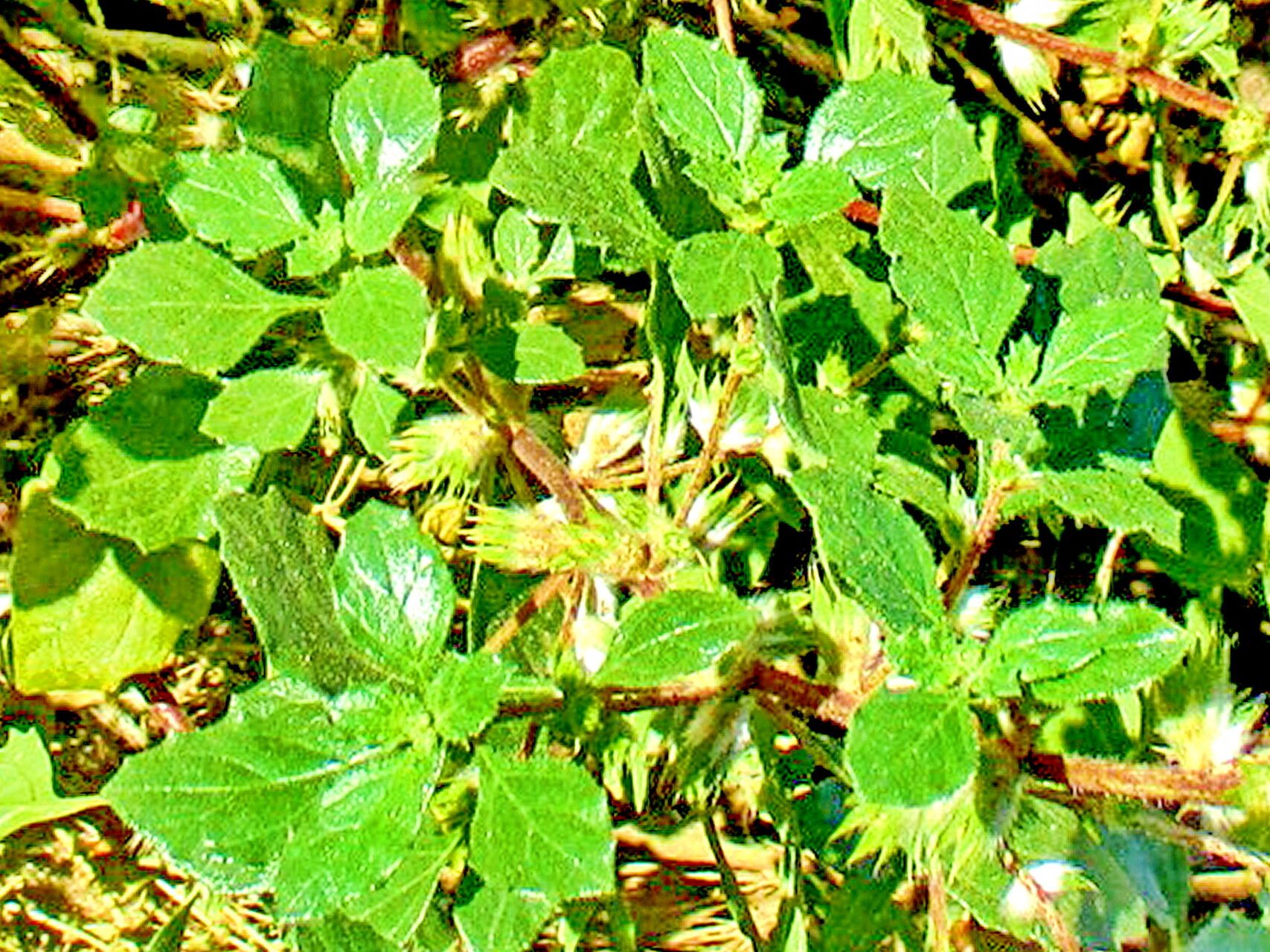
Forsskaolea tenacissima is a member of the non-stinging nettles genus Forsskaolea and is in the same family as the stinging kind, Urticaceae. Described as "looking like a tough character that does not want or need a caress", F. tenacissima makes its home where not many plant species survive, in stony soils, road edges, in the gravel wadi and "in the rock crevices and water-receiving depressions" above the stone pavements of the Hamadas.Forsskaolea tenacissima was named in mourning of a student of Carl Linnaeus, a Swede named Peter Forsskål, who died while gathering botanical and zoological specimens from the Arabia Felix. Linnaeus named this plant Forsskaolea tenacissima because the plant was as stubborn and persistent as the student had been.
Desert Nettle has strong resistance to disease and is usually not susceptible to illnesses. With respect to care, this plant is fairly low-maintenance. When placed outdoors, it needs only minimal watering and larger specimens typically do not require pruning. However, smaller plants should be pruned after they have finished blooming. Desert Nettlet is suitable for anyone who has an outdoor area, such as a garden or deck, and does not need much prior care experience.
How to keep Forsskaolea Tenacissima.
Light
Desert Nettle comes from open habitats, such as sunny meadows and forest edges, that offer plenty of light. It prefers full sun but will also tolerate partial sun, doing well across a range of sunlight conditions.
Temperature
Desert Nettle comes from tropical areas, where conditions are generally warm and humid. Because of this, it is well suited to high heat and humidity. It is sensitive to sudden temperature shifts and prefers a consistent temperature, so indoor temperature swings should be avoided. It typically cannot withstand cold and needs warmer temperatures to grow. If the surrounding temperature becomes too low, the plant may stop growing or even die.
Fertilizer
Fertilization is essential to caring for Desert Nettle. Regular feeding during the growing season maintains the energy required for its showy foliage and supports overall growth. Ignoring fertilization can lead to unhealthy leaves, reduced ornamental value, and stunted or weak growth that is prone to breaking.
Botanical profile.
- Plant Type
- Shrub
- Life Cycle
- Perennial
- Genus
- Forsskaolea
- Family
- Urticaceae
- Hardiness Zone
- 9-11
- Mature Height
- 30 cm to 61 cm
- Mature Spread
- 20 cm to 40 cm
- Leaf Color
- Green, Dark Green
- Leaf Type
- Evergreen
- Flower Size
- 0.20 cm to 0.25 cm
- Bloom Time
- Late spring, Summer
- Planting Time
- Spring, Summer, Autumn
- Harvest Time
- Mid summer, Late summer, Early fall, Mid fall
- Native Area
- Saudi Arabia, Libya, Djibouti, Egypt, Tunisia, United Arab Emirates, Sudan, Madagascar, Eritrea, Pakistan, Mauritania, Morocco, Yemen, Niger, Chad, Afghanistan, Spain, Oman, Iran, Ethiopia, Algeria, Qatar