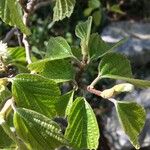
Fothergilla major
Mountain witchalder · Witch-alder
Description
Source: leafsnapFothergilla major, commonly known as mountain witch alder, is a deciduous shrub native to the southeastern United States. It usually reaches a height of 6 to 10 feet and spreads 5 to 8 feet wide. In the spring, this plant produces fragrant white flowers, complemented by its attractive blue-green foliage that turns vibrant shades of yellow, orange, and red in the fall. Fothergilla major thrives in moist, well-drained soil and prefers partial shade, although it can tolerate full sun if provided with adequate moisture. Owing to its appealing foliage and flowers, it is frequently used in landscaping as an ornamental shrub or hedge. Besides its aesthetic value, Fothergilla major is also renowned for its medicinal properties. It contains compounds that exhibit anti-inflammatory effects when consumed or applied topically.
🌳 The fragrant blooms of mountain witch alder give off a pleasant scent that has drawn attention from the perfume industry. Although it is not widely used, mountain witch alder’s potential as a source of distinctive essential oils for scented products is noteworthy. Beyond its ornamental role in gardens, its scent could find niche uses in perfumes and naturally scented lotions that stand apart from those made with more commonly used floral sources.
Care Guide
💧 Water Every 7 days
Mountain witch alder thrives in environments with consistent moisture similar to its native woodland habitats. It requires weekly watering to maintain optimal health. Although it can withstand moderate drought once established, the availability of water significantly affects its growing season, influencing the vibrancy of its foliage and spring flowers.
What's the best way to water my Mountain witch alder plant?
To ensure excellent root development, place a garden hose at the base of the plant. Avoid spraying the leaves directly, as they may need more water if exposed to direct sunlight outdoors. Moisturize the roots by using bubblers or soaker hoses on each plant. When adding or removing plants, use soaker hoses that cover the entire garden or bed to encourage deep root growth. After watering, drain any excess water and allow the soil to dry before watering again. Water at ground level to prevent diseases. On sunny days, consider spraying the entire bush with water. Regardless of whether the plant is potted or in-ground, remember that Mountain witch alder prefers deep watering rather than light sprinkling.
What should I do if I give too much or too little water to a Mountain witch alder?
An overwatered Mountain witch alder may exhibit signs of stress such as yellowing, wilting, and dropping leaves. The plant's appearance may also be lackluster and unhealthy, with mushy stems. It's important to adjust your watering schedule when you notice these signs. Conversely, wilting can also indicate under watering, characterized by crispy and dry leaves. If the soil is dry and simply watering is not sufficient, provide a thorough watering. This will help the Mountain witch alder recover, but it may still display dryness and yellow leaves for a few days due to root damage. Once the plant returns to normal, the yellowing of leaves will cease. Indoor Mountain witch alder plants should have their moisture levels checked regularly to avoid overwatering. Look out for black spots, and if present, allow the soil to dry out by refraining from watering for a few days. Overwatering can cause root rot, which can be addressed by transferring the plant to a different pot, especially if you observe discolored and slimy roots. It is crucial to prevent root rot by avoiding excessively soggy soil. When planting Mountain witch alder outdoors, ensure that the soil is adequately moist. If you find the soil too dry when checking with your fingers, the plant may be underwatered, in which case it requires sufficient watering to aid in its recovery.
How often do I need to water my Mountain witch alder?
The Mountain witch alder prefers deep and infrequent watering, especially when it's in pots. Soak it with a gallon of water each time you water to account for the limited water storage in pots. In colder regions, water every 3 to 5 days. Water it in the morning when the soil is dry and check the top 2-3 inches of soil. If it's dry, give the plant a full watering. During hot days, check the moisture daily as the pot soil can dry quickly. For garden plants in hot climates, water once a week when the top 2-3 inches of soil become too dry. Avoid irrigating if there's already sufficient rainfall to prevent root rot. Add 3 to 4 inches of mulch when the plants are outdoors to retain water. Sandy soil requires more frequent watering, while clay soil needs less. Keep track of watering dates and pay attention to drooping leaves as signs of overdue watering.
How much water should I give to my Mountain witch alder?
The Mountain witch alder generally needs a gallon of water on its schedule. For potted plants, water them deeply until water drips from the bottom of the pot. Then, wait for the soil to dry before watering again. You can use a water calculator or moisture meter to track the amount given each week. During the flowering period, provide plenty of water, but let the moisture evaporate to prevent root rot. If the Mountain witch alder is planted outdoors with sufficient rainfall, additional watering may not be needed. However, young or newly planted Mountain witch alders should receive 1-2 inches of rain per week. As the plant matures, it can rely on natural rainwater. Only in hot weather or when no rain occurs for 2-3 weeks should the Mountain witch alder be fully watered during cooler parts of the day to avoid heat damage. Additional watering is necessary during extended dry periods.
Do I need to change how often I water my Mountain witch alder based on the time of year or the climate?
The Mountain witch alder needs to be kept outdoors where it can receive rain, but if it is consistently dry, you may need to water it. During the spring and fall growing seasons, the soil should be kept moist but not too wet, and alternating between dry and moist soil conditions will help the plant thrive. In the summer, hot weather can cause the water to evaporate quickly, so if there is little rainfall, you will need to water the plant regularly to keep it moist. In winter, the Mountain witch alder requires less water as it drops its leaves and becomes dormant. You can use a well-draining soil mixture to help the water evaporate faster. Once the plant starts to leaf out and go dormant, you can stop watering it and rely on fall and winter rains to provide moisture. After spring, you can encourage growth and blooming by cultivating your Mountain witch alder when the temperature gets warmer. The plant does not like excessive water or drought when it is flowering, so make sure there is good drainage, especially during the winter. When the plant is in a pot, it has limited root growth, so water it well, especially in the summer. Avoid cold and wet roots by providing adequate drainage, especially if the plant is still growing. It is best to water the Mountain witch alder deeply once or twice a week, depending on the weather, rather than giving it shallow sprinkles that only reach the leaves. Even during the fall or winter when the plant is dormant, do not let it dry out completely. It is important not to overwater the plant as it does not like sitting in water for too long. Poor drainage can be fatal in the winter. Finally, applying mulch can help reduce stress, conserve water, and promote healthy blooms.
☀️ Light Full sun
The mountain witch alder flourishes when exposed to continuous direct sunlight throughout the day. However, a spot protected from the intense midday sun can also encourage robust development. It's essential to note that although the mountain witch alder can adjust to moderately lighted conditions, insufficient lighting could hinder its growth and lead to thinning leaves.
How many hours of sunlight per day does Mountain witch alder need for healthy growth?
To ensure healthy growth, it is important to give Mountain witch alder at least 3–6 hours of sunlight per day. This is the minimum amount they need, as most plants that can tolerate part sun can also do well in full sun. However, because they require less light for photosynthesis, these plants are more adaptable compared to those that need full sun or part shade.
What kind of sunlight does the Mountain witch alder plant require?
Mountain witch alder thrives when exposed to full or part sun. It prefers direct morning light, but during summer, it requires protection from the intense afternoon sun. In temperate environments, excessive hot afternoon sun can scorch the leaves, leading to a decline in the plant's appearance and health.
Can the sun harm Mountain witch alder trees? How can I shield Mountain witch alder from the sun and heat damage?
When moving Mountain witch alder from indoors to outdoors, direct sunlight can harm the plant. To prevent sunburns, it is best to gradually move the pots from a shaded area to a brighter spot. However, even plants accustomed to the summer sun can be damaged by extreme heat. During a heatwave, it is crucial to keep the soil consistently moist to help the plants cope. If faced with extreme weather, moving the potted plants to areas with afternoon shade or using a shade cloth can protect the sensitive Mountain witch alder.
Should Mountain witch alder be shielded from the sun?
Mountain witch alder thrives in bright morning sun and partial sun exposure, but the intense midday sun of summer can be overwhelming. If this plant is in the ground, it can gradually adapt to the increasing intensity of the summer sun. However, if it is in a potted plant that has been indoors or in a protected spot, it may be harmed by sudden exposure to direct summer sun in the hottest part of the day. To safeguard the plant from the harsh afternoon summer sun, it is advisable to plant or position it in an area that is shaded at midday by taller trees, plants, a building, or a landscape feature.
What will happen if the Mountain witch alder does not get enough sunlight?
When Mountain witch alder doesn't get enough sunlight, it can turn pale green or develop drooping, yellow leaves. While it's normal for some leaves to fall, not seeing any new ones grow back indicates a problem. If Mountain witch alder does manage to grow in inadequate light, the new growth is usually thin, pale, and attracts insects. By noticing these signs and adjusting the lighting, you can make a big difference for the plant.
🌡️ Temperature 5–35°C
The mountain witch alder is most comfortable in a temperate climate with cool temperatures, and naturally thrives in environments where the temperature ranges from 5 to 35 ℃ (41 to 95 ℉). It has a high tolerance for various temperature ranges, and recommendations for adjusting the temperature are suitable for different seasonal changes.
What is the best temperature for Mountain witch alder?
The Mountain witch alder thrives best in a temperature range of 65 to 80 degrees Fahrenheit (18 to 27 degrees Celsius). During its primary growing phase, it can tolerate temperatures as high as 95 degrees Fahrenheit (35 degrees Celsius), and as low as 15 degrees Fahrenheit (-10 degrees Celsius). This species is able to survive freezing winters due to its tolerance for low temperatures. For optimal growth, the ideal temperature range is between 65 and 80 degrees Fahrenheit (18 to 27 degrees Celsius). The highest tolerable temperature range is between 85 to 95 degrees Fahrenheit (30 to 35 degrees Celsius), while the lowest tolerable range is -5 to 15 degrees Fahrenheit (-20 to -10 degrees Celsius) or lower.
Do I need to change the temperature for Mountain witch alder at different times when it's growing?
According to research, when the temperature is consistently high, Mountain witch alder may experience stunted growth, particularly during the development of axillary buds and the growth of main shoots. To promote strong growth after germination or transplanting, it is recommended to keep the temperature cooler, around 65℉ (18℃).
What can I do to keep Mountain witch alder warm during cold seasons?
Mountain witch alder is tolerant of freezing temperatures when planted in the ground, as long as they do not drop below 15℉(-10℃) during winter. However, if you choose to plant them in pots or containers, it is important to shield their roots from the winter chill. This can be done by wrapping the container in a blanket or bringing it inside for full protection from the elements.
If the temperature is too high or too low, what will happen to the Mountain witch alder?
Mountain witch alder is more vulnerable to consistent high temperatures rather than low temperatures. High temperatures can reduce seed germination and photosynthesis efficiency due to heat stress hormones. This can be observed through signs like wilting, leaf browning, and even death. On the other hand, if the temperature drops too low, the plant's functions, such as nutrient uptake and photosynthesis, may stop, leading to potential death. Additionally, a single freezing event during the growing season can cause a phase transition in the plant's membranes, resulting in the cessation of its functions and ultimately, its death.
What do I need to remember about temperature for Mountain witch alder?
To ensure the health and growth of Mountain witch alder, it is crucial to regulate the soil temperature. This can be achieved by adopting a few key strategies, such as regular watering, applying mulch to exposed soil, and planting the alder in shaded areas. By maintaining a consistent soil temperature, you will encourage successful budding, flowering, and new growth.
💨 Humidity
🪴 Soil 5-6
🌱 Fertilizer
The timing is vital when it comes to fertilizing Mountain witch alder. You should start fertilizing them in the early spring and continue to do so on a monthly basis until the start of summer. Fertilizing not only helps in creating beautiful blooms but it also supplies the necessary energy during both dormant and active growth stages.
Why should I put fertilizer on my Mountain witch alder?
To ensure your Mountain witch alder produces beautiful blooms, it is important to fertilize it for several reasons. Firstly, fertilizer is a key factor in enhancing the blooming process. Secondly, early spring fertilization is highly recommended for optimal flower production during that season. Additionally, fertilizer provides ample energy for the Mountain witch alder to store in the ground during periods of dormancy. By supplementing the plant with nutrients during fall planting or late spring, it will be able to store more energy to utilize during active growth phases.
When should I put fertilizer on my Mountain witch alder?
To effectively fertilize Mountain witch alder, timing plays a crucial role. Applying fertilizer too early while the plant is still dormant would be ineffective, as it would be washed away by rainwater, causing waste and pollution. It is recommended to apply the first round of fertilizer in early spring, and continue to fertilize once a month until early summer.
When is it not a good idea to fertilize my Mountain witch alder?
To ensure optimal growth and blooming of Mountain witch alder, it's important to avoid using fertilizers with excessive nitrogen. These can result in an abundance of leaves but few blooms. Instead, seek out fertilizers that have a lower nitrogen content compared to other nutrients. Additionally, refrain from fertilizing after early autumn to prevent excessive growth before winter. Moreover, avoid fertilizing during hot and dry periods, as the dry soil may not effectively deliver the fertilizer and stimulate growth that requires additional water. The best time for fertilizer application is earlier in the season when temperatures are cooler. Lastly, be cautious not to inadvertently give the tree/shrub a double-dose of fertilizer, as Mountain witch alder can absorb nearby fertilizers applied to other plants or lawns.
What kind of fertilizer should I use for my Mountain witch alder?
The best fertilizer for a Mountain witch alder is one that has a balanced mix of plant nutrients, with slightly more phosphorus. Another option is to improve the soil by adding organic materials like compost, worm castings, and manure. Experienced gardeners might use water-soluble fertilizers with phosphorus once or twice when the flower buds start to appear. This helps the flowers grow bigger and bloom longer. There are different forms of fertilizers available, but liquid or powdered ones tend to work best for Mountain witch alder. Regardless of the form you choose, make sure to dilute the fertilizer and apply it while watering your Mountain witch alder.
How should I add plant food to my Mountain witch alder?
To properly fertilize your Mountain witch alder, it is important to follow the specific directions for the chosen fertilizer type and conduct some research. Avoid over-fertilization, which is crucial for the health of your plant. The general guideline is to determine the correct amount of fertilizer based on the age of the tree or the diameter of the trunk. Typically, use one-tenth of a pound of fertilizer per year or per inch of trunk, with a maximum of one pound. For granular fertilizers or organic options like blood meal, apply them by sprinkling around the tree's base, extending to the drip line. Ensure that the fertilizer does not come in contact with the trunk. Over time, the granules will break down and seep into the soil for root absorption. After applying the fertilizer, spread a one-inch layer of compost around the tree's base and water thoroughly.
🪴 Pot & Repot 2-3 years
During the repotting of Mountain witch alder, choose a pot that's 1-2 inches (2.5-5 cm) larger with sufficient drainage. Utilize a potting mix that drains well. Make sure to repot in spring or fall, with the root ball positioned slightly beneath the flower pot's rim. Thoroughly water after the repotting process and keep it in a warm location with indirect sun exposure.
✂️ Pruning
The mountain witch alder is a deciduous shrub known for its vibrant fall colors and fragrant blooms in the spring. To maintain its shape and health, prune the shrub in late spring after it has finished flowering. Remove any dead wood, trim back overly vigorous shoots, and thin out older stems to improve air circulation. Be sure to use clean and sharp tools to prevent the spread of disease.
🌿 Propagating
🐛 Diseases & pets
☠️ Toxicity
Characteristics
- Plant Type
- Shrub
- Life Cycle
- Perennial
- Genus
- Fothergilla
- Family
- Hamamelidaceae
- Hardiness Zone
- 5-9
- Mature Height
- 2.44 m
- Mature Spread
- 1.52 m to 2.74 m
- Leaf Color
- Green, Red, Orange, Yellow
- Leaf Type
- Deciduous
- Flower Color
- White
- Flower Size
- 2.03 cm to 3.05 cm
- Bloom Time
- Mid spring, Late spring
- Planting Time
- Spring, Autumn
- Harvest Time
- Early summer, Mid summer