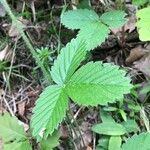
Fragaria moschata
Hautbois Strawberry · Hautboy Strawberry
Description
Source: leafsnapThe musk strawberry or hautbois strawberry (Fragaria moschata), is a species of strawberry native to Europe. Its French name hautbois strawberry may be anglicised as hautboy strawberry. The plants are hardy and can survive in many weather conditions. They are cultivated commercially on a small scale, particularly in Italy. The fruit are small and round; they are used in the gourmet community for their intense aroma and flavour, which has been compared to a mixture of regular strawberry, raspberry and pineapple. Popular cultivated varieties include 'Capron' and 'Profumata di Tortona'.
Care Guide
💧 Water
Musk strawberries flourish in temperate regions where the soil remains consistently moist. They prefer soil that is evenly watered. To mimic their natural habitat, they should be watered weekly. During the outdoor growing season, providing attentive care will promote healthy growth and a bountiful harvest of fruit.
☀️ Light Full sun
The musk strawberry prefers plentiful sunlight during the day, though it can continue to grow with moderate sun exposure. Its native habitat typically has abundant light, which encourages healthy growth. Excessive exposure can cause leaf scorch, while too little light may result in reduced fruit production.
What are the sunlight requirements for musk strawberry?
Musk strawberry thrives best when exposed to an abundance of sunlight throughout the day. Ideally, it requires full sun, which is above 6 hours of sunlight a day, but it can also grow under partial sun, defined as about 3-6 hours of sunlight. In its original habitat, musk strawberry is accustomed to plentiful light which encourages healthy growth. However, it's important to balance the exposure as too much sunlight can lead to leaf scorch, and too little sunlight may result in decreased fruit production. Observing how sunlight moves through your garden and choosing locations that provide a good mix of light and shade is crucial for ensuring the plant's happiness.
What should I do if natural sunlight is insufficient for my musk strawberry?
If your musk strawberry is not receiving enough natural sunlight, especially in situations like winter or less sunny spaces, incorporating artificial lighting can be a great solution. For optimal growth under artificial lighting, choose LED lights as they can be customized to provide specific wavelengths of light. Full sun plants require 30-50W/sq ft of artificial light, partial sun plants 20-30W/sq ft, and full shade plants 10-20W/sq ft. Position the light source 12-36 inches above the plant to mimic natural sunlight and keep the lights on for 8-12 hours per day, simulating natural daylight hours for your plant species. This approach promotes faster, healthier growth when sunlight availability is limited.
What are the symptoms of inadequate light for musk strawberry?
When musk strawberry plants receive insufficient light, several symptoms may appear indicating the need for more sunlight. These include smaller new leaves than the previous ones, leggy or sparse growth with extended spaces between leaves or stems, faster leaf drop as the plant sheds older leaves to conserve resources, halted growth indicating a survival mode due to poor light conditions, and lighter-colored or pale new leaves caused by lack of chlorophyll. Moreover, chlorosis (leaf yellowing), sunscald with pale or necrotic areas, leaf curling as a defense against sunlight overexposure, wilting from increased water loss, and leaf scorching with brown, dry edges are also common symptoms. These signal overexposure to sunlight or an imbalance in light conditions.
How can I solve the sunlight exposure problem for indoor and outdoor musk strawberry plants?
To address sunlight exposure problems, gradually adapting your musk strawberry plants to the ideal sunlight conditions is key. For indoor plants, move them to a sunnier location each week until achieving at least 6 hours of direct sunlight daily. Utilizing a south-facing window helps maximize sunlight exposure. Additionally, if moving the plant isn't feasible, consider supplementing with artificial light sources like desk lamps or professional grow lights for at least 8 hours a day. For outdoor plants, transitioning them gradually to sunnier spots can prevent shock and sunburn. This may require observing and possibly reducing obstructions like tree branches to ensure ample sunlight. In the case of smaller plants, transplanting can be considered during dormant periods with careful movement to a well-lit location with good drainage. It's important to note that while affected parts may not fully recover, new growth after adapting light conditions will be healthy.
🌡️ Temperature 5–35°C
Musk strawberry grows best in its native temperature range of 41 to 95 °F (5 to 35 ℃). It generally prefers mild climates and is able to tolerate seasonal temperature variations. Precautions should be taken to protect the plant from extreme heat or cold.
What are the ideal growing temperatures for Musk Strawberry?
Musk Strawberry thrives in temperatures ranging from 41 to 95 °F (5 to 35 °C). Native to environments that experience mild climates, it is capable of adjusting to seasonal temperature changes. It possesses strong resistance to cold, making special frost protection measures generally unnecessary. However, in extremely cold winters where temperatures may fall below -25°C, protective measures such as covering the plant with soil or straw are advisable. To help the plant through winter and early spring, it's recommended to water it abundantly before the first freeze of autumn, ensuring the soil is moist when it freezes.
How does low temperature affect Musk Strawberry, and what are the solutions?
Musk Strawberry is cold-tolerant, thriving best when the temperature is maintained above 5°C. During winter, it should not be exposed to temperatures below -20°C. Exposure to temperatures below -25°C may not show immediate effects during winter, but it could lead to decreased sprouting or even a lack of sprouting in spring. If this occurs, the solution is to remove any plant parts that fail to sprout in spring.
How does high temperature affect Musk Strawberry, and what are the solutions?
During summer, it is crucial to ensure that Musk Strawberry is kept below 35°C. The plant may experience stress when temperatures exceed 38°C, indicated by lighter leaf color, curling leaves, susceptibility to sunburn, and in severe cases, wilting or drying out of the entire plant. To mitigate these issues, it is recommended to trim away sunburned and dried-up parts of the plant. Provide shade during the midday and afternoon sun, either by relocating the plant or using a shade cloth. Additionally, watering the plant in the morning and evening will help to maintain soil moisture.
💨 Humidity
🪴 Soil 5-7
🌱 Fertilizer
The Musk strawberry plant needs adequate nutrients for optimal fruit production. Fertilize in early spring to encourage new growth and bloom development. Regular fertilization helps the plant stay healthy, produce more delicious fruit, and prevents nutrient-deficiency problems such as yellow leaves and poor fruit production.
🪴 Pot & Repot 2-3 years
Repot musk strawberry plants every 2-3 years in the spring to promote healthy growth. Choose a slightly larger pot to allow the roots to expand. After repotting, keep the soil moist and place the plant in partial shade to help it recover. This will ensure a vibrant yield of aromatic berries.
✂️ Pruning
The musk strawberry is valued for its aromatic fruit. To promote healthy growth and increase yield, it's important to prune the plants in early summer after the harvest. Start by removing any dead foliage and managing the runners. Make sure to use clean tools for the best results. This practice enhances air circulation, reduces the risk of disease, and improves the quality of the fruit.
🌿 Propagating
🐛 Diseases & pets
☠️ Toxicity
Characteristics
- Plant Type
- Herb
- Life Cycle
- Perennial
- Genus
- Fragaria
- Family
- Rosaceae
- Hardiness Zone
- 5-9
- Mature Height
- 20 cm to 34 cm
- Mature Spread
- 30 cm
- Leaf Color
- Green
- Leaf Type
- Evergreen
- Flower Color
- White
- Flower Size
- 2.03 cm to 3.05 cm
- Bloom Time
- Mid spring, Late spring
- Planting Time
- Spring, Summer, Autumn
- Harvest Time
- Early summer, Mid summer
- Native Area
- Austria, Czech Republic, Slovakia, Montenegro, Bulgaria, Armenia, Poland, Croatia, Slovenia, Belarus, Ukraine, Serbia, Russia, Lithuania, Hungary, Germany, Italy, Switzerland, Estonia, France, Albania, Azerbaijan, Romania, Latvia, Belgium, Moldova, Netherlands