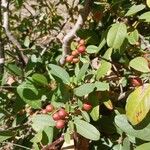
Frangula californica
California buckthorn · California coffeeberry · Coffee berry · Californian buckthorn · California coffee berry
Description
Source: leafsnapFrangula californica, commonly known as California buckthorn or coffeeberry, is a shrub native to the western United States. It belongs to the Rhamnaceae family and can grow up to 20 feet tall. The plant features dark green, oval-shaped, glossy leaves with serrated edges. In spring, it produces small white or pink flowers that develop into red or black berries by summer. California buckthorn is popular for landscaping due to its appealing foliage and berries. Native Americans used the fruit medicinally, particularly for treating constipation, and employed the bark as a laxative. This shrub prefers well-drained soils and, once established, can tolerate drought conditions. Additionally, it is resistant to pests and diseases, making it a low-maintenance option for any garden or landscape design. Overall, Frangula californica is an excellent choice for those seeking an attractive, native shrub with medicinal properties that requires minimal maintenance once established in the garden landscape.
🌳 Beyond decorative landscaping, the California coffeeberry plays an important role by providing essential resources for wildlife. Its berries are a nutritious food source for a range of bird species, and its dense foliage provides shelter and places to nest. Not commonly used by people for purposes like spices or oils, the California coffeeberry’s ecological value lies in supporting biodiversity and in its potential for habitat restoration projects.
Care Guide
💧 Water Every 7 days
The California coffeeberry is well-suited to the Mediterranean climate and thrives with moderate moisture while also being able to tolerate dry conditions. It benefits from watering every one to two weeks, striking a balance between drought resistance and consistent soil hydration. As an evergreen plant, the California coffeeberry remains resilient throughout the year, maintaining its water balance without shedding leaves seasonally.
☀️ Light Full sun
California coffeeberry thrives in full sun and can tolerate moderate sunlight. It was originally grown in areas with abundant sunshine and relies on that light for healthy growth. Too much sun can scorch the leaves, while too little light may stunt its growth.
What are the sunlight requirements for California coffeeberry?
California coffeeberry requires full sun exposure, which means it thrives with more than 6 hours of direct sunlight daily. However, it can also tolerate partial sun conditions, about 3-6 hours of sunlight. It's crucial to observe how sunlight moves through your garden to choose locations that offer a balance of light and shade, fostering the well-being of your plants. Excessive sunlight can lead to leaf scorching, while insufficient light may stunt growth.
How does California coffeeberry respond to sunlight and artificial lighting?
The California coffeeberry flourishes under extensive sun exposure and can endure moderate sun. Being native to environments with abundant sunlight, it relies on this for robust growth. Overexposure might cause leaf scorching, whereas inadequate light can result in stunted growth. If natural sunlight is lacking, particularly during winter or in less sunny areas, artificial lighting can be a vital alternative. Indoor plants benefit from LED lights, which can be adjusted to provide specific light wavelengths needed by the plants. The recommended artificial light intensity varies depending on the plant's sunlight requirements: full sun plants need 30-50W/sq ft, partial sun plants need 20-30W/sq ft, and full shade plants need 10-20W/sq ft. The light source should be placed 12-36 inches above the plant, and most plants need 8-12 hours of light per day.
What are the symptoms of inadequate sunlight in California coffeeberry?
When California coffeeberry does not receive sufficient sunlight, it may exhibit several symptoms indicating light deficiency. New leaves might grow smaller than older ones, and the plant could show leggy or sparse growth, which makes it appear stretched and weak. Additionally, faster leaf drop can occur as the plant sheds older leaves to conserve resources. Growth may slow down or stop altogether, and new leaves may be lighter in color or develop irregular patterns, indicating a lack of chlorophyll and nutrients. Chlorosis, or the yellowing of leaves due to chlorophyll breakdown, sunscald, leaf curling, wilting, and leaf scorching are other symptoms that may manifest due to inadequate sunlight or overexposure.
What solutions can improve sunlight exposure for California coffeeberry indoors and outdoors?
To optimize sunlight exposure for California coffeeberry, particularly for indoor plants, gradually relocate the plants to sunnier spots each week, ensuring they receive at least 6 hours of direct sunlight daily. Place them near a south-facing window and keep curtains open during the day for maximum exposure. If moving the plant is not feasible or it requires additional light, consider artificial lighting, keeping a lamp on for at least 8 hours daily or using professional plant grow lights. For outdoor plants, also move them gradually to sunnier spots to avoid sudden light intensity changes which could cause sunburn. Pruning surrounding trees or vegetation can help reduce obstructions and increase sunlight access. If practical, transplanting smaller plants during their dormant period in late winter or early spring to a location with better sunlight and drainage can significantly improve light exposure. Note that parts of the plant already affected by insufficient light may not recover, but new growth will be healthy with increased light exposure.
🌡️ Temperature 15–35°C
The natural habitat of the California coffeeberry indicates it prefers temperatures from 15 to 35 ℃ (59 to 95 ℉). It is a temperate woody species that can adapt to seasonal temperature changes as needed.
What is the native growth environment of the California coffeeberry?
The California coffeeberry thrives in temperatures ranging from 15 to 35°C (59 to 95°F). It is a temperate woody plant that is adaptable to various temperatures across different seasons. It has a strong resistance to cold, and special frost protection measures are generally not needed. However, if temperatures are expected to fall below the plant's cold tolerance limit, it's important to protect it by wrapping the trunk and branches with materials like non-woven fabric or cloth. Additionally, watering the plant abundantly before the first freeze in autumn helps ensure the soil remains moist and prevents drought and water scarcity during winter and early spring.
What are the symptoms of low temperature exposure for California coffeeberry?
California coffeeberry is notably cold-tolerant, performing best when temperatures stay above its minimum suitable growth temperature during winter. Should temperatures fall below its growth limit, the branches might not show immediate damage in winter, but by spring, they could turn brittle and dry, with no new shoots emerging. The suggested solution for this is to prune away any dead branches that haven't produced new leaves come spring.
What are the symptoms of high temperature exposure for California coffeeberry?
During the summer, it's important for the California coffeeberry to remain below its maximum suitable growth temperature. Exceeding the tolerable maximum temperature can cause the leaves to lighten in color and the tips to dry and wither, increasing the risk of sunburn. To mitigate these effects, trim away the sunburned and dried-up parts. Relocating the plant to a shaded area or using a shade cloth can protect it from the harsh midday and afternoon sun. Watering the plant in the morning and evening will also help maintain soil moisture.
💨 Humidity
🪴 Soil 6-7
🌱 Fertilizer
Fertilize your California coffeeberry in early spring to encourage healthy growth. Regular feeding improves overall plant health, producing vigorous growth, greater resilience to harsh conditions, and enhanced resistance to diseases and pests. Follow a consistent fertilization schedule to maintain foliage that is vibrant, deeply colored, and lush in appearance.
🪴 Pot & Repot 2-3 years
When repotting California coffeeberry, select a pot 1-2 inches (2.5–5.1 cm) larger with ample drainage. Use a well-draining potting mix. Repot in spring or fall, making sure the root ball is slightly lower than the rim of the flower pot. Water thoroughly after repotting and place it in a warm spot with indirect sunlight.
✂️ Pruning
🌿 Propagating
🐛 Diseases & pets
☠️ Toxicity
Characteristics
- Plant Type
- Shrub
- Life Cycle
- Perennial
- Genus
- Frangula
- Family
- Rhamnaceae
- Hardiness Zone
- 7-10
- Mature Height
- 0.91 m to 3.66 m
- Mature Spread
- 1.52 m to 4.57 m
- Leaf Color
- Green
- Leaf Type
- Evergreen
- Flower Color
- White
- Flower Size
- 2.54 cm
- Bloom Time
- Late spring, Early summer, Mid summer
- Planting Time
- Winter
- Harvest Time
- Mid summer, Late summer, Early fall