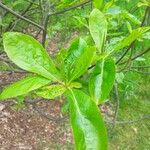
Franklinia alatamaha
Franklin tree
Description
Source: leafsnapFranklinia alatamaha, commonly known as the Franklin tree, is a rare and endangered plant species native to the southeastern United States. It was first discovered in 1765 by botanists John Bartram and his son William Bartram along the banks of the Altamaha River in Georgia. The plant is named after Benjamin Franklin, the renowned American statesman and scientist. The Franklin tree is a deciduous shrub or small tree that can grow up to 20 feet tall. Its dark green leaves turn a striking reddish-purple in autumn before falling. The plant produces large, white flowers with yellow centers that bloom from late summer to early fall. Due to its rarity and threatened status in its natural habitat, Franklinia alatamaha is a significant species for conservation efforts. While horticulturists have successfully cultivated it for ornamental purposes, its propagation remains challenging because of its low seed viability. This unique plant serves as an important reminder of America's natural heritage and underscores the importance of preserving endangered species for future generations.
Care Guide
💧 Water Every 7 days
The Franklin tree, native to the humid regions of North America, thrives in consistently moist soil and can tolerate moderate drought conditions. To maintain consistent moisture, water the tree every three weeks. This outdoor plant displays beautiful flowers during its growing season, so it is essential to water it carefully and prevent it from experiencing dry spells.
☀️ Light Full sun
The Franklin tree originates in open habitats, such as sunny meadows and forest edges, which provide abundant light. It does best in full sun but can also tolerate partial sun, adapting well to a range of sunlight conditions.
What are the sunlight requirements for the Franklin Tree?
The Franklin tree requires full sunlight, characterized by more than 6 hours of direct sunlight daily, for optimal growth, though it can also grow in partial sun, with about 3-6 hours of sunlight. Observing how sunlight moves through your garden is essential for choosing the best locations for your plants, ensuring they receive the ideal balance of light and shade.
How does the Franklin tree adapt to different sunlight conditions?
Originating from environments like sunny meadows and forest edges that offer abundant light, the Franklin Tree is well-adapted to full sun but can also tolerate partial sun. This adaptability allows it to thrive in various sunlight conditions, making it a versatile plant for different garden spots.
What solutions are available for indoor Franklin trees with insufficient natural light?
When natural sunlight is insufficient for indoor Franklin trees, especially during winter or in less sunny spaces, artificial lights provide a vital solution. LED lights, recommended for their ability to offer specific wavelengths, should provide 30-50W/sq ft for full sun plants and 20-30W/sq ft for partial sun plants. The light source should be placed 12-36 inches above the plant for 8-12 hours per day to mimic natural daylight hours, promoting healthier and faster growth.
What are the symptoms of light deficiency in Franklin trees?
Franklin trees may exhibit symptoms of light deficiency such as smaller new leaves, leggy or sparse growth, faster leaf drop, halted growth, pale new leaves, and conditions like chlorosis, sunscald, leaf curling, wilting, and leaf scorching. These symptoms indicate the plant's struggle with suboptimal lighting conditions.
How can one address insufficient sunlight for Franklin trees?
To address insufficient sunlight, gradually move plants to sunnier locations, ensuring they receive at least 6 hours of direct sunlight daily, or position them near a south-facing window, keeping curtains open during the day. For large or immovable plants, artificial lighting, such as desk or ceiling lamps left on for at least 8 hours daily or professional plant grow lights, can supplement daylight. Outdoors, gradually adapt plants to brighter conditions to avoid sunburn, and consider pruning or transplanting to reduce obstructions and provide ample sunlight and good drainage.
🌡️ Temperature 10–35°C
The Franklin tree shows strong adaptability to a variety of climate conditions, whether facing scorching summers or cold winters. However, it does have an optimal temperature range for growth. When temperatures become excessively high, the plant is susceptible to heat and humidity stress, which can lead to its death. In regions where temperatures approach the lower limit of its cold tolerance, it's important to implement insulation measures to protect the plant.
💨 Humidity
🪴 Soil 6-8
🌱 Fertilizer
Timing is important when fertilizing a Franklin tree. Apply fertilizer in early spring and continue monthly through early summer. Fertilizer encourages attractive blooms and supplies energy during both dormant and active growth periods.
🪴 Pot & Repot
✂️ Pruning
The Franklin tree is known for its fragrant white flowers and attractive fall foliage. To keep it healthy, prune in early spring by removing any dead branches and lightly shaping the tree to maintain its form. Be careful not to prune heavily, as the tree is sensitive to extensive cutting. Regular maintenance helps improve air circulation and lowers the risk of disease. For more detailed information, consult horticultural resources.
🌿 Propagating
🐛 Diseases & pets
☠️ Toxicity
Franklinia is a member of the Tea family. It is not toxic and is used in the Appalachian Mountains as a tea substitute. The tea is decaffeinated, and the leaves can be used either fresh or dried. With fresh leaves, it makes a delicate green tea that is slightly herbal tasting. When using dried leaves, the tea is less herbal tasting and more akin to a black tea but less tannic. It is an odd thing to find a tree large enough with leaves to spare for tea making. But if you have the access and ability, it is something to try.
Characteristics
- Plant Type
- Tree, Shrub
- Life Cycle
- Perennial
- Genus
- Franklinia
- Family
- Theaceae
- Hardiness Zone
- 6-9
- Mature Height
- 3.05 m to 6.1 m
- Mature Spread
- 3.05 m to 4.57 m
- Leaf Color
- Green, Red
- Leaf Type
- Deciduous
- Flower Color
- White
- Flower Size
- 7.62 cm to 15.24 cm
- Bloom Time
- Late summer, Early fall, Mid fall
- Planting Time
- Spring, Summer
- Harvest Time
- Late fall, Early winter, Mid winter
- Native Area
- Extinct in the wild, was Southeast Georgia