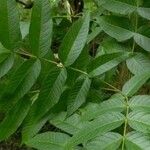
Fraxinus nigra
Water ash · Black ash · Swamp ash · Baapaagimaak · Brown Ash
Description
Source: leafsnapFraxinus nigra, commonly known as black ash, is a deciduous tree native to eastern North America. It typically reaches a height of 15-20 meters and features a straight trunk with a narrow crown. The tree's bark is dark gray and deeply furrowed. The leaves of Fraxinus nigra are compound, consisting of 7-11 leaflets that are dark green on top and lighter underneath. In the spring, the tree produces small flowers, followed by winged seeds in the fall. Black ash holds significant importance for Native American communities, who use its wood for basket weaving due to its flexibility and strength when wet. Commercially, it is also valued as lumber for furniture, flooring, and tool handles. Unfortunately, Fraxinus nigra is threatened by an invasive species known as the emerald ash borer. This pest feeds on the inner bark of ash trees, causing them to die within several years. Conservation efforts are underway to protect this vital species from extinction.
🌳 Black ash wood is valued for its flexibility and impact resistance, making it an excellent choice for tool handles and sports gear. Additionally, black ash leaves act as bioindicators of environmental quality, indicating when heavy metals are present in the soil.
🎭 Safeguarding, Wealth, Maritime Rituals
Care Guide
💧 Water Every 7 days
Black ash, native to wetlands, thrives in environments with consistent moisture and high humidity. Water the plant every 1-2 weeks, increasing the frequency during the growing season. For indoor growth, use well-draining soil to mimic its natural damp conditions, but be careful to avoid waterlogging, as this is essential for developing lush foliage.
☀️ Light Full sun
Black ash flourishes when exposed to uninterrupted sunlight throughout the day. This level of light encourages healthy development and supports vigorous growth. Nevertheless, black ash can also tolerate locations with less sunlight. If these light conditions are not met, the plant’s overall health and vigor may be negatively affected.
What are the sunlight requirements for Black Ash?
Black Ash requires full sun to thrive, which means it should receive more than 6 hours of sunlight daily. It can also adapt to partial sun conditions, receiving about 3-6 hours of sunlight. Continuous sun exposure throughout the day is essential for the healthy development of Black Ash, promoting vigorous growth. However, the plant can adapt if these conditions are not met, though its overall health and vigor may be impaired. It's important to observe your garden's sunlight exposure and choose locations that offer the right balance of light and shade for your Black Ash to ensure its happiness.
How can artificial lighting support Black Ash growth indoors?
When natural sunlight is insufficient for Black Ash, especially during winter or in less sunny spaces, artificial lights can be a valuable solution. They promote faster, healthier growth by mimicking natural sunlight. LED lights are recommended due to their ability to provide specific wavelengths needed by plants. For full sun plants like Black Ash, 30-50W/sq ft of artificial light is needed, while partial sun plants require 20-30W/sq ft. The light source should be placed 12-36 inches above the plant to mimic the sun's natural distance, and plants typically need 8-12 hours of light per day.
What are the symptoms of insufficient sunlight in Black Ash?
Black Ash may show several symptoms when not receiving enough sunlight, including smaller new leaves, leggy or sparse growth, accelerated leaf drop, slower or no new growth, lighter-colored new leaves, and conditions such as chlorosis, sunscald, leaf curling, wilting, and leaf scorching. These symptoms indicate that the plant is not getting the optimal light levels needed for its growth and photosynthesis processes.
What solutions can address light deficiency issues in Black Ash?
To address light deficiency in Black Ash, ensure the plant gradually receives at least 6 hours of direct sunlight daily by moving it closer to a south-facing window or using artificial light sources for indoor plants. Outdoors, gradually relocate your plants to sunnier spots to avoid sunburn. If obstructions block sunlight, consider pruning or transplanting smaller plants during their dormant period to a location with ample sunlight and proper drainage. Remember, while adjusting light conditions can promote new healthy growth, parts of the plant already affected by light deficiencies may not fully recover.
🌡️ Temperature 0–32.2°C
Black ash is a temperate woody species that thrives at temperatures from 32 to 90 ℉ (0 to 32 ℃). Its native habitat, in terms of temperature needs, consists of cool areas with average temperatures of 50 to 70 ℉ (10 to 21 ℃). In winter, it is advised to keep temperatures above the freezing point (32 ℉ or 0 ℃) to avoid frost damage to the plant.
What are the ideal temperature conditions for a black ash plant?
Black ash is a temperate woody plant that thrives in temperatures ranging from 32 to 90°F (0 to 32°C), with its native growth environment featuring cool areas where average temperatures are between 50 to 70°F (10 to 21°C). It is crucial to keep the environment above the freezing point of 32°F (0°C) during winter to avoid frost damage. The plant has a high tolerance for cold and does not require additional protection against frost. Nonetheless, it is advisable to water the plant generously before the first freeze of autumn to ensure the soil remains moist when it enters a frozen state, aiding in the prevention of drought and water scarcity during the winter and early spring.
How does black ash respond to low temperatures, and what measures should be taken?
Black ash shows exceptional tolerance to low temperatures, capable of withstanding winter conditions above -40°C without noticeable damage during the cold season. However, if temperatures fall below this threshold, branches may become brittle and dry, failing to produce new shoots in the spring. In response, pruning dead branches that have not sprouted new leaves in spring is recommended to maintain the health and appearance of the plant.
What is the impact of high temperatures on black ash, and how can it be mitigated?
Black ash has a limited tolerance to high temperatures; exposure to temperatures above 32°C can lead to significant leaf drop and, in severe cases, the death of the plant. To mitigate these effects, it’s advisable to trim sunburned and dried parts, relocate the plant to a shaded area during the midday and afternoon sun, or utilize a shade cloth. Additionally, watering the plant in the morning and evening helps maintain soil moisture, further protecting it from the stress of high temperatures.
💨 Humidity
🪴 Soil 6-7
🌱 Fertilizer
Fertilize your Black ash in early spring to encourage healthy growth. Regular fertilization boosts overall health, producing vigorous growth, increased tolerance to harsh conditions, and improved resistance to pests and diseases. Keep to a specific fertilization schedule for your Black ash to maintain foliage that is vibrant, deeply colored, and lush.
🪴 Pot & Repot
✂️ Pruning
Black ash trees have slender, grayish bark and compound leaves. To improve their structure and airflow, prune these trees in early spring by removing dead or crossing branches. Thinning the branches also helps reduce wind resistance. Make sure your cuts are clean to minimize the risk of disease, and always follow local horticultural guidelines for best practices.
🌿 Propagating
🐛 Diseases & pets
☠️ Toxicity
Characteristics
- Plant Type
- Tree
- Life Cycle
- Perennial
- Genus
- Fraxinus
- Family
- Oleaceae
- Hardiness Zone
- 2-7
- Mature Height
- 14.94 m to 20.12 m
- Mature Spread
- 10.36 m to 14.94 m
- Leaf Color
- Green
- Leaf Type
- Deciduous
- Flower Color
- Cream
- Flower Size
- 2.54 cm to 5.08 cm
- Bloom Time
- Late spring, Early summer
- Planting Time
- Autumn
- Harvest Time
- Mid summer
- Native Area
- Eastern U.S. and Canada