Fraxinus pennsylvanica
Green ash · Northern red ash · Red Ash · Downy ash · Mótó'e
Description
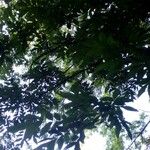
Source: leafsnapFraxinus pennsylvanica, commonly known as the green ash, is a deciduous tree native to North America. It is a medium to large-sized tree that can grow up to 60 feet tall and 40 feet wide. When young, its bark is gray and smooth, but it becomes rough and fissured as it ages. The leaves of the green ash are compound, consisting of five to nine lance-shaped leaflets with serrated edges. They turn yellow in autumn before falling off during winter dormancy. In early spring, before its leaves emerge, the green ash produces small clusters of inconspicuous flowers. These flowers are followed by winged seeds that are dispersed by the wind. Green ashes prefer moist soils but can tolerate drought conditions once established. They grow best in full sun but can also tolerate partial shade. Green ashes have been widely planted as ornamental trees due to their attractive foliage and adaptability. Their wood, which is strong yet flexible, has also been used for furniture making and tool handles. Unfortunately, green ashes have been severely threatened by an invasive species called the emerald ash borer. This pest, introduced from Asia in the early 2000s, has caused significant damage across North America. As a result, many cities have been forced to remove green ashes from public spaces due to their susceptibility to this pest.
💡 Fallen leaves from the green ash tree serve as a crucial food source for certain kinds of tadpoles. Consequently, in some regions where the green ash is being replaced by the red maple, frog populations are declining.
🌳 Green ash is prized by electric guitar aficionados for its wood, which is lightweight yet resonant and ideal for making guitars. That mix of lightness and tone-enhancing qualities makes it a top choice for the mobility and sound of electric guitars, affecting their tone, durability, and the player’s experience. From a forest giant to a music icon, green ash wood is turned into the vital parts of a guitar.
🎭 Security, Wealth, fruitfulness, power
Care Guide
💧 Water Every 7 days
Green ash trees naturally grow in wetlands and along riverbanks, thriving in consistently moist environments yet showing resilience to dry conditions. To care for a green ash, water it every 1-2 weeks, adjusting the frequency based on seasonal changes. They require more water in the spring and summer and less during their dormancy in the fall.
When Should I Water My Green Ash?
Timely and adequate watering is crucial for the health, growth, and survival of green ash. It is important to water your green ash when the soil around it becomes dry a few inches below the surface, not just at the top. Inspecting the leaves can provide clues about the tree's water needs; if they begin to wilt or appear limp, it might be time to water. However, ensure not to water too early or late in the day to avoid root rot from too much moisture or stress from too little. Monitoring for signs like yellowing or browning leaves can also help determine if adjustments to watering are necessary.
How Should I Water My Green Ash?
Watering your green ash effectively starts with assessing the soil’s moisture, preferably using a moisture meter. The best techniques for watering include drip irrigation or using a soaker hose to ensure water reaches the plant's roots without wetting the foliage, which could lead to disease. It’s recommended to focus watering around the outer edge of the tree's canopy where the feeder roots are, aiming for a deep watering that reaches 12-15 inches into the soil for mature trees. Using tools like a moisture meter, soaker hose, drip irrigation system, or an adjustable watering wand can help in achieving the desired watering depth and precision.
How Much Water Does Green Ash Really Need?
The water needs of green ash vary based on its size and the weather conditions. Generally, young trees in pots require 3-5 gallons of water per session, while mature trees might need 10-15 gallons. The key is to ensure deep watering that accommodates the deep root system of green ash, ideally soaking the soil to a depth of 12 to 15 inches for younger trees and up to 24 inches for mature ones. Regular but infrequent watering that allows the soil to partially dry between sessions can promote healthy growth and prevent problems like root rot or under-watering stress.
What Kind of Water is Best for Green Ash?
Green ash plants have moderate sensitivity to the type of water used. The best option is distilled water due to its purity and lack of contaminants. Rainwater is a good alternative, assuming it's collected cleanly without pollutants. Tap water is acceptable if other sources aren't available, though it may contain chlorine, fluoride, and minerals that can affect the plant. To mitigate chlorine's effects, let tap water sit for at least 24 hours before use or apply a dechlorination treatment. A balanced approach to water quality, considering the plant’s moderate sensitivities, is ideal.
How Do Green Ash's Watering Needs Change with the Seasons?
Green ash's watering needs fluctuate through the year. In spring, water more frequently to support new growth, ensuring the soil stays cool and slightly damp. Summer’s heat necessitates vigilant monitoring of soil moisture due to higher evaporation rates, potentially requiring more frequent watering. As autumn progresses and temperatures cool, gradually reduce watering frequency while keeping the soil lightly moist. Winter calls for minimal watering because of the tree's dormancy and reduced metabolic activity, focusing on preventing soil from becoming too wet and cold.
☀️ Light Full sun
Green ash is naturally suited to sites that receive abundant sunlight throughout the day. It can, however, tolerate areas where light is occasionally partially blocked. If there is too little or too much sun exposure, it can impact the plant’s overall health and growth.
What are the sunlight requirements for Green Ash?
Green Ash requires full sun, characterized by above 6 hours of sunlight daily, but can also thrive in partial sun, receiving about 3-6 hours of sunlight. Observing how sunlight moves through your garden is crucial for choosing the best spots that offer a balanced environment of light and shade, ensuring the plant's well-being.
How does insufficient or excess sunlight affect Green Ash?
Green Ash is naturally suited for areas with abundant sunlight throughout the day but can adapt to conditions where sunlight is partially blocked. If the plant experiences a lack of or excess sun exposure, its health and growth may be adversely affected. In indoor settings, when natural light is insufficient, artificial lighting can be used to ensure optimal growth, with recommendations for the types and amounts of artificial light needed based on the plant's sunlight requirements.
What are the symptoms of incorrect light exposure for Green Ash?
Incorrect light exposure can lead to several symptoms in Green Ash, including small or lighter-colored new leaves, leggy or sparse growth, faster leaf drop, halted growth, chlorosis, sunscald, leaf curling, wilting, and leaf scorching. These issues range from cosmetic to more severe health impacts on the plant.
How can I support Green Ash growth with artificial lighting?
Indoor Green Ash plants can benefit from artificial lighting, especially when natural sunlight is insufficient. Choose the right type of light, like LED lights that can be tailored to the plant's needs. The recommended wattage varies depending on whether the plant requires full sun, partial sun, or full shade conditions. Artificial lights should be placed at an appropriate distance from the plant and kept on for 8-12 hours per day to mimic natural daylight hours.
What solutions are available for Green Ash experiencing light-related issues?
To address light-related issues in Green Ash, gradual adjustments to lighting conditions are recommended. For indoor plants, moving the plant to sunnier spots incrementally or using artificial lighting can help. Outdoors, gradually relocating the plant to sunnier positions can prevent sunburn. If sunlight is blocked by physical obstructions, consider pruning or transplanting the plant to a better-lit location. Note that while parts of the plant damaged by insufficient light may not recover, new growth should be healthy once proper light levels are established.
🌡️ Temperature 5–35°C
Green ash is native to North America and can endure a broad temperature span from 5 to 35 ℃ (41 to 95 ℉). It does best in temperatures around 20 to 25 ℃ (68 to 77 ℉). In cold seasons the green ash benefits from protection such as wrapping or mulching, while in warm seasons it prospers in full sun and well-drained soil.
What is the native region of the green ash, and what temperatures does it prefer?
The green ash, or Fraxinus pennsylvanica, is native to North America. It can tolerate a wide range of temperatures, from 5 to 35°C (41 to 95°F), but it prefers temperatures in the range of 20 to 25°C (68 to 77°F). For optimal growth, it benefits from protection in colder seasons through methods such as wrapping or mulching, and thrives in well-drained soil and full sun in warmer seasons.
How should green ash be cared for in winter to protect against extreme cold?
Green ash has a strong resistance to cold and usually doesn't require special frost protection measures during the winter. However, if temperatures are expected to drop below -25°C, it's important to protect the tree. This can include wrapping the trunk and branches with non-woven fabric or cloth. Also, before the first freeze in autumn, it's recommended to water the plant abundantly to ensure the soil remains moist and freezes in that state, helping prevent drought stress.
How does green ash respond to low temperatures and how can it be cared for?
Green ash is cold-tolerant and performs best when temperatures are above 5°C, but should be kept above -20°C during winter. If temperatures fall below -25°C, while there might not be noticeable changes in winter, in spring, the branches can become brittle and dry, and no new shoots will emerge. To care for it in these conditions, prune away any dead branches that have failed to produce new leaves in the spring.
What are the signs of heat stress in green ash and how can it be alleviated?
During summer, it's best to keep the green ash below 35°C. Temperatures exceeding 38°C can cause the leaves to become lighter in color, the tips to dry and wither, and increase susceptibility to sunburn. To alleviate heat stress, trim away sunburned and dried-up parts of the plant. Move the plant to a shadier location or use a shade cloth to protect it from midday and afternoon sun. Ensure the plant is watered in the morning and evening to keep the soil moist.
💨 Humidity
🪴 Soil 6-7
🌱 Fertilizer
Fertilize your Green ash in early spring to encourage healthy growth. Regular feeding improves its overall health, leading to vigorous development, increased tolerance of challenging conditions, and enhanced resistance to diseases and pests. Follow a set fertilization schedule for your Green ash to preserve vibrant, deeply colored foliage and a lush appearance.
Why do I have to put fertilizer on my Green ash tree?
No matter which type of Green ash you have, regular fertilization is essential for maintaining the overall health of your plant. Providing the proper nutrients will promote vigorous growth, enhance resilience to difficult growing conditions, and improve the ability to fight off diseases and pests. The foliage of your Green ash is particularly attractive, so it is crucial to maintain it. This can be achieved by following a consistent fertilization schedule tailored to your specific variety of Green ash. By doing so, you will encourage the development of deeply colored leaves and a lush appearance.
When should I add fertilizer to my Green ash tree?
To ensure healthy growth, it is recommended to fertilize your Green ash during late winter or early spring. This will provide the necessary nutrients for the tree's growth once the weather warms up. If you live in a warm climate region, it can also be beneficial to fertilize again in early fall. This will not only supply additional nutrients for the following growing season but also help the tree withstand the winter without foliage damage. Fertilizing earlier in fall allows sufficient time for new branches to grow and be more resilient against the cold winter.
When is it best to not apply fertilizer to my Green ash tree?
There are specific times of the year when it is not advisable to fertilize your Green ash tree. One such time is during the early and mid-winter months when the tree is dormant and does not require any nourishment. It is also not recommended to fertilize the tree in late spring and throughout the summer, as these months usually have hotter and drier weather conditions. Fertilizing during this time can have a negative impact on the tree's response to the fertilizer. To avoid any potential issues, it is best to follow a fertilization schedule that only includes feeding the tree in early spring and early fall.
What kind of fertilizer does my Green ash tree need?
Green ash trees primarily require nitrogen as their most important nutrient, but this does not diminish the importance of phosphorus and potassium. It is recommended to provide a balanced fertilizer, like a 10-10-10, to ensure adequate levels of all three major nutrients. Nonetheless, for optimal growth, a more varied nutrient ratio is often beneficial for Green ash trees. Fertilizers with a slightly higher nitrogen content, such as a 10-6-4 ratio, tend to yield superior results. When fertilizing, both granular and liquid-based fertilizers are suitable options to consider.
How do I help my Green ash grow better?
To fertilize your Green ash with granular fertilizer, simply sprinkle it on the soil at the appropriate time. This slow-release fertilizer will gradually release nutrients into the soil. It's recommended to lightly water your Green ash before applying the fertilizer. Another option is to use liquid fertilizer, although this is less common. To do this, mix the fertilizer with water and pour it onto the soil around the base of your Green ash. Occasionally, it may be helpful to conduct a soil test beforehand to determine if the pH needs adjustment.
🪴 Pot & Repot Every 12 months
✂️ Pruning
Green ash is a deciduous tree known for its compound leaves and bark with a distinctive diamond pattern. To promote the tree's health and improve air circulation, it is best to prune it in early spring. When pruning, focus on removing dead or crossing branches. Structural pruning is important to develop a strong framework for the tree. Always use clean, sharp tools to maintain the tree's vigor and ensure it looks its best in any landscape.
🌿 Propagating
🐛 Diseases & pets
☠️ Toxicity
Characteristics
- Plant Type
- Tree
- Life Cycle
- Perennial
- Genus
- Fraxinus
- Family
- Oleaceae
- Hardiness Zone
- 5-9
- Mature Height
- 10.06 m to 20.12 m
- Mature Spread
- 10.36 m to 14.94 m
- Leaf Color
- Green
- Leaf Type
- Deciduous
- Flower Color
- Yellow, Green, Purple, White, Red, Lavender, Burgundy, Gold
- Flower Size
- 5.08 cm to 20.32 cm
- Bloom Time
- Mid spring, Late spring
- Planting Time
- Spring, Autumn
- Harvest Time
- Mid summer
- Native Area
- Mexico