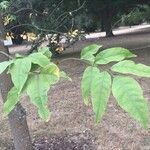
Fraxinus profunda
Pumpkin ash
Description
Source: leafsnapFraxinus profunda, commonly known as the pumpkin ash, is a deciduous tree species in the olive family. Native to North America, it is found in the eastern United States and parts of Canada. The pumpkin ash can grow up to 30 meters tall with a trunk diameter reaching 60 centimeters. The tree has pinnately compound leaves with seven dark green leaflets. Its bark is grayish-brown with deep furrows, giving it a rough texture. In spring, the tree produces small greenish-yellow flowers that appear in clusters. Pumpkin ash thrives in moist soils such as swamps or floodplains but can also grow well in drier conditions. Due to its strength and durability, it has been used for various purposes, including making furniture, tool handles, flooring, and baseball bats. Unfortunately, this species is threatened by the invasive emerald ash borer, an insect that feeds on its bark. This infestation can cause significant damage and ultimately lead to the tree's death if not treated properly or without timely human intervention. Ecologically, Fraxinus profunda is important as it provides habitat for wildlife such as birds and insects. Its beautiful fall foliage also contributes aesthetically to North American ecosystems. Despite the threat from the emerald ash borer, the pumpkin ash remains a vital part of these ecosystems. Immediate attention and protective measures, including biological control methods, are necessary to safeguard this valuable species.
Care Guide
💧 Water Every 7 days
Pumpkin ash flourishes in wet environments such as swamps and riverbanks, as it requires high humidity and ample water. This deciduous tree needs watering every three weeks. It sheds its leaves each year to conserve water during the drier seasons.
☀️ Light Full sun
Pumpkin ash grows best when it receives plenty of sunlight throughout the day. Light is vital for its healthy development and for forming its lush foliage. However, too much or too little light can damage the plant. In its natural habitat, it does well even with inadequate shade protection.
What are the sun requirements for Pumpkin ash?
Pumpkin ash requires various amounts of sunlight depending on its environment. Full sun consists of over 6 hours of sunlight daily, while partial sun ranges from about 3-6 hours of sunlight. It's important to observe how sunlight moves through your garden to find locations that offer a balance of light and shade, promoting the well-being of your plants.
What are the essentials for growing Pumpkin ash?
Pumpkin ash thrives in abundant sunlight throughout the day, which is vital for its healthy growth and lush foliage development. Too much or too little sunlight can be detrimental. In its natural setting, pumpkin ash flourishes despite inadequate shade. When natural light is insufficient, especially in winter or less sunny spaces, artificial lighting can be crucial. Optimal growth is supported by adequate artificial light, such as LEDs, which can provide specific wavelengths needed by plants. Full sun plants require 30-50W/sq ft of artificial light, partial sun plants need 20-30W/sq ft, and full shade plants need 10-20W/sq ft. The light source should be placed 12-36 inches above plants, with 8-12 hours of light per day to mimic natural conditions.
What symptoms indicate Pumpkin ash is receiving insufficient light?
Symptoms of insufficient light in Pumpkin ash include smaller new leaves, leggy or sparse growth, quicker leaf drop, halted new growth, lighter-colored new leaves, chlorosis, sunscald, leaf curling, wilting, and leaf scorching. These tell-tale signs suggest that the plant is struggling with light conditions that are either too intense or not adequate, affecting its overall health and ability to thrive.
What steps can be taken to ensure Pumpkin ash receives enough light?
To optimize growth, gradually move your Pumpkin ash to sunnier locations, ensuring at least 6 hours of direct sunlight daily. Utilize south-facing windows for indoor plants and keep curtains open during the day. If moving the plant is not feasible, consider using desk or ceiling lamps for at least 8 hours daily or invest in professional grow lights. For outdoor placement, adjust the plant's location gradually to avoid shock from sudden light changes. Pruning nearby trees can reduce obstructions to sunlight. For smaller plants, consider transplanting during their dormant period to a better-lit area with ample sunlight and good drainage.
🌡️ Temperature 5–35°C
Pumpkin ash is native to areas where temperatures range from 41 to 95 °F (5 to 35 °C). The plant generally prefers moderately warm conditions. Seasonal temperature changes should be managed carefully to avoid shock and to maintain optimal growth.
What are the ideal temperature conditions for Pumpkin ash?
Pumpkin ash flourishes in temperature ranges from 41 to 95 °F (5 to 35 °C), thriving in moderately warm conditions. It is crucial to manage seasonal temperature adjustments carefully to avoid shock and promote optimal growth. The plant exhibits strong cold resistance, hence special frost protection measures are not typically required. However, if temperatures are expected to fall below -25°C, it's essential to provide cold protection by wrapping the trunk and branches in non-woven fabric or cloth and watering the plant abundantly before the first freeze, ensuring the soil is moist.
How does low temperature affect Pumpkin ash, and what are the solutions?
Pumpkin ash is cold-tolerant and best suited for temperatures above 5°C, requiring protection if winter temperatures drop below -20°C. When temperatures fall below -25°C, you may not notice immediate changes during the winter, but come springtime, the branches might turn brittle and dry with no new shoots emerging. To combat this, prune any dead branches not producing new leaves in spring.
How does high temperature affect Pumpkin ash, and what are the solutions?
During summer, it’s important to keep Pumpkin ash below 35°C. Exceeding 38°C may cause the leaves to lighten in color, tips to dry and wither, and increase susceptibility to sunburn. Addressing this involves trimming away sunburned and dried parts, moving the plant to a shaded location during midday and afternoon sun, or using a shade cloth. Also, ensure to water the plant in the morning and evening to maintain soil moisture.
What is the botanical name of Pumpkin ash?
The botanical name of Pumpkin ash is Fraxinus profunda.
💨 Humidity
🪴 Soil 6-7
🌱 Fertilizer
Fertilize your Pumpkin ash in early spring to encourage healthy growth. Regular feeding improves overall health, producing vigorous growth, greater tolerance of challenging conditions, and enhanced resistance to pests and diseases. Keep a consistent fertilization schedule for your Pumpkin ash to ensure vibrant foliage with deep color and a lush appearance.
🪴 Pot & Repot
✂️ Pruning
The pumpkin ash is a deciduous tree known for its large, compound leaves and ability to withstand waterlogged conditions. To promote healthy growth, prune the tree in early spring by removing any dead or crossing branches, which will enhance airflow and light penetration. Regular maintenance ensures vigorous growth and improves the tree's resilience to environmental stressors.
🌿 Propagating
🐛 Diseases & pets
☠️ Toxicity
Characteristics
- Plant Type
- Tree
- Life Cycle
- Perennial
- Genus
- Fraxinus
- Family
- Oleaceae
- Hardiness Zone
- 5-9
- Mature Height
- 11.89 m to 29.87 m
- Mature Spread
- 9.14 m to 14.94 m
- Leaf Color
- Green, Red, Bronze
- Leaf Type
- Deciduous
- Flower Color
- Green, Yellow, Purple, Lavender
- Flower Size
- 0.20 cm to 0.25 cm
- Bloom Time
- Early spring, Mid spring
- Planting Time
- Autumn, Winter
- Harvest Time
- Late summer, Early fall, Mid fall
- Native Area
- Southeastern United States