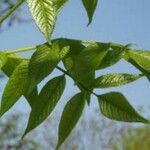
Fraxinus quadrangulata
Blue ash · Four-angled ash
Description
Source: leafsnapFraxinus quadrangulata, commonly known as the blue ash, is a deciduous tree native to North America. A member of the olive family, it can grow up to 80 feet tall with a trunk diameter of up to 3 feet. The blue ash is distinguished by its gray, fissured bark featuring diamond-shaped ridges. The leaves of the blue ash are compound, composed of five to nine ovate-lanceolate leaflets with serrated edges. In autumn, these leaves turn yellow before falling off. The tree derives its name from the distinctive bluish-gray coloration of its twigs, leaf scars, and buds. Notably, it has four-sided twigs, a unique characteristic among North American ashes. This species prefers moist soils but can tolerate drought conditions once established. It thrives in full sun but can also grow in partial shade. The wood of Fraxinus quadrangulata is strong and durable, making it ideal for furniture, tool handles, and sports equipment such as baseball bats. Unfortunately, the blue ash is threatened by the invasive emerald ash borer, an insect that has inflicted significant damage on its populations throughout North America since it was first discovered in Michigan in 2002. Conservation efforts are currently underway to protect this valuable tree species from further decline due to this invasive pest.
🎭 Safeguarding, Wealth, Maritime Rituals
Care Guide
💧 Water Every 7 days
The blue ash originates from moderately moist regions and thrives with consistent, moderate watering. It should be watered every 1-2 weeks, adjusting for seasonal changes. During the colder months, when the tree enters dormancy, its watering needs decrease. The blue ash is also resilient to short-term droughts.
☀️ Light Full sun
Blue ash needs considerable sunlight to develop properly and remain healthy. Not getting enough light can reduce its vigor and limit leaf production. Its native setting is open and unshaded, which suggests it is suited to very sunny conditions. Too much light or too little light can result in stunted growth or leaf discoloration, respectively.
What are the sunlight requirements for Blue Ash?
Blue Ash requires full sun exposure, which means it should receive more than 6 hours of direct sunlight daily for optimal growth and health. However, it can also tolerate partial sun conditions, involving about 3-6 hours of sunlight. It's crucial to observe how sunlight moves through your garden to choose spots that ensure the perfect balance of light and shade, promoting the plant's happiness.
What are the essential considerations for Blue Ash's sunlight and growth?
Blue Ash necessitates substantial exposure to sunlight for proper growth and maintaining its health. Insufficient light can lead to reduced vitality and leaf production, while its preference for open, unshaded environments indicates its tolerance for sun-soaked conditions. Inappropriate light levels can result in stunted growth or leaf discoloration. For indoor plants, when natural light is inadequate, particularly during winter or in areas receiving less sunlight, artificial lighting becomes crucial. LED lights are recommended for providing the specific wavelengths needed, with full sun plants requiring 30-50W/sq ft, partial sun plants needing 20-30W/sq ft, and full shade plants requiring 10-20W/sq ft of artificial light. The light source should be placed 12-36 inches above the plant and should remain on for 8-12 hours per day to mimic natural daylight conditions.
What are the symptoms of insufficient light in Blue Ash?
When exposed to suboptimal lighting, Blue Ash may display symptoms indicating light deficiency, despite its preference for full sunlight. Such symptoms include smaller new leaves compared to mature ones, leggy or sparse growth with extended spaces between leaves or stems, and a general appearance of thinness and weakness. The plant may also experience accelerated leaf drop to conserve resources, a halt in new leaf production, and irregular or pale coloration of new leaves, indicative of chlorophyll and nutrient deficiency. Furthermore, excessive sunlight can lead to chlorosis, sunscald, leaf curling, wilting, and leaf scorching, all of which compromise the plant's health and photosynthesis process.
How can you address and prevent sunlight-related issues in Blue Ash?
To ensure Blue Ash receives optimal sunlight, gradually acclimate indoor plants to sunnier locations until they achieve at least 6 hours of direct sunlight daily, ideally near a south-facing window. If natural sunlight is insufficient, supplement with artificial light, such as professional plant grow lights, for at least 8 hours daily. Outdoors, move plants to sunnier spots gradually to avoid sunburn and choose locations with minimal light obstructions. Pruning nearby trees can help increase sunlight exposure. For smaller plants, consider transplanting during the dormant period to a brighter location with good drainage. It's crucial to understand that parts of the plant already affected by inadequate sunlight may not recover, but new growth will be healthier following improved light exposure.
🌡️ Temperature 5–32.2°C
Blue ash is native to habitats with modest temperatures ranging from 41 to 89.6 °F (5 to 32 ℃). It favors warmer climates but is fairly adaptable. If temperatures become extreme, adjustments to its environment should be made as necessary.
What are the ideal temperature conditions for Blue ash?
Blue ash thrives in environments with moderate temperatures, ideally ranging from 41 to 89.6 °F (5 to 32 °C). It prefers warmer climates but is adaptable to various conditions. While it has strong cold resistance and usually doesn't require special frost protection, if temperatures are expected to drop below -30°C, protective measures should be taken. Wrapping the trunk and branches with non-woven fabric or cloth can provide cold protection. Additionally, it's recommended to water the plant thoroughly before the first freeze in autumn to ensure the soil remains moist, helping the plant avoid drought and water scarcity during the colder months.
How does Blue ash handle low temperatures?
Blue ash is quite cold-tolerant, capable of thriving when the temperature stays above 5°C. It should ideally be kept above -25°C during winter. However, if temperatures fall below -30°C, while there may not be immediate visible damage in winter, the plant could experience brittleness and dryness in its branches by spring, possibly failing to produce new shoots. In such cases, it's advisable to prune away the affected branches in spring to encourage healthy new growth.
What are the implications of high temperatures on Blue ash and how can they be mitigated?
During summer, it's important to keep Blue ash below 32°C as exposure to temperatures exceeding 35°C can lead to lighter leaf colors, dry and withered leaf tips, and increased susceptibility to sunburn. To mitigate these effects, trim away the sunburned and dried parts of the plant. Moving the plant to a shaded location or using a shade cloth to protect it from the midday and afternoon sun can prevent further damage. Additionally, watering the plant in the morning and evening helps maintain soil moisture, reducing stress on the plant.
💨 Humidity
🪴 Soil 6-7
🌱 Fertilizer
Fertilize your Blue ash in early spring to encourage healthy growth. Regular fertilization boosts its overall health, producing vigorous growth, greater tolerance of harsh conditions, and improved resistance to diseases and pests. Keep to a consistent fertilization schedule for your Blue ash to ensure foliage that is vibrant, deeply colored, and lush in appearance.
🪴 Pot & Repot
✂️ Pruning
Blue ash trees benefit greatly from early spring pruning, which involves removing any dead or diseased branches. This process improves airflow and encourages healthy growth. Light shaping not only enhances the tree's structure and flowering but also helps prevent diseases. When pruning, make sure to use sterilized tools to avoid contamination, since blue ash trees heal slowly and should not be subjected to heavy pruning.
🌿 Propagating
🐛 Diseases & pets
☠️ Toxicity
Characteristics
- Plant Type
- Tree
- Life Cycle
- Perennial
- Genus
- Fraxinus
- Family
- Oleaceae
- Hardiness Zone
- 4-8
- Mature Height
- 10.06 m to 24.99 m
- Mature Spread
- 1.83 m
- Leaf Color
- Green, Blue, Yellow, Gold
- Leaf Type
- Deciduous
- Flower Color
- Yellow, Green, Purple, Lavender
- Flower Size
- 2.54 cm
- Bloom Time
- Early spring, Mid spring
- Planting Time
- Spring
- Harvest Time
- Late summer, Early fall, Mid fall
- Native Area
- Midwestern United States