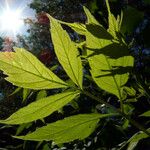
Fraxinus velutina
Arizona Ash · Arizon ash · Desert ash · Velvet ash
Description
Source: leafsnapFraxinus velutina, commonly known as the velvet ash, is a deciduous tree in the Oleaceae family. Native to southwestern North America, it thrives in habitats such as canyons, valleys, and foothills. The tree can grow up to 50 feet tall and spread up to 30 feet wide. The leaves of Fraxinus velutina are compound, consisting of five to nine leaflets that are dark green on the top and lighter underneath. The bark is grayish-brown with deep furrows as it matures. In the spring, the tree produces small clusters of greenish-yellow flowers that develop into winged seeds by late summer. Fraxinus velutina is valued for its ornamental and shade purposes due to its attractive foliage and bark texture. Additionally, its leaves possess medicinal properties and have been traditionally used to treat ailments such as fever and rheumatism. However, Fraxinus velutina faces significant threats from pests, particularly the emerald ash borer, which has caused extensive damage to ash tree populations in North America in recent years. Conservation efforts include planting resistant cultivars and using insecticides, but more research is needed to determine the most effective methods to protect this valuable species from extinction due to pests like the emerald ash borer, which pose a global threat.
💡 The Velvet ash is a small deciduous tree native to the southwestern regions of North America. Its presence in desert areas usually indicates the existence of an underground water source. These trees are commonly planted along streets to provide shade in both residential and commercial areas. Additionally, they are admired for their beautiful fall foliage.
🌳 Velvet ash, which many consider just an ordinary tree, actually serves as a natural water purifier. Centuries ago, Native Americans found that the ash from this tree could greatly improve water quality, leaving it cleaner and fresher. The technique is effective: scientific evidence supports using the tree's ash, which is high in calcium carbonate, to remove impurities from water. In addition, velvet ash is prized by beekeepers because it produces abundant nectar, increasing honey yields.
🎭 Safeguarding, Wealth, Maritime Rituals
Care Guide
💧 Water Every 7 days
Velvet ash thrives in semi-arid environments due to its drought tolerance. It requires watering every one to two weeks, with the soil partially drying out between waterings. Often planted outdoors, velvet ash is an excellent choice for xeriscaping, contributing to water conservation in landscaping efforts.
How should I water my Velvet ash tree?
To ensure excellent root development, place a garden hose at the base of the plant. Avoid spraying the leaves directly, as this may require more watering if the plant is outdoors and exposed to direct sunlight. Consider using bubblers or soaker hoses to moisten the roots, covering the entire garden or bed if necessary. After adding or removing plants, make sure to drain any excess water and allow the soil to dry before watering again. To prevent diseases, water at ground level. On a sunny day, you can spray the entire bush with water. Remember, whether potted or in-ground, Velvet ash prefers deep watering rather than light sprinkling.
What do I do if I give Velvet ash tree too much or too little water?
If a Velvet ash is overwatered, it may develop yellow, wilting leaves that eventually fall off. The plant may look unhealthy and have mushy stems. It is important to adjust your watering schedule when you notice these signs. Wilting can also indicate under watering, in which case the leaves may become crispy and dry. When the soil is dry, simply adding water may not be enough - give the plant a thorough watering. Although sufficient water will help the Velvet ash recover, it may still have dry and yellow leaves due to damage to the root system. Once the plant returns to normal, the yellowing leaves will stop. When keeping a Velvet ash indoors, always check the moisture levels in the pot and avoid overwatering. Look for signs of black spots, and if present, allow the soil to dry out by reducing watering for a few days. Overwatering can lead to root rot, so it may be necessary to repot the plant if you observe discolored and slimy roots. Prevent root rot by avoiding excessively soggy soil. When planting a Velvet ash outdoors, make sure to check the soil moisture with your fingers. If it feels too dry, the plant may be underwatered, and adequate watering is necessary for recovery.
How frequently should I water my Velvet ash tree?
The Velvet ash thrives with deep and infrequent watering. For potted plants, soak them in a gallon of water each time to account for their limited water storage. In cold regions, water every 3 to 5 days. Water in the morning when the soil is dry, indoors or outdoors. Check the top 2-3 inches of soil to determine when to water; if dry, give the plant a full watering. During hot days, check moisture daily to prevent the soil from drying out quickly. If you have a garden, irrigation is necessary. In hot climates, water once a week when 2 to 3 inches of soil is dry. Avoid overwatering to prevent root rot, considering the amount of rainfall received. For outdoor Velvet ash, add 3 to 4 inches of mulch to conserve water. Sandy soil requires more frequent watering, while clay soil necessitates less watering to avoid root rot. Mark watering dates on the calendar and be mindful of drooping leaves, indicating potential delay in watering.
How much water does my Velvet ash tree need?
The Velvet ash generally needs about a gallon of water on a regular schedule. For potted plants, water them deeply until water drips out of the bottom of the pot. Wait for the soil to dry before watering again. Use a water calculator or moisture meter to track how much water you give your plant in a week. During the flowering period, provide plenty of water but let the moisture evaporate to prevent root rot. If Velvet ash is planted outside with sufficient rainfall, it may not need extra watering. When the Velvet ash is young or newly planted, ensure it receives 1-2 inches of rain per week. As the Velvet ash grows, it can rely solely on rainfall. Only water it fully during cooler times of the day when the weather is extremely hot or when there has been no rain for 2-3 weeks to prevent heat damage. Additional watering will be necessary during extended dry periods.
Should I change how often I water my Velvet ash tree based on the time of year or the weather?
The Velvet ash prefers to be outdoors and relies on rain for watering, unless there is persistently dry weather. In the spring and fall, keep the soil moist but not soggy for optimal growth. Alternating between dry and moist soil conditions is beneficial for the Velvet ash. During the summer, hot weather can cause water to evaporate quickly, so you may need to water it more frequently if there is a lack of rain. In general, the Velvet ash requires less water in winter when it goes dormant. To help water evaporate faster, use a well-draining but moisture-retentive soil mixture like terracotta when planting the Velvet ash during winter. Once the Velvet ash begins to leaf out and go dormant, you can skip watering as it can rely on fall and winter rains to survive. When growing the Velvet ash in a pot, ensure good drainage, especially in winter when the plant is more susceptible to ponding and drought. Keep potted Velvet ash well-watered during summer while avoiding cold and wet roots. Water the entire root system deeply at least once or twice a week, depending on the weather, instead of shallow sprinkles that may encourage fungi growth. Don't allow the Velvet ash to completely dry out in fall or winter, even during dormancy. Avoid overwatering as well, as sitting in water for too long can be detrimental to the plant, especially during winter. Adding mulch can help reduce stress, conserve water, and promote healthy blooms.
☀️ Light Full sun
The velvet ash performs best when it receives a substantial amount of light for most of the day, though it can also tolerate spots with moderate light. Its native environment was naturally rich in sunlight. Insufficient light can impede growth, while excessive exposure may scorch the leaves.
What are the sunlight requirements for Velvet Ash?
Velvet Ash needs significant light exposure for optimal growth, thriving in areas receiving full sun, defined as over 6 hours of sunlight, or partial sun, about 3-6 hours of sunlight daily. Observing how sunlight moves through your garden is crucial for choosing the best spots that provide a mix of light and shade, ensuring your plants grow happily and healthily.
Why is sunlight important for Velvet Ash, and how can artificial lighting be utilized?
Sunlight is crucial for Velvet Ash (Fraxinus velutina) because it originates from a naturally sunlight-rich habitat and requires considerable light most of the day, although it can adapt to moderate light exposures. Insufficient light may impair growth, whereas too much can cause leaf scorch. When natural sunlight is inadequate, especially during winter or in less sunny spaces, artificial lighting becomes essential. LED lights, recommended for their customizability, should provide 30-50W/sq ft for full sun plants, 20-30W/sq ft for partial sun plants, and 10-20W/sq ft for full shade plants. The light source should be placed 12-36 inches above the plant, imitating natural sunlight for 8-12 hours per day to promote healthier, more robust growth.
What are some common symptoms of light deficiency or overexposure in Velvet Ash?
When Velvet Ash doesn't receive enough light, it might show symptoms like smaller new leaves, leggy or sparse growth, faster leaf drop, slower or halted new growth, paler new leaves, indicating a lack of chlorophyll and essential nutrients. Overexposure can lead to chlorosis, where leaves turn yellow, sunscald with damaged tissues, leaf curling as a defense mechanism against water loss, wilting due to increased transpiration, and leaf scorching. Recognizing these signs early can help address light issues, improving plant health.
How can I ensure Velvet Ash receives adequate sunlight indoors, outdoors, and in the ground?
To ensure Velvet Ash gets enough sunlight, gradually increase exposure to at least 6 hours daily. For indoor plants, use a south-facing window or supplement with artificial lighting, such as a desk or ceiling lamp for 8 hours or professional grow lights. Outdoors, slowly transition your plants to sunnier spots to avoid sudden changes that might cause sunburn. For ground locations, identify and minimize obstructions like trees by pruning, or consider transplanting smaller plants during their dormant period to spots with ample sunlight and good drainage. Remember that parts of the plant affected by insufficient light might not recover, but new growth will be healthy after adjusting light exposure.
🌡️ Temperature 10–35°C
Velvet ash is a temperate woody species that prefers temperatures from 50 to 95 ℉ (10 to 35 ℃). In its native habitat it thrives where summers are warm and winters are mild. During summer, keep it out of excessive heat and ensure it has adequate moisture. In winter, protect it from frost by applying a layer of mulch.
What are the ideal growing conditions for Velvet Ash?
Velvet Ash, botanically known as Fraxinus velutina, flourishes in temperate climates with temperatures ranging from 50 to 95 °F (10 to 35 °C), enjoying a habitat with warm summers and mild winters. It's important to shield the plant from extreme heat during summer by ensuring it has ample moisture. In winter, despite its strong cold resistance, it's wise to protect it from frost by mulching. If temperatures are expected to dip below -25°C, additional cold protection is advisable by wrapping the trunk and branches with non-woven fabric or cloth. It's also recommended to water the plant generously before the first freeze of autumn to keep the soil moist, which helps to prevent drought and water scarcity during winter and early spring.
How does Velvet Ash react to low temperatures, and what are the solutions if damage occurs?
Velvet Ash is notably cold-tolerant, thriving best when temperatures remain above 10°C and needs to be kept above -15°C during winter. Despite its resilience, if temperatures plummet below -25°C, the branches might not show immediate damage during winter but can become brittle, dry, and fail to produce new shoots in spring. The solution to this issue is to prune away any dead branches that have not produced new leaves in the spring, revitalizing the tree for new growth.
What should be done if Velvet Ash experiences high temperatures?
During the summer months, Velvet Ash should ideally be kept below 35°C. Exposing the plant to temperatures over 41°C can cause the leaves to lighten in color, dry out at the tips, and increase the risk of sunburn. To mitigate these issues, trim away the sunburned and dried-up parts, move the plant to a shaded area or create shade with a cloth during the intense midday and afternoon sun. Additionally, watering the plant in the morning and evening helps to maintain soil moisture and protect against heat stress.
💨 Humidity
🪴 Soil 6-8
🌱 Fertilizer
Fertilize your Velvet ash in early spring to encourage healthy growth. Regular feeding improves overall health, producing vigorous growth, better tolerance of harsh conditions, and increased resistance to pests and diseases. Keep to a specific fertilization schedule for your Velvet ash to maintain vibrant foliage with deep color and a lush appearance.
Why should I put fertilizer on my Velvet ash tree?
No matter what type of Velvet ash you have, regular fertilization is crucial for promoting overall plant health. Providing the right nutrients ensures stronger growth and increased resilience against difficult growing conditions, pests, and diseases. The foliage of your Velvet ash plays a key role in its attractiveness, so it's important to maintain it. This involves following a specific fertilization schedule for your Velvet ash, which will result in deep-colored leaves and a lush appearance.
When should I put fertilizer on my Velvet ash tree?
To keep your Velvet ash healthy and promote growth, there are two optimal times to fertilize. The first is in late winter or early spring, providing the necessary nutrients for growth once temperatures rise. Additionally, if you live in a warm climate, it is beneficial to give your Velvet ash an extra feeding of fertilizer in early fall. This provides nutrients for the upcoming growing season and helps the tree withstand winter without foliage damage. Fertilizing early ensures that new branches have enough time to grow and withstand the cold winter temperatures.
When shouldn't I put fertilizer on my Velvet ash tree?
There are specific times of the year that you should avoid fertilizing your Velvet ash. One of these times is in the early and mid-winter months when the tree is dormant and does not require any feeding. Another time to avoid fertilizing is during the late spring and throughout the entire summer. During this period, the weather tends to be hotter and drier, increasing the chances of a negative reaction to fertilizer. To prevent any problems, it is best to stick to a fertilization schedule that only involves feeding in the early spring and early fall.
What kind of fertilizer does my Velvet ash tree need?
The most important nutrient for a Velvet ash is usually nitrogen, but phosphorus and potassium are also important. A balanced fertilizer, like a 10-10-10, can be effective because Velvet ash requires all three nutrients. However, a more specific ratio of nutrients, with higher nitrogen content, can promote optimal growth. For instance, a ratio of 10-6-4 can work well. Granular or liquid-based fertilizers can be used for application.
How should I give my Velvet ash tree plant food?
To fertilize your Velvet ash with a granular fertilizer, simply sprinkle it on the soil at the appropriate time. The slow-release nature of granular fertilizer will gradually provide nutrients to the soil. It's recommended to lightly water your Velvet ash before applying fertilizer. Another option is a liquid fertilizer, although this is less common. To use liquid fertilizer, mix it with water and pour it onto the soil around the base of your Velvet ash. Occasionally, it may be helpful to conduct a soil test before fertilizing to determine if any pH adjustments are necessary.
🪴 Pot & Repot
✂️ Pruning
The velvet ash tree is known for its soft, velvety leaves and requires annual pruning in early spring to thrive. The main techniques include removing dead branches and thinning the tree to improve air circulation. Pruning not only promotes healthy growth but also helps maintain the tree’s shape and lowers the risk of pests. For more detailed care instructions, consult horticultural guides.
🌿 Propagating
🐛 Diseases & pets
☠️ Toxicity
Characteristics
- Plant Type
- Tree
- Life Cycle
- Perennial
- Genus
- Fraxinus
- Family
- Oleaceae
- Hardiness Zone
- 6-10
- Mature Height
- 10.06 m
- Mature Spread
- 9.14 m to 11.89 m
- Leaf Color
- Green, Yellow, Gray
- Leaf Type
- Deciduous
- Flower Color
- White, Green
- Flower Size
- 0.20 cm to 0.25 cm
- Bloom Time
- Mid spring, Late spring
- Planting Time
- Spring, Autumn
- Harvest Time
- Mid summer, Late summer
- Native Area
- Mexico